A Concept from the 1960s: What Is the 'Kardashev Scale' That Elon Musk Talked About?
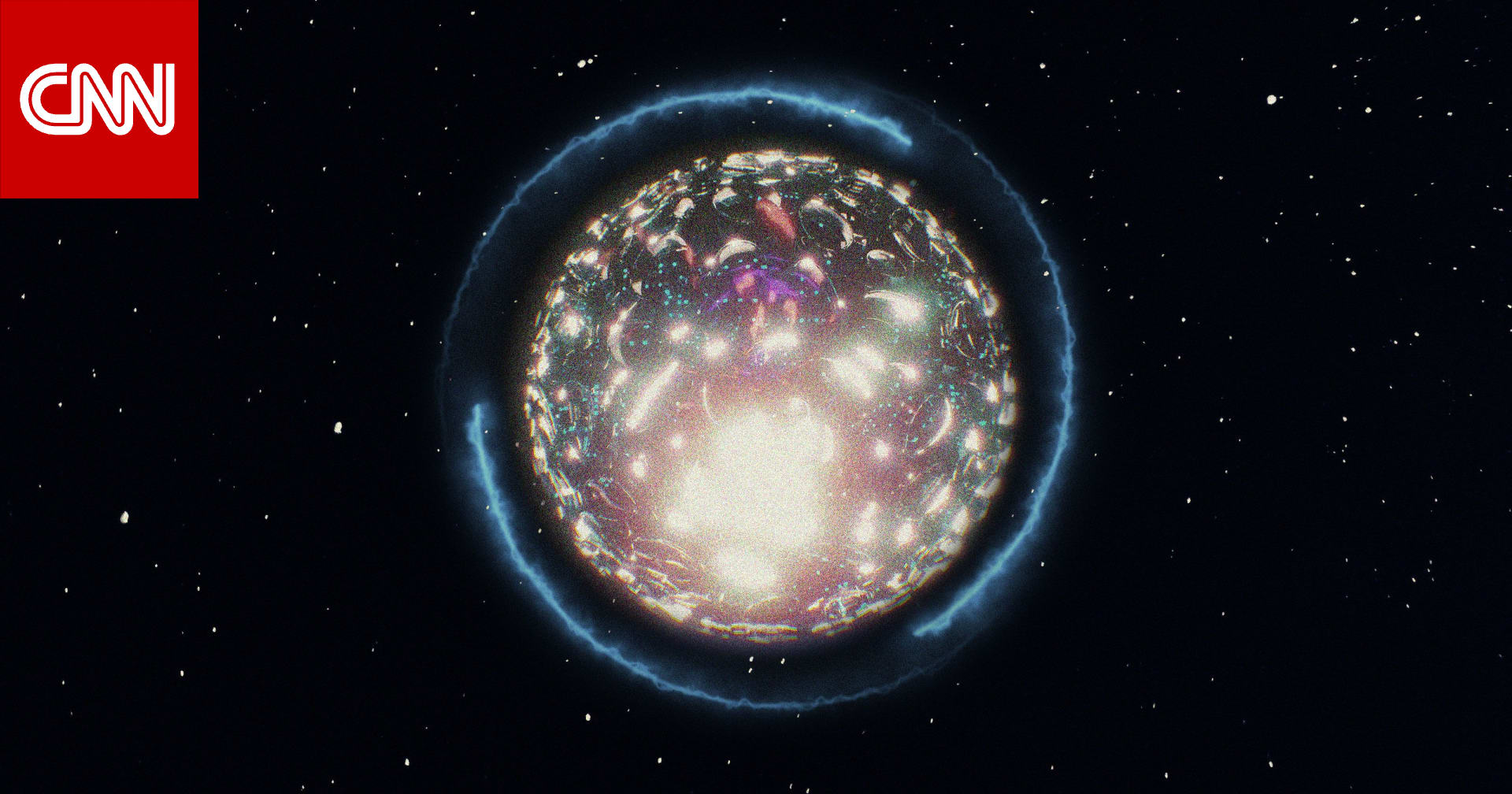
A Soviet astronomer proposed a scale in the 1960s to classify hypothetical space civilizations. Here's why this theoretical framework continues to be discussed today.
Credit: Photo illustration by CNN/DrPixel/Moment RF/gremlin/E+/Jiojio/Moment RF/Getty Images
(CNN) -- Elon Musk's vision for the future of SpaceX and humanity is based on a scientific concept known as the 'Kardashev Scale,' a system proposed by Soviet astronomer Nikolai Kardashev in 1964 to classify civilizations according to their ability to produce and harness energy. This idea emerged at a time when astronomers were beginning to pick up mysterious radio signals from space, raising questions about the possibility of intelligent civilizations beyond Earth.
The Kardashev Scale consists of three main levels:
A Type I civilization can harness all available energy sources on its planet, such as solar, wind, and geothermal energy.
A Type II civilization can harness the entire energy output of its star,
A Type III civilization can exploit energy on a galactic scale.
Although this scale is not officially recognized in scientific circles, it is still used as a theoretical framework for discussing the evolution of advanced civilizations.
Elon Musk has revived this concept on numerous occasions, emphasizing that SpaceX's plans represent a first step toward achieving a Type II civilization. In this context, the company has applied to the US Federal Communications Commission for permission to launch about one million new satellites to create data centers in space.
Musk believes that this space infrastructure could pave the way for harnessing solar energy beyond Earth and provide enormous capabilities for data processing and running AI applications.
Some scientists view the 'Kardashev Scale' as a useful tool for estimating the level of technological progress of civilizations, as it is based on the amount of energy they can control and use. However, some researchers criticize the scale for assuming that all civilizations will follow a path similar to humanity's, which may not be true for potential space civilizations.
American astronomer Carl Sagan proposed a popular revision to the Kardashev Scale in the 1970s. Credit: Santi Visalli Inc./Getty Images
In the 1970s, American astronomer Carl Sagan proposed a modification to the scale by adding decimal levels, making the transition between grades more precise. According to this modification, humanity today is classified at a level of about 0.73, meaning it has not yet reached Type I. Some recent studies suggest that humanity could rise to about 0.74 by 2060 if current energy consumption rates continue, but reaching a full Type I civilization may take centuries or even thousands of years, unless major revolutions occur in renewable energy or nuclear fusion technologies.
Musk believes that humanity should not be satisfied with reaching Type I, but should directly move toward exploiting space resources.
However, some experts believe that achieving this requires building giant structures around the Sun to collect its entire energy, a project that would require quantities of raw materials exceeding the mass of all asteroids in the asteroid belt, and could lead to radical changes in the solar system, making it an unrealistic goal at present.
On the other hand, some scientists advocate moving heavy industries and data centers into space or to the Moon's surface, instead of increasing pressure on Earth's resources. They believe this approach could limit energy and water consumption on our planet, especially with the rapid expansion of AI use, which requires massive data centers that consume enormous amounts of electricity.
The concept of space colonization is gaining increasing attention, as Jeff Bezos supports building huge cylindrical space colonies orbiting Earth or the Sun, capable of housing millions of people and relying on resources extracted from the Moon and asteroids. These visions are an extension of the idea of humanity gradually moving into space.
In the search for advanced civilizations, scientists are studying the possibility of detecting so-called Dyson spheres, hypothetical structures that completely surround a star to capture most of its energy. Such structures are believed to emit heat that can be detected in infrared.
A recent study examined millions of stars in the Milky Way and identified a limited number of objects that could be candidates for hosting such structures, but the matter still requires further observation with advanced telescopes like the James Webb Space Telescope.
Soviet astronomer Nikolai Kardashev (pictured in 1980), creator of the 'Kardashev Scale.' Credit: Woodruff T. Sullivan III/NRAO/AUI Archives, Sullivan Collection
Although more than six decades have passed since the Kardashev Scale was introduced, the question of the existence of intelligent civilizations beyond Earth remains unanswered definitively.
Most scientists believe that advanced civilizations, if they exist, may be very rare, or perhaps radically different from the portrayals offered by the scale. Some researchers also suggest that more developed civilizations might focus on efficiency, information processing, and scientific progress, rather than merely increasing energy consumption.
Nevertheless, the 'Kardashev Scale' remains an important intellectual tool that helps scientists envision the future of human civilization and its potential for space exploration, while also inspiring ambitious projects like those pursued by SpaceX in its journey to expand humanity's presence beyond Earth.
Original source: CNN Arabic





Comments (0)
Be the first to comment.