Heat Dome Hits the Maghreb: How Did Social Media React?
Meteorological agencies have urged citizens to follow safety guidelines, primarily by increasing water intake, avoiding direct sun exposure during peak hours, and limiting strenuous physical activity.
Heat Dome Hits the Maghreb: How Did Social Media React?
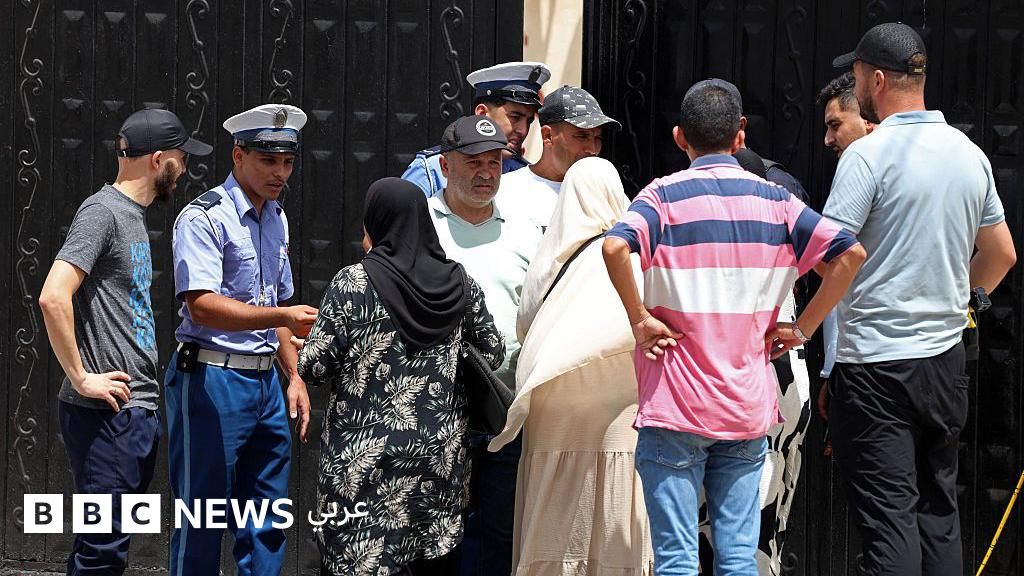
Image caption: At the entrance of the orphanage in Algeria where a fire broke out, claiming the lives of 11 children.
Published 2 hours ago
Reading time: 5 minutes
The North African region has been witnessing an exceptional heatwave in recent days, caused by a powerful heat dome centered over the southwestern Mediterranean.
A heat dome is a strong high-pressure system that traps hot air in the lower layers of the atmosphere, limiting its ascent and the renewal of air masses, which leads to rising temperatures both day and night.
This dome is centered over Morocco, Algeria, Tunisia, and Libya, particularly in their eastern regions.
What happens to our bodies during heatwaves?
How does a 123-year-old air conditioning system help us deal with extreme temperatures today?
The heatwave is expected to peak over the weekend and continue until the middle of next week, with temperatures ranging between 45 and 48 degrees Celsius, amid warnings that it could approach 50 degrees in some areas.
Meteorological agencies in these countries have called on residents to follow safety guidelines, including drinking plenty of water, avoiding direct sunlight during peak hours, and steering clear of strenuous physical activity, while paying special attention to the elderly and those living alone.
Orphanage fire
In Algeria, 11 children died and 19 others were injured in a fire that broke out at dawn on Thursday at a child care facility in the Mohammadia municipality, east of the capital, Algiers, according to the Civil Protection authority. A number of the injured were transported to a hospital specializing in burns, while rescue teams evacuated five children with disabilities to a safe location.
The incident occurred while Algeria is experiencing a severe heatwave and a notable increase in the number of fires. Civil Protection recorded 932 fires across the country between July 8th and 15th, stating that it had managed to extinguish 913 of them by Wednesday morning. The fires included forests, brush, agricultural crops, and urban areas.
Authorities have not announced any link between the heatwave and the fire that broke out at the "Childhood and Social Assistance" institution, and an investigation is still underway to determine its causes.
Skip the most read and continue reading
Who deserves the title of the greatest player of all time: Messi, Maradona, or Pele?
The Iranian Revolutionary Guard says its strikes will continue until "calm returns" to the south of the country.
Andy Burnham: Why is the new British Prime Minister a mystery to everyone?
Messi and Lamine Yamal face-off: "A true miracle created by fate."
Skip the podcast and continue reading
Worth noting
An in-depth explanation of the most prominent events and topics, to help you understand the most important variables around you and their impact on your life.
Episodes
End of podcast
Civil Protection stated that it had mobilized more than 19,000 personnel and over 700 fire trucks and intervention vehicles to combat forest fires, in addition to six helicopters and 12 water-tanker aircraft.
Authorities evacuated residents from areas threatened by fires to safe places, particularly in the provinces of Bejaia, Guelma, Bouira, and Mila, according to the official Algeria Press Service.
On Wednesday, authorities announced the full restoration of electricity to 16 provinces, following a widespread outage caused by a technical failure at a major electrical facility in the Sidi Okba area in Biskra province. The outage coincided with a record rise in electricity consumption due to the heatwave.
The National Office of Meteorology warned of a severe heatwave in a number of provinces on Thursday and Friday, especially Bejaia and Jijel, with temperatures expected to reach or exceed 48 degrees Celsius.
Northern Algeria experiences frequent forest fires during the summer, while increasing heatwaves and drought contribute to raising the risk of their outbreak and spread. In recent years, massive fires have claimed the lives of dozens of people and destroyed thousands of hectares of forests and agricultural land, as well as a number of homes.
Skip Facebook post, 1
Do you allow the display of content from Facebook?
This page contains content from Facebook. Your consent is required before viewing any materials as they may include cookies and other technical tools. You may prefer to view the Facebook cookie policy and privacy policy before agreeing. To view the content, select "Agree and Continue."
Warning: The BBC is not responsible for the content of external sites.
End of Facebook post, 1
Users commented on the orphanage fire in Algeria, with many praying for mercy for the victims, especially the children, while others called for an investigation to uncover the causes of the fire and to hold those responsible for any negligence accountable.
One wrote: "From Morocco to Algeria, we share your grief. Oh Lord, these are Your children; they have no father but You and no mother but Your mercy," praying that God would include them in His grace and comfort the hearts of their loved ones.
Hassiba Arkam, from the Algerian province of Tizi Ouzou, also called for the cancellation of concerts scheduled in the province out of respect for the state of mourning, and demanded compensation for farmers affected by the fires.
A user named Hanaa, via her account @loulyh80, criticized the conditions of the orphanage where the fire broke out, and also criticized the complexity of adoption procedures for children deprived of family care in Algeria, considering that this limits their chances of moving to substitute families.
Frequent power outages in Tunisia
The severe heatwave in Tunisia pushed electricity consumption to record levels, leading to frequent power outages in a number of regions. The CEO of the Tunisian Company of Electricity and Gas said that consumption reached about 5,000 megawatts during peak hours, an increase of nearly 30 percent over normal averages, as a result of intensive use of air conditioners.
Local media reported the death of five people who relied on home oxygen devices that stopped working during the power outage, including a cancer patient. No official confirmation of this toll or a direct link between the deaths and the power outage has been issued yet.
The Tunisian Company of Electricity and Gas had announced the possibility of resorting to periodic power cuts on Thursday, July 16, 2026, in a number of areas of Greater Tunis, during the period from 1:00 PM to 4:00 PM in intermittent intervals, with the aim of easing pressure on the network and avoiding a total blackout.
Dozens of citizens gathered in front of one of the government company's offices in the center of the capital, Tunis, to protest against the frequent outages, and some said they caused damage to electricity meters and home appliances.
The electricity crisis coincided with ongoing disruptions in the distribution of drinking water in several parts of the country until Friday. However, water outages had begun before the recent electricity disruptions, amidst high demand during the heatwave and problems facing distribution networks.
Tips and sarcasm
Users on social media interacted with the heatwave, with some posting tips to reduce its risks, particularly the potential for fires to break out.
Kamel Al-Aboudi, from the city of Kairouan, wrote on Facebook calling for parking cars away from places prone to fires.
Skip Facebook post, 2
Do you allow the display of content from Facebook?
Original source: BBC Arabic

Comments (0)
Be the first to comment.