Europe.. and the Grip of Heat - Dr. Muhammad bin Abdulrahman Al-Bashr

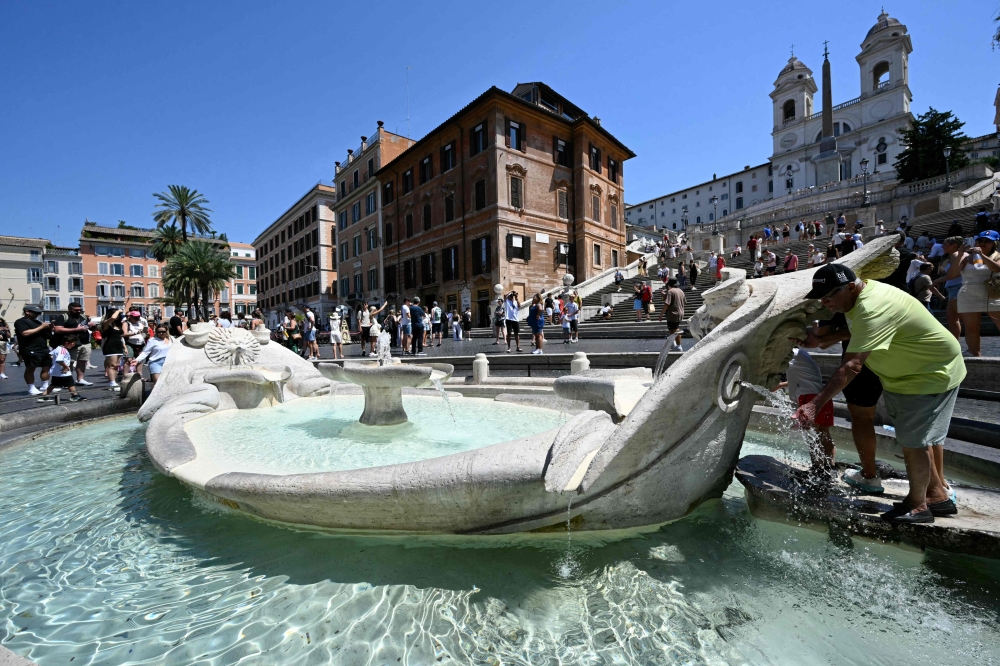
Europe has been under the grip of severe heat for 11 days, during which 1,300 people died. In France alone, 109 people died within 24 hours. Spain also experienced a similar heat wave to that which hit France, with 350 people dying in a short period. The Spanish government announced that 1,000 people have died from heat-related causes and noted that the first half of this year has been the hottest on record. In Hungary, a village lost its water supply due to the heat. In Italy, tourists crowded under misting devices to relieve the summer heat—undoubtedly an unprecedented situation. Building designs in Europe were not equipped to handle such temperatures, which reached 44 degrees Celsius in some areas. People rushed to throw themselves into rivers, with authorities in some countries allowing this in limited zones, resulting in more than 90 drownings in France alone. This unprecedented event, some analysts say, would not have occurred without global climate change resulting from humans' poor use of the raw materials and intellect that God granted them, enabling them to utilize these materials for various aspects of life. This facilitated different ways of living, and humanity has long been content with its achievements, expanding this path year after year until, after many years and numerous studies, it became clear that the excessive use of these divine gifts had unknowingly impacted the planet they inhabit.
Later, humans became aware and realized that something was happening on the Earth's surface. They began researching until they discovered that there are emissions of gases that affect the atmosphere, which protects the Earth from upper radiation. The discussion about that impact, how, and its extent is well known and has been addressed by scientists and writers in all forums. Humans in the past two centuries, up to the present, have been delighted with their great achievements—truly great. They can travel by plane through the sky to cross from east to west in a few hours in a comfortable vehicle. At sea, they travel by ship and transport their goods in a few weeks with greater efficiency than in times past. Everything in their lives has been made easy: communication, entertainment, food preparation, and more. They have skillfully doubled their food production and provided clean water. Therefore, they do not want to disturb their happiness by seriously considering the negative impact of their excessive use of resources. But what they feared has happened: the Earth's temperature has risen faster than imagined, and the number of deaths due to heat or heat-related causes has increased.
Humans have realized that changing their lifestyle has a cost. Increased consumption of meat means a need for more cattle, chickens, and goats, and the resulting waste increases emissions of ammonia gas, which plays an important role in affecting the atmosphere. The increase in factories and various means of transportation also contribute to that impact. However, today they have managed to reduce their negative impact by improving efficiency.
The solution remains in the hands of politicians, who can make global consensus decisions to reach specific standards, especially those countries with the highest emissions such as the United States, China, India, and Europe. They also have the political power to make global decisions if they wish. However, party conflicts, economic considerations, high production costs, and competitiveness make domestic priorities take precedence over global interests, even if the negative impact harms everyone, including those influential countries. Strangely, the world has moved to diligently set certain rules, but later retreated due to internal and external political strife.
It seems that humans continue on their path of disregard, blaming a particular element for political reasons, until the negative impact of gas emissions reaches a critical level that forces them to make the decision they have been dodging left and right and turning a blind eye to. But that long path will come at a great human, economic, and perhaps political cost.
Original source: Al-Jazirah


Comments (0)
Be the first to comment.