Heatwave continues to sweep Europe, WHO links it to around 1,300 deaths

According to the WHO director, the unprecedented heatwave that Europe has been experiencing since the start of summer may be responsible for hundreds of additional deaths.
Heatwave continues to sweep Europe, WHO links it to more than 1,300 deaths
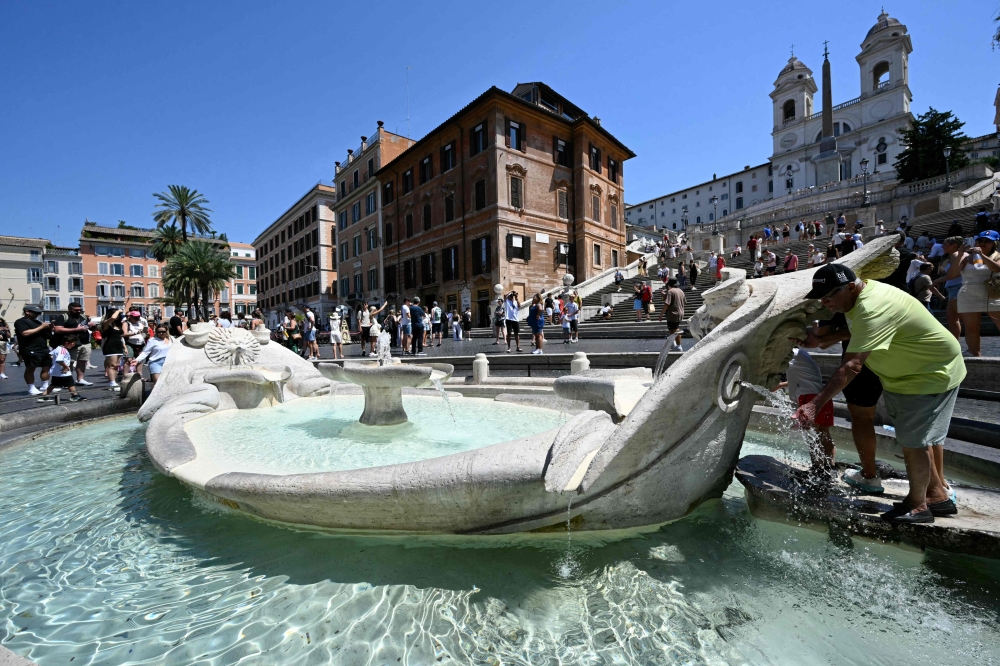
Image caption, Poland recorded a record temperature of 40.5 degrees on Sunday as the heatwave moves east
Article Information
Author, Neil Murphy
Published June 29, 2026
Reading time: 3 minutes
The World Health Organization Director-General Tedros Adhanom Ghebreyesus said that the unprecedented heatwave that Europe has been experiencing since the start of summer may be responsible for hundreds of deaths.
New record temperatures were recorded across the continent on Sunday, including in Germany, Poland and the Czech Republic, as the severe heatwave continues to extend eastwards.
In a post on X, the WHO director mentioned more than 1,300 deaths have been recorded since June 21 "due to high temperatures in Europe".
He said European homes, workplaces and schools "were not designed to withstand such conditions".
Even young and healthy people are advised to avoid running and excessive alcohol consumption during heatwaves
Climate emergency in Europe, what about the Arab countries' summer?
On Sunday morning, the French Ministry of Health announced that the number of deaths in the country had increased by about a thousand cases compared to the usual level since Wednesday.
According to the ministry, most of the additional deaths were recorded among those over 65, after a 40 percent increase in the number of deaths at home.
Tedros warned that "Europe is the fastest warming continent on Earth, with temperatures rising at twice the global average."
He added that millions of people in Europe "are currently living under extreme heat, with hundreds dead, schools closed, and power grids under severe strain."
Skip most read and continue reading
Do you really need to avoid gluten?
Ukraine strikes major oil station in Russian city of Saint Petersburg
"A meal I ate during my vacation ended up infecting me with 38 parasites in my brain"
Hossam Abu Safiya: Warnings of life-threatening risk after repeated assaults inside Israeli prison
Image caption, People take refuge at a fountain in front of Berlin Cathedral to alleviate the ongoing heatwave
Skip podcast and continue reading
Worth paying attention
In-depth explanation of the most important events and topics, to help you understand the key changes around you and their impact on your life
Episodes
Podcast end
Preliminary readings showed that Germany recorded its highest temperature in history for the third consecutive day on Sunday, reaching 41.7 degrees Celsius in the east of the country.
At the Kuchin monitoring station, near the Polish border in eastern Brandenburg, a temperature of 41.7 degrees Celsius was recorded around 4 p.m. local time.
In the Czech Republic, the country recorded a second new temperature record in two days, reaching 41.1 degrees Celsius in Doksany, north of Prague, according to the Czech Hydrometeorological Institute.
The institute expected temperatures to peak on Sunday, with storms forecast in western regions later.
Poland recorded a new record of 40.5 degrees Celsius in the city of Slubice in the west of the country, according to AFP quoting the National Institute of Meteorology.
Tedros affirmed that climate change is behind these extreme weather conditions, warning that Europe is experiencing temperature rises at "twice the global average."
He added, "Due to climate change and global warming, heatwaves that were once considered once-in-a-generation events are now occurring almost every year."
He called on European countries to "implement health action plans to deal with heatwaves" as part of efforts to protect people's health in the face of climate change.
These extreme weather conditions have prompted European authorities to take exceptional measures to reduce heat-related illnesses.
In the Netherlands, the "Defcon 1" music festival was canceled on Thursday after an unprecedented red-level warning due to extreme heat.
In Paris, authorities imposed a ban on alcohol consumption in public places, and the Pride march was also canceled, in an attempt to ease pressure on emergency services.
The ban began at noon on Friday local time, ahead of France's World Cup match against Norway, and lasted until Sunday morning.
French Interior Minister Laurent Nunez also reported that at least 74 people have died by drowning since the start of the heatwave.
He noted that most of the deaths occurred "largely in unmonitored water bodies: rivers, lakes and ponds especially," in statements to Le Parisien newspaper on Saturday.
The record heatwave in June has been attributed to a phenomenon known as a 'heat dome'.
This weather pattern occurs when air descends from the upper atmosphere, compresses and heats up upon reaching the Earth's surface.
This descending air also leads to dryness, preventing cloud formation, thus allowing strong sunlight to heat the ground further.
Skip short clips and continue reading
Short clips
Short clips end
Climate change and misinformation: How the environmental issue turned into a dispute over truth? November 9, 2024
The black cat 'Flo' warns us of coming disasters May 20, 2025
Historic decision: International Court of Justice gives green light for countries to sue each other over climate change damages July 24, 2025
Original source: BBC Arabic


Comments (0)
Be the first to comment.