5 Challenges Facing Andy Burnham as British Prime Minister
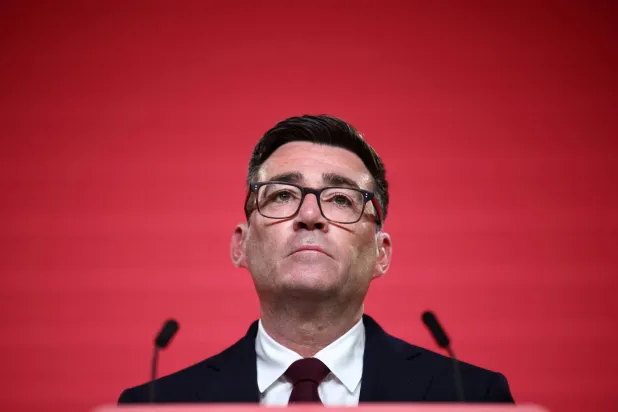
Andy Burnham, who is preparing to take over as British Prime Minister on Monday, will face a set of challenges when he becomes the seventh Prime Minister of the United Kingdom in a decade.
The former Mayor of Greater Manchester received overwhelming support on Friday to take over the leadership of the Labour Party, following Keir Starmer's resignation last month.
Observers say Burnham must now address many of the issues that led to the downfall of several of his predecessors, according to AFP.
Cost of Living
Priority will be given to boosting the economy and improving living standards for voters angered by rising energy and food prices since the outbreak of the Russian-Ukrainian war.
Burnham will face limited room for maneuver amid slowing economic growth, rising public debt, and strict fiscal rules requiring him to balance government spending and tax revenues.
In a speech on Friday, Burnham expressed his desire 'to reach a more comfortable standard of living for our country.'
He defended the idea of transferring more powers to other cities as a tool for achieving growth.
0 seconds of 0 secondsVolume 90%
Press shift question mark to access a list of keyboard shortcuts
00:00
00:00
00:00
Philip McCann of the Productivity Institute commented, saying: 'It is not just about driving local growth, but about transforming these regions into engines of national growth.'
Burnham announced he would support small businesses, seek to revive the industrial sector, and enhance state control over water, transport, and energy sectors.
The Financial Times reported that he might ease restrictions on oil and gas exploration in the North Sea to reduce energy bills.
His choice of finance minister—which he has not yet announced—may define his economic agenda and whether it leans left or adopts a more centrist approach.
Care Services Bill
The high cost of social care poses another challenge for Burnham, who acknowledged the need to reduce it.
Starmer faced angry reactions from the public and his party over welfare system reforms, including cuts to winter fuel payments for the elderly.
Starmer was forced to backtrack on those measures, which further reduced his popularity.
Burnham, who belongs to what is known within the party as the 'moderate left,' will face pressure to resist welfare cuts.
He also pledged to 'reform' underfunded sectors such as care services, which he attempted to radically overhaul when he was Health Secretary in 2009.
On Friday, Burnham, whose father suffers from Alzheimer's, stated that he is 'ready to face the challenges' to make changes, adding: 'The system is broken.'
Defense
Burnham will need to fill a gap of 4.7 billion pounds ($6.3 billion) over four years in the defense investment plan.
Last month, Starmer unveiled the plan after repeatedly delaying its announcement. But the task of implementing it will fall to Burnham.
Burnham is also likely to face pressure from within and from allies, including the United States, to further increase defense spending and meet NATO's goal of allocating 3.5% of GDP to defense by 2035.
He has previously stated that he will take 'responsibility' for funding the defense plan and will not compromise 'on anything' in this regard.
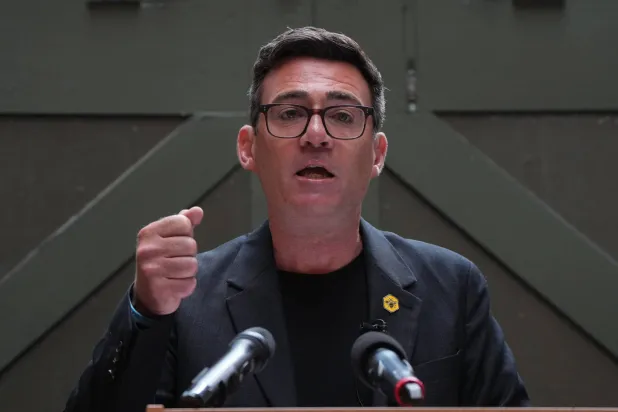
Andy Burnham speaks after winning the leadership of the British Labour Party ahead of becoming Prime Minister (dpa)
Labour Party Popularity
One of the main tasks is to curb the growing popularity of the far-right 'Reform UK' party led by Nigel Farage, known for its anti-immigration stance.
Labour is seeing a decline in popularity in favor of the Green Party and the left-wing Reform Party, both of which made significant gains in local elections earlier this year, increasing pressure on Starmer to step aside for a politician capable of countering Reform's success.
In his Friday speech, Burnham pledged to chart a new political course that 'clearly reflects Labour's identity,' away from the approach of the two parties on the political fringe. He said: 'We win by being ourselves.' He added: 'We will not seek to compete with the Green Party on its environmental agenda, or with Reform on its slogans, and we will not repeat what we did in the past when we adopted many Conservative policies.'
Tony Travers, professor of politics at the London School of Economics, said this might represent a different approach.
Travers told AFP: 'This suggests that Labour under Burnham will seek to win votes from Reform and Green voters through a different program.'
Foreign Policy
Travers added: 'Regarding international affairs, the most prominent issue is how to deal with Donald Trump,' noting that Starmer had a relatively friendly relationship with the US president until the outbreak of war between the US and Iran.
Alongside seeking common ground with the volatile US president who described Burnham as 'very liberal,' the latter will find himself facing the challenge of dealing with the ongoing wars in Ukraine and the Middle East.
Burnham indicated that he would not stray far from the foreign policy pursued by Starmer, which is generally well-regarded, while maintaining close ties with NATO members and other allies.
He wrote in The Times this month: 'Our relationship with the United States will remain critically important as our most important defense and security ally, and Britain's support for Ukraine will not waver.'
Read also
Original source: Asharq Al-Awsat


Comments (0)
Be the first to comment.