Eggs Spark Widespread Controversy in Indian Schools
Eggs Spark Widespread Controversy in Indian Schools
July 4, 2026 - 14:54 | Last updated July 4, 2026 - 14:54
Follow Okaz channel on WhatsApp
Mohammad Siddiq
A decision by the government of the Indian state of West Bengal to replace eggs with plant-based alternatives in some school meals has sparked widespread controversy, amid accusations of prioritizing religious considerations over the nutritional needs of millions of children, while authorities insist that vegetarian meals can provide the same nutritional value.
The state government plans to implement a pilot project in several schools under the Kolkata Municipal Corporation, assigning meal preparation to Anamitra, an affiliate of the International Society for Krishna Consciousness (ISKCON), which only offers vegetarian meals.
A program benefiting millions of children
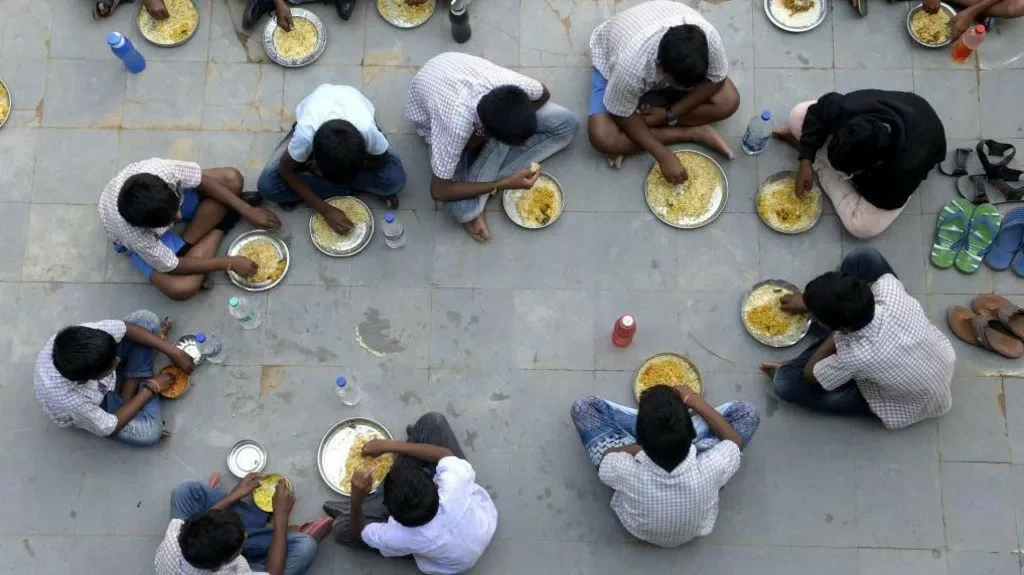
The free school meal program, known as the 'Mid-Day Meal,' is one of the largest school nutrition programs in the world, providing cooked meals to over 110 million students in government and government-aided schools.
Millions of children from low-income families rely on these meals as their most nutritious, and sometimes only, daily meal.
Accusations of imposing vegetarianism
The decision drew criticism from opposition parties and nutrition experts, who argued that excluding eggs from school meals is driven more by religious and ideological considerations than health reasons.
The Trinamool Congress party, which ruled the state until last May, accused the new government led by the Bharatiya Janata Party (BJP) of attempting to 'impose a vegetarian diet' on students.
Critics also expressed doubts about children's acceptance of alternatives such as soybeans or red beans, proposed by the organization, stating they are not a staple of the local diet in West Bengal.
Government defends the decision
For his part, state Chief Minister Suvendu Adhikari asserted that the project aims to provide 'good and pure food' to students, denying that the decision was motivated by ideological or religious reasons.
ISKCON also emphasized that its vegetarian meals provide the proteins and vitamins necessary for children's growth, noting that it already provides school meals to about one million students in 16 Indian states.
Organization officials added that the menus are carefully prepared to ensure they meet children's nutritional needs.
Experts: Eggs more efficient and cheaper
Nutrition experts consider eggs to be one of the best and cheapest sources of complete protein, containing all nine essential amino acids, as well as vitamins D and B12 crucial for children's growth.
Nutritionist Vaariha Chanam said that alternatives like cheese may provide similar nutritional value but are much more expensive, making their regular provision in government programs difficult.
In contrast, doctors warned that excluding eggs without providing nutritionally equivalent alternatives could affect children's growth, and weaken immunity and learning abilities in the long run.
Calls to give students freedom of choice
Amid the division, several politicians and teachers called for a compromise solution that gives students the freedom to choose between eggs and plant-based alternatives.
This system is already in place in some states, such as Bihar, where willing students receive an egg weekly, while those who do not eat eggs are given a banana instead.
The project in West Bengal is still under study, and its implementation mechanism or possible expansion to other schools has not yet been finalized.
Indian schools
Original source: Okaz





Comments (0)
Be the first to comment.