Algeria's Elections… What Comes After the Announcement of Final Results?
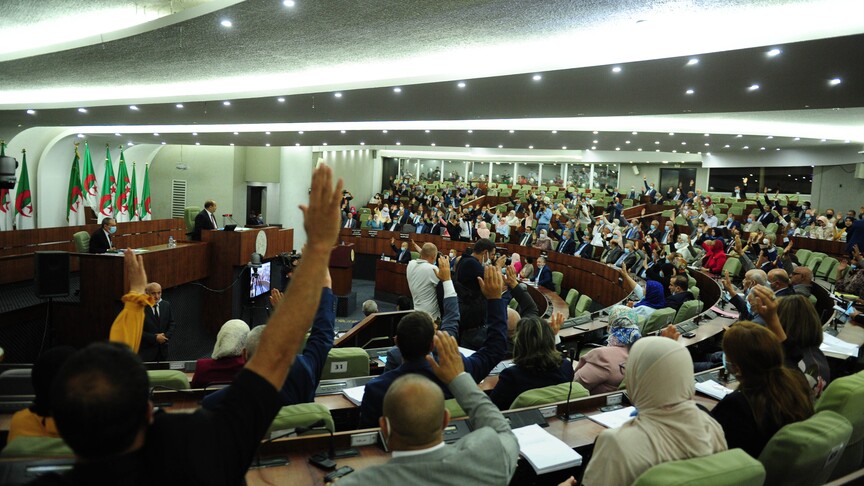
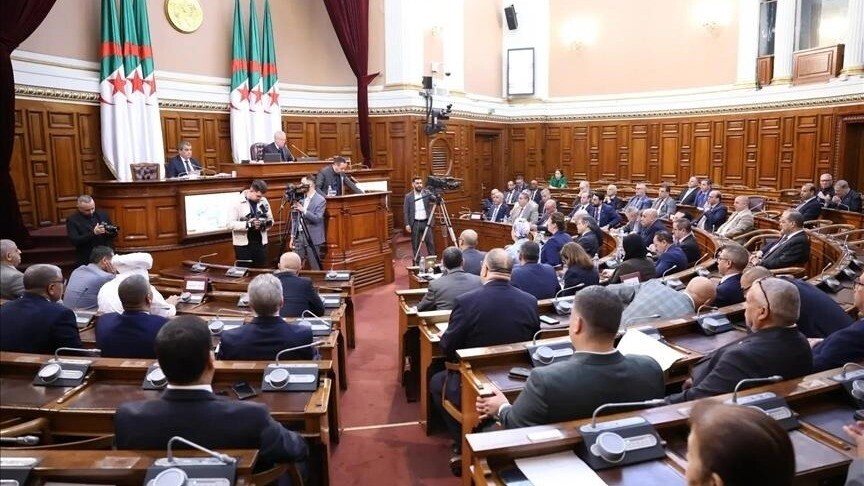
The Constitutional Court's announcement of the final results, and the completion of the political composition within the National People's Assembly, moves the country's political scene to a crucial point regarding the formation of the government, which is subject to clear constitutional rules along with political custom.
ALGIERS / Abbas Mimouni / Anadolu
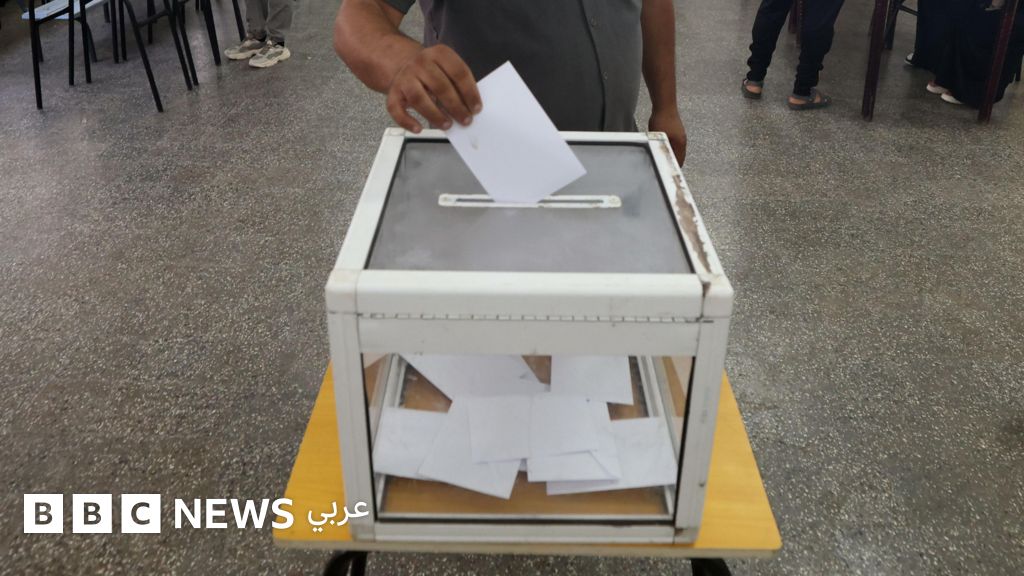
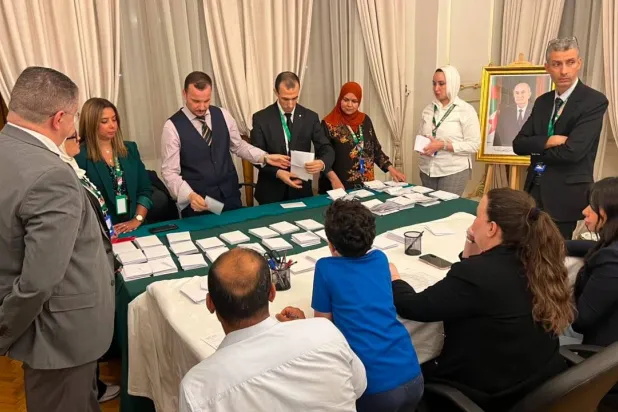
With the Constitutional Court announcing the final results of the parliamentary elections in Algeria on Saturday, the curtain falls on the final stages of the electoral process for the poll held on July 2, and attention now turns to the shape of the next government.
Pending that, and in completion of legal procedures, the final results announced by the Constitutional Court are considered 'not subject to appeal' and will be published in the Official Gazette after being forwarded to the current President of the National People's Assembly (the lower house of parliament) Ibrahim Boughali, and the head of the Independent National Election Authority Karim Khalfan.
This step is the final legal procedure before summoning all winners of the parliamentary elections to a session to inaugurate the new National People's Assembly within 15 days.
*A Majority Supporting President Tebboune
Parties supporting the program of President Abdelmadjid Tebboune topped the three leading positions: the National Liberation Front party with 91 seats, the National Democratic Rally party with 74 seats, and the Future Front with 56 seats, according to the Constitutional Court's announcement.
Since the majority in a 407-seat assembly is defined as 204 seats according to the (50%+1) rule, the total seats obtained by these pro-Tebboune parties, which participated in activating popular rallies in the 2024 presidential election which he won for a second term, equals 221 seats.
Added to this is the El-Ahrar bloc with 33 seats, which declared in the previous parliamentary elections its support for President Tebboune's program, along with the National Construction Movement (Islamist) with 40 seats.
The only opposition party that can form a parliamentary bloc within the assembly is the Movement of Society for Peace (largest Islamist party) with 43 seats.
While the remaining opposition parties, three in number, cannot form a parliamentary bloc, which requires at least 15 seats.
The Socialist Forces Front (leftist) obtained 12 seats, while the Rally for Culture and Democracy (secular) won 4 seats, and the Workers' Party (radical left) got 3 seats.
Even parties that won fewer than 10 or 5 seats are known for their supportive positions towards President Abdelmadjid Tebboune.
Politically, the Algerian president enjoys an absolute majority within the National People's Assembly and in both chambers of parliament combined, granting him full support in legislative and oversight work as well as in parliamentary diplomacy.
*Formation of the Government
The Constitutional Court's announcement of the final results and the completion of the political composition within the National People's Assembly moves the country's political scene to a crucial point regarding the formation of the government, which is subject to clear constitutional rules along with political custom.
In this regard, the country's constitution, drafted in 2020, distinguishes between two scenarios.
If the legislative elections result in a presidential majority, supporting the President of the Republic and his program, Article 103 stipulates: 'The government is led by a Prime Minister if the legislative elections result in a presidential majority.'
If the elections produce a parliamentary majority, the same article stipulates: 'The government is led by a Head of Government if the legislative elections result in a parliamentary majority.'
The same article adds: 'The government consists of the Prime Minister or the Head of Government, as the case may be, and the ministers who form it.'
Article 104 specifies the mechanism for appointing government members, stating: 'The President of the Republic appoints members of the government upon proposal by the Prime Minister or the Head of Government, as the case may be.'
In the case of a presidential majority, Article 105 clarifies the subsequent constitutional steps, stating: 'If the legislative elections result in a presidential majority, the President of the Republic appoints a Prime Minister and tasks him with proposing the formation of the government and preparing a work plan to implement the presidential program, which is submitted to the Council of Ministers.'
In the case of a parliamentary majority, meaning opposition control, Article 10 of the constitution states: 'The President of the Republic appoints the Head of Government from the parliamentary majority and tasks him with forming his government and preparing the program of the parliamentary majority.'
The same article adds: 'If the appointed Head of Government fails to form his government within thirty (30) days, the President of the Republic appoints a new Head of Government and tasks him with forming the government.'
*The President Holds the Power of Appointment
There is no article in the Algerian constitution that literally stipulates the resignation of the government after the announcement of the final results of the parliamentary elections and the clarification of the nature of the majority controlling the lower house of parliament.
However, there is a clear and explicit correlation between who leads the government and the election results, so it has become political custom to renew the composition of the government based on the new composition of the National People's Assembly.
The country's constitution grants the President of the Republic full authority to appoint the Prime Minister and the ministers proposed by the Prime Minister or even the Head of Government in the case of a parliamentary majority.
From this perspective, President Tebboune can renew confidence in Prime Minister Seifi Gherib to lead the next government, either publicly, or appoint a Prime Minister to lead the government.
President Tebboune can also order the government to continue its tasks (even temporarily), given the approaching start of the social season next September, and the intensive preparations that accompany it, which may impose stability on the same government team.
He can also carry out a partial government reshuffle, affecting sectors he deems in need of new impetus, based on an evaluation of ministers' performance.
*Political or Technocratic
After the President of the Republic settles on the identity of the Prime Minister, the way is usually paved for the formation of a government that can take the form of a 'political composition' consisting of competencies affiliated with the parties that won the most parliamentary seats. It can also be formed from technocrats who have no party affiliation.
In this context, President Tebboune can invite parties for consultations before forming the government, as he did in 2021, and the latter propose lists of their competencies they consider qualified to hold ministerial positions.
The constitution does not oblige him to organize these consultations, but allows him to appoint ministers based on the proposal of the Prime Minister, or those he deems suitable to hold certain ministerial portfolios.
After the 2021 parliamentary elections, President Tebboune formed a government composed of some ministers affiliated with parties that won parliamentary seats, but the majority were technocrat ministers.
After five years, and with the end of the current legislative term, the current government lacks ministers with political affiliation.
Original source: Anadolu Agency
Comments (0)
Be the first to comment.