US imposes naval blockade on Iranian ports, Trump says navigation is open to all 'except Iran'
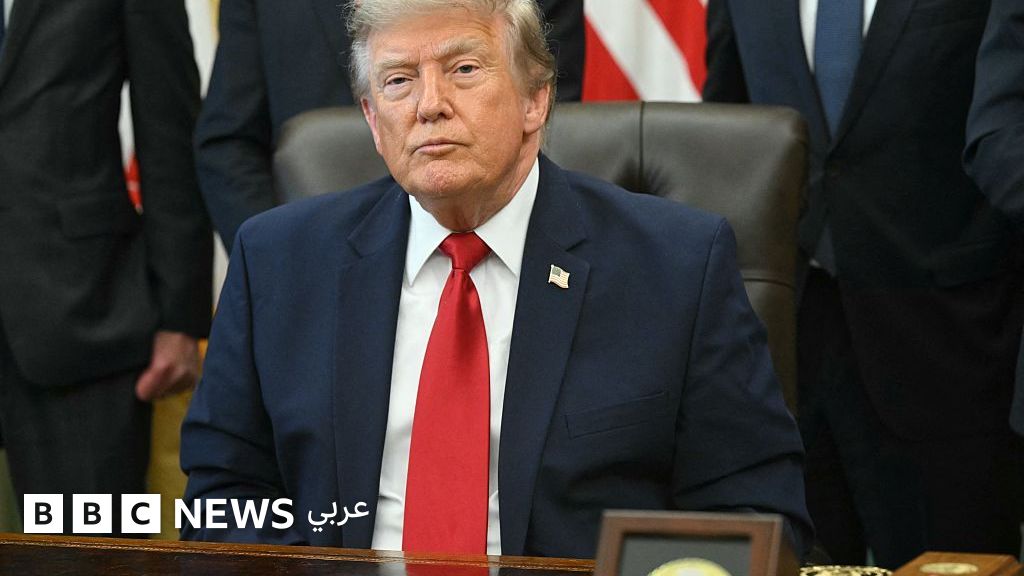
The United States imposes a blockade on Iranian ports on Tuesday at 8:00 PM GMT, after the US President announced he would maintain a 'total blockade' on ships heading to or from Iranian ports, and on ships carrying any cargo linked to Iran.
The US blockade on Iranian ports is nearing effect, and Trump says the strait is open to navigation 'except Iran'
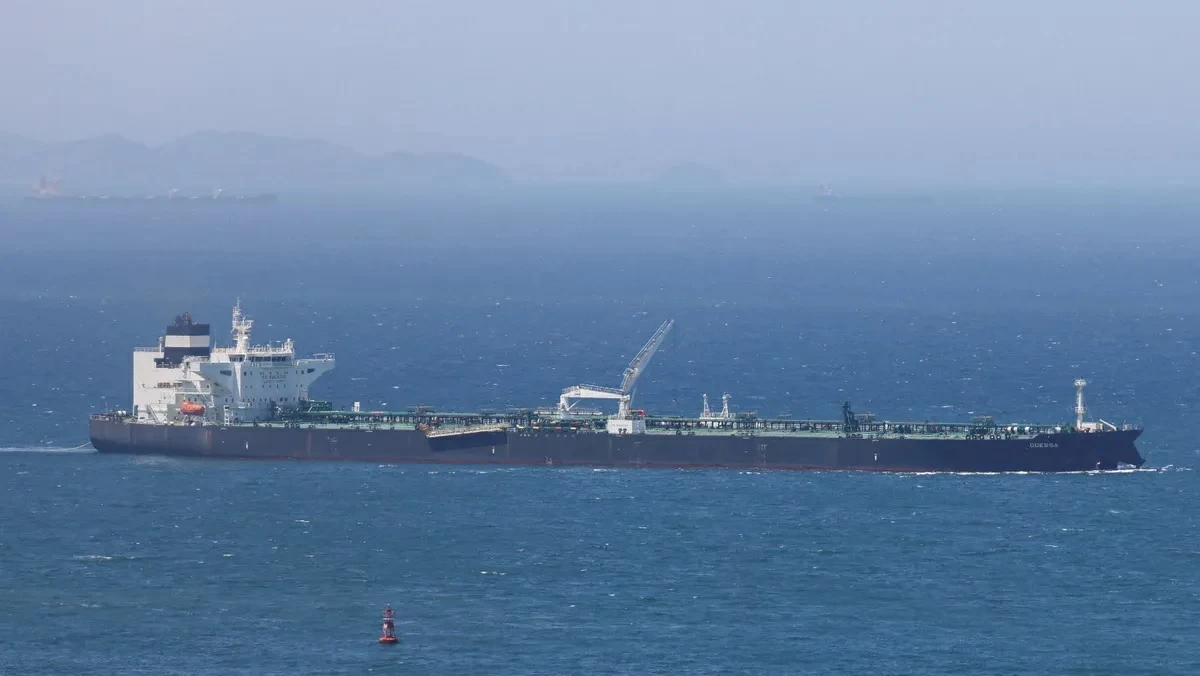
Image caption, A cargo ship anchored near the Strait of Hormuz off the eastern coast of the United Arab Emirates at Khor Fakkan
This report was published on July 14, 2026 at 16:00 GMT
This measure comes amid escalating tensions between Washington and Tehran over freedom of navigation in the Strait of Hormuz.
Last updated 27 minutes ago
Reading time: 5 minutes
The US blockade on Iranian ports, announced by President Donald Trump, begins at exactly 8:00 PM GMT.
In a post on Truth Social, Trump affirmed that the Strait of Hormuz is 'open to all ship traffic except Iran, due to its false, violent, and malicious leadership that is leading it toward a path of mass destruction,' in his words.
For his part, Iran's Revolutionary Guard said that as long as 'American evil' exists in the region, not a single drop of oil or gas will be exported, according to its statement.
The IRGC added that the US 'aggressions' will only delay the opening of the Strait of Hormuz.
During the previous blockade imposed last April, in response to Tehran's closure of the strait, Iran was unable to export 'a single barrel of oil,' according to Iran's chief negotiator Mohammad Baqer Qalibaf.
Trump had backtracked on his statements in which he said he wanted to collect a 20 percent fee on the value of shipments crossing the strait in exchange for its protection, which contradicts international law guaranteeing freedom of navigation.
Trump wrote a post on his Truth Social account, in which he said he decided 'to replace the 20 percent US compensation fees with trade and investment agreements that various Gulf states will conclude with the United States.'
Iran and the Strait of Hormuz: What do past experiences say about the effectiveness of a naval blockade?
What is a naval blockade? And how can it be applied in the Strait of Hormuz?
He added in his post: 'These investments will be enormous, but at the same time they will bring exceptional benefits to them and their future.'
Skip most read and continue reading
World Cup: Oyarzabal scores Spain's opening goal from the penalty spot
'How did Israel recruit former Iranian President Mahmoud Ahmadinejad?' - New York Times
Houthis target Abha airport and warn against flying in Saudi airspace
Why do mosquitoes bite some people more than others?
Skip podcast and continue reading
Worth attention
In-depth explanation of key events and topics, to help you understand the most important changes around you and their impact on your life
Episodes
Podcast end
Tehran had previously stated its desire to impose fees on ships crossing the Strait of Hormuz.
The Iranian parliament began studying a draft law related to the strait, without revealing its details.
China called for reopening the strait and respecting the 'rights of the littoral states.'
Iran had effectively closed the Strait of Hormuz, the vital maritime corridor through which a fifth of global crude oil production passed, after the US and Israel launched attacks against it on February 28.
The closure gradually began to be lifted after the two parties signed a memorandum of understanding on June 17, which included several provisions, most notably a ceasefire on all fronts, reopening the Strait of Hormuz, and conducting negotiations aimed at reaching a final agreement within a renewable 60-day period.
However, confrontations renewed last Tuesday, following attacks on ships in the Strait of Hormuz attributed to Tehran.
Confrontations resumed at an unprecedented pace for weeks, prompting Trump to repeatedly say that the ceasefire 'ended,' leading to the collapse of the memorandum of understanding.
However, the attacks on Tuesday targeting ships trying to cross the Strait of Hormuz led to renewed confrontations at an unprecedented pace in weeks, leading Trump to say that the ceasefire had ended.
Image caption, Some Iranians said their country would not be affected by the US blockade of Iranian ports, while others said the blockade would directly target vital economic arteries.
How did the Iranian public receive the blockade decision?
The new US decision reimposing a blockade on Iranian ports brings back to the forefront the issue of sanctions and their impact on trade. The program 'Middle East Diaries,' broadcast on BBC Arabic Radio, spoke to Iranian citizens about the repercussions of this decision on prices of goods and basic needs.
An Iranian citizen told the BBC: 'I think the current situation portends an escalation of war, not control of the conflict and a ceasefire. I think the third war has begun. Only Pakistan is left for mediation, and I doubt it can do anything this time. My impression is that in the coming days, with the start of the blockade of Iranian ports, the scope of war will widen.'
Another said that the US is using the blockade as a tool to pressure Iran, 'which may affect its oil exports, but Iran, due to the diversity of its trade routes, is able to limit the impact of these pressures.'
A third said, 'The naval blockade on Iran will lead to severe structural damage, a sharp rise in the exchange rate, and a crisis in the supply chain of basic goods. Since most of Iran's trade is conducted through its southern ports, blocking them will directly target vital economic arteries and reduce foreign currency revenues from oil sales, which are the main source of the government budget.'
New attacks on Kuwait
Image caption, An image dated March 25, 2026, of smoke from an attack by an Iranian drone on a fuel depot at Kuwait International Airport.
In a related context, Kuwait said it was dealing with 'hostile aerial targets' in its airspace.
The Kuwaiti army stated on its X account that any sounds of explosions heard are the result of air defense systems intercepting hostile attacks.
Meanwhile, the International Maritime Organization, a UN agency, said at least two people were killed and others injured in attacks targeting oil tankers in the Strait of Hormuz overnight.
Earlier, both the UAE and Delhi reported the death of an Indian sailor in strikes launched by Tehran.
The IMO reported the death of a second sailor on the same ship ('Al-Bahiya'); the ship was located about 13 nautical miles off the coast of Oman.
The maritime authority stated in a statement to the BBC that it is working with authorities 'to ascertain the full circumstances' and called for an end to the 'cycle of escalation.'
The IMO says 17 sailors have died as a result of hostilities in the strait since the start of the war between the US and Iran.
Image caption, Explosions at an unknown location, as part of what US Central Command (CENTCOM) says are strikes on Iran
Washington had launched new strikes on Iran on Tuesday, hours before the deadline set by Washington to reimpose a naval blockade on its ports, although President Donald Trump did not rule out the possibility of reaching a deal with it.
Original source: BBC Arabic


Comments (0)
Be the first to comment.