America Intensifies Strikes on Iran's Military Belt at Hormuz
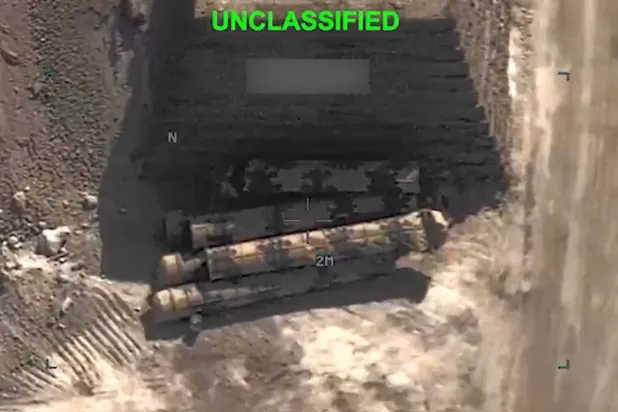
The United States has intensified its strikes on the Iranian military belt overlooking the Strait of Hormuz, as part of a campaign aimed at deterring attacks on ships and weakening Tehran's ability to threaten navigation.
The United States intensified its strikes on the Iranian military belt overlooking the Strait of Hormuz and the Gulf of Oman on the tenth night of the ongoing raids, as part of a campaign that Washington said aims to deter attacks on commercial ships and weaken Tehran's ability to threaten the maritime corridor.
The US Central Command (CENTCOM) said in a statement that the latest round lasted about five hours and targeted 'Iranian military command centers, naval capabilities, missile and drone launch sites, and air defense systems.'
CENTCOM added that the goal of the operations is to 'undermine Iran's ability to continue attacking commercial ships transiting the Strait of Hormuz,' and published footage it said shows strikes on sites inside Iran, without specifying the names of the targeted facilities or the extent of the damage. The command announced after the round ended early Tuesday that US forces remain on alert and ready to hold Iran accountable for what it described as 'unprovoked aggression' against civilian sailors trying to cross the strait.
The strikes coincided with the sound of explosions heard in several Iranian provinces. Official media reported explosions in the provinces of Hormozgan, Fars, Kerman, Sistan and Baluchestan in the south, and Ilam in the west, while Iranian reports mentioned sounds of explosions near the cities of Bandar Abbas, Sirik, Chabahar, and Konarak, in addition to the mountainous areas around Shiraz.
The semi-official Mehr news agency reported at least two explosions in Isfahan province in central Iran, but the governor of the province denied attacks, saying authorities are investigating the sources of the sounds.
US soldiers aboard the amphibious assault ship USS Boxer support air operations in the Arabian Sea (CENTCOM)
The distribution of sites where explosions were heard shows that the US round focused mainly on the southern and southeastern provinces, extending from areas near the Strait of Hormuz to the coast of the Gulf of Oman, with reports of strikes on more inland locations. Bandar Abbas, the capital of Hormozgan province, lies on the Iranian coast opposite the northern entrance to the Strait of Hormuz.
Sirik is in the same province, east of the strait on the Gulf of Oman coast, while Chabahar and Konarak are in Sistan and Baluchestan province, along the Iranian coast extending to the Pakistani border. Shiraz, the capital of Fars province, is inland to the northwest of the strait.
The nature of the sites bombed in their vicinity remains unclear, and Iranian authorities have not issued a detailed tally of losses from the raids. The previous night's US raids had extended to other areas, including Ahvaz in the southwest and Tabriz in northwestern Iran, but the new operations refocused on the southern coast and capabilities that Washington says are used to target ships in the strait.
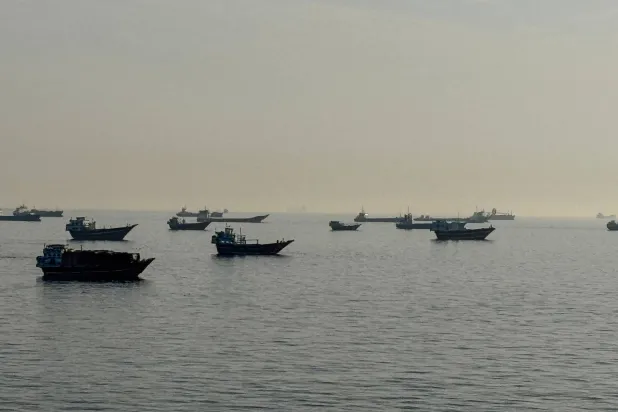
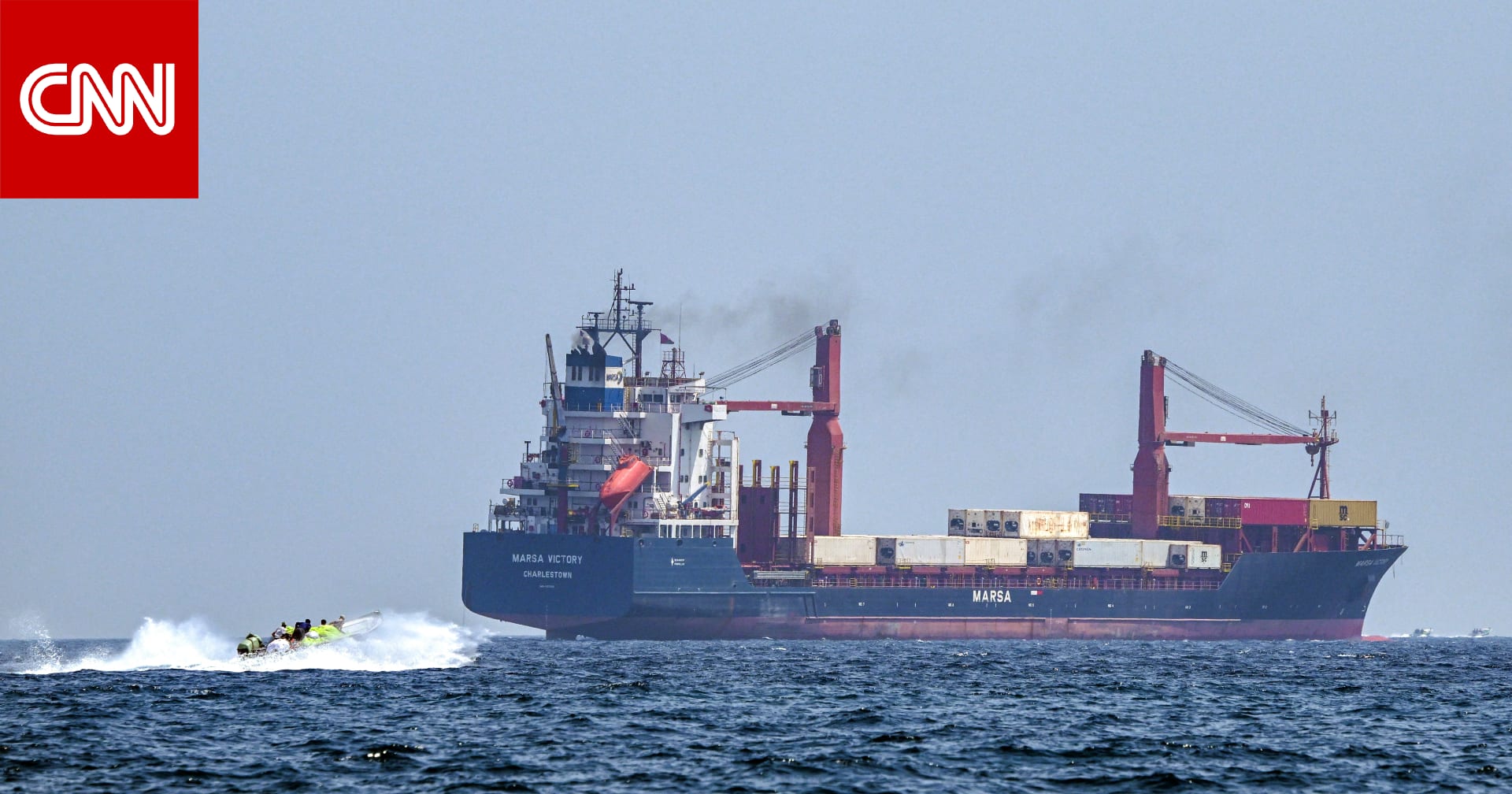
Ten consecutive nights of strikes have not ended attacks on shipping. A tanker was attacked early Tuesday off the Omani coast, forcing its crew to abandon it, while Iran's Islamic Revolutionary Guard Corps (IRGC) claimed responsibility for attacking ships in the waterway. Shipping traffic in the Strait of Hormuz has dropped to very low levels.
Lloyd's List Intelligence said only three ships crossed the strait on Sunday, while Kepler data showed four ships carrying basic commodities crossed on Monday, compared to seven the previous day. Kepler recorded no transits of crude oil tankers or LNG carriers on Monday, indicating that shipping companies continue to avoid the waterway, which before the war carried about one-fifth of global crude oil and natural gas trade.
CENTCOM said US forces diverted seven commercial ships and disabled another until July 20.
Iranian counterattacks
In response to the US raids, Iranian forces announced a series of attacks on sites and 'American bases' in Kuwait, Bahrain, and Jordan.
The Iranian army said it launched surface-to-surface missiles at US HIMARS systems at the Arifjan base, south of Kuwait City.
It added that targeting the systems aims to damage US offensive and defensive capabilities and reduce its missile capability.
The army also announced attacking three US sites in Kuwait with suicide drones, saying the targets included the Arifjan base, a helicopter parking area in Camp Al-Adere, a soldier housing building at Ahmed Al Jaber Air Base, as well as missile defense systems, radars, and satellite communication receiving systems in Kuwait.
In Bahrain, the IRGC announced targeting two air defense systems and a radar station at two US sites.
0 seconds of 0 secondsVolume 90%
Press shift question mark to access a list of keyboard shortcuts
00:00 00:00 00:00
An IRGC statement said the attacks targeted a radar system and air defense in Muharraq, in addition to a Patriot system in Riffa. It threatened to launch 'more decisive and powerful' waves of missile and drone attacks.
Bahrain sounded missile warning sirens on Tuesday afternoon, coinciding with the announced Iranian attack on the island, which hosts the US Fifth Fleet headquarters.
In a separate statement, the IRGC claimed to have targeted infrastructure belonging to US company Amazon in Bahrain. No official confirmation from Bahraini authorities was issued, and Reuters said it could not independently verify the incident. In Jordan, the army said it intercepted five drones launched from Iran overnight Monday and Tuesday morning, confirming no casualties or material damage.
Earlier, Jordan announced intercepting three Iranian missiles. That came after the IRGC announced attacking a site where US forces are deployed in the Rubkan area of northern Jordan, claiming casualties in the attack, without Jordanian or American confirmation.
Nearly 100 US casualties
US Defense Department spokesman Sean Parnell said that about 100 US service members have been wounded since Washington resumed strikes on Iran on July 7, explaining that 96 percent of them have returned to duty.
He added that the 'vast majority' of injuries were mild concussions. His statement came in response to a New York Times report that said the Defense Department withheld information about military casualties from Iranian attacks.
Parnell denied hiding casualty data, but the Defense Casualty Analysis System, the military record dedicated to reporting deaths and injuries in conflicts, had not been updated as of Monday evening to include the latest attacks. The number of US troops killed since the war began on February 28 has risen to 17.
The army revealed the identities of two soldiers killed in attacks in Jordan, while a third soldier remains missing. The army also announced the death of another soldier in Iraq on Saturday during what it described as a 'controlled detonation' of a previously downed Iranian drone. US President Donald Trump vowed a multiplied response to the soldiers' deaths, writing on his social media platform: 'Every time Iran kills a US soldier, they will pay a multiplied price.'
Original source: Asharq Al-Awsat


Comments (0)
Be the first to comment.