Ankara Welcomes ASEAN's Decision to Accept Turkey as a Dialogue Partner
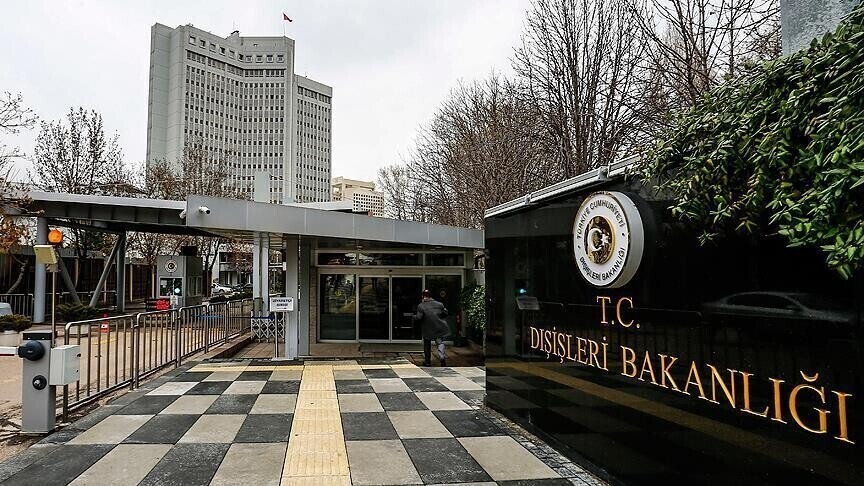
Turkish Foreign Ministry considers the step a turning point in relations between the two sides
Istanbul / Anadolu
Ankara welcomed Tuesday the decision of the Association of Southeast Asian Nations (ASEAN) to accept Turkey as a dialogue partner, considering it an important turning point in relations between the two sides.
The Turkish Foreign Ministry, in a statement, thanked the Philippines, the rotating chair of the association, as well as the General Secretariat and member states, in appreciation of their will that contributed to the decision during the foreign ministers' meeting held in Manila between July 18 and 23.
The ministry said: 'We welcome the decision taken during the 59th ASEAN Foreign Ministers' Meeting in the Philippine capital Manila regarding the establishment of a dialogue partnership between Turkey and ASEAN.'
The statement affirmed that strategic cooperation with ASEAN will continue to develop on the basis of mutual interests and shared prosperity.
It added: 'We will continue, within the strategic vision of the 'Re-Asia' initiative, to deepen our institutional cooperation with the Asia-Pacific region with full determination.'
Turkey had submitted a formal application in 2024 to obtain the status of 'Dialogue Partner' with ASEAN.
During the 47th Summit in October 2025 in Kuala Lumpur chaired by Malaysia, member states agreed in principle to grant Turkey dialogue partner status, but formalization was linked to the completion of ASEAN's decision regarding the freeze on accepting new dialogue partners.
Upgrading Turkey's status from 'Sectoral Dialogue Partner' to 'Dialogue Partner' would allow deepening the project-based relations model with member states within the framework of institutional cooperation and consultation mechanisms, and enhance Turkey's more effective participation in regional political and security platforms, as well as strengthening its strategic maneuverability in the Asian continent.
** Turkey-ASEAN Relations
Turkey laid the foundations of its institutional relations with ASEAN in 2010 by joining the Treaty of Amity and Cooperation in Southeast Asia, and then obtained the status of 'Sectoral Dialogue Partner' in 2017.
While trade and investments continue to form the main pillar of relations with Southeast Asia, Turkey also seeks to develop its relations with ASEAN and its member states in a multidimensional manner, including structured political dialogue, development cooperation, and academic and cultural interaction.
The volume of trade between Turkey and ASEAN, which includes about 690 million people and has an economy size of $3.95 trillion, rose from $6.5 billion in 2010 to $16.12 billion in 2025.
In this context, Malaysia, Vietnam, Indonesia, Thailand, and Singapore emerged as Turkey's main trading partners.
Cooperation between Turkey and ASEAN also continues to develop through concrete projects in agriculture, women's economic empowerment, disaster management, humanitarian mine action, maritime affairs, sustainable development, newborn health, and science and technology.
** Dialogue Partner Status with ASEAN
The 'Dialogue Partner' status with ASEAN is the highest form of institutional external partnerships that the association establishes with non-member states and international organizations, but it does not grant membership or voting rights in decision-making processes.
However, this status allows partners to regularly participate in summits and high-level consultative meetings, and provides them with a broader and more sustainable opportunity to participate in ASEAN's expanded regional meetings, such as the East Asia Summit and the ASEAN Regional Forum.
Under the decision taken Tuesday, Turkey will join the list of ASEAN dialogue partners, which also includes the European Union, the United States, Canada, Russia, China, Japan, South Korea, India, Australia, New Zealand, and the United Kingdom.
** Association of Southeast Asian Nations (ASEAN)
The Association of Southeast Asian Nations (ASEAN) was established in 1967 with the aim of institutionalizing dialogue mechanisms among Southeast Asian countries, promoting economic, social, and cultural development, and encouraging regional peace and stability.
At its founding, the association included the Philippines, Malaysia, Thailand, Indonesia, and Singapore; then Brunei joined in 1984, Vietnam in 1995, Laos and Myanmar in 1997, Cambodia in 1999, and finally Timor-Leste in 2025, bringing the number of members to 11 countries.
The highest decisions within ASEAN are made during summits held twice a year.
Turkey views ASEAN as a pivotal partner within the 'Re-Asia Initiative' and approaches its relations with the association from a long-term strategic perspective.
Original source: Anadolu Agency



Comments (0)
Be the first to comment.