Aoun Facing the American Test... Will the Amin Gemayel Experience Repeat Itself?

This article explores the complexities of the Lebanese-U.S. relationship, analyzing the historical context of high-level visits and the strategic nuances of American intervention in Lebanese affairs, specifically in light of General Joseph Aoun's current visit to Washington.
The relationship between Lebanon and the United States has never been stable or linear; rather, it has witnessed ups and downs ranging from political and military support to diplomatic containment, followed by withdrawal at the first shift in regional priorities.
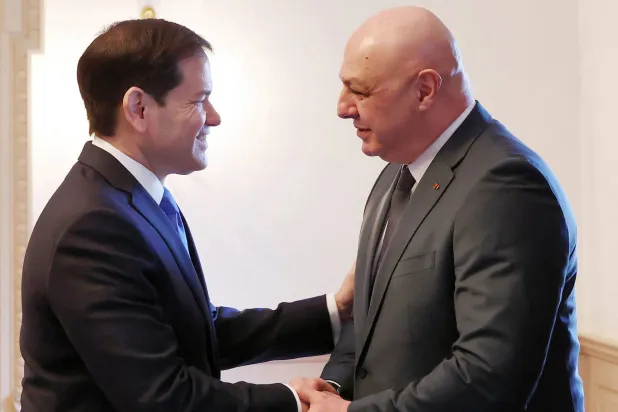
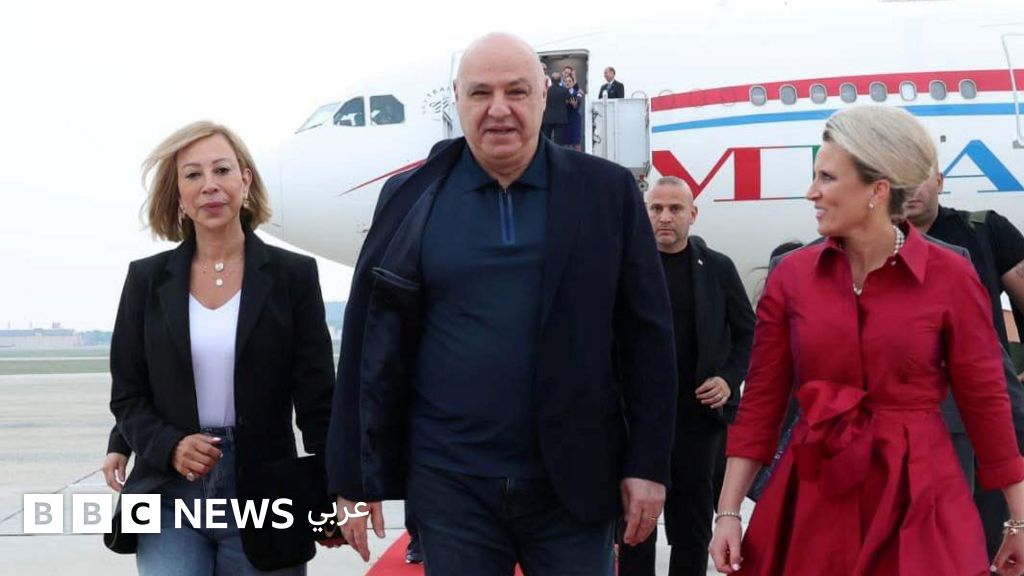
The visit of Lebanese Armed Forces Commander General Joseph Aoun to Washington, which began on Saturday, July 18, comes at a moment that does not resemble traditional protocol visits. It is the first visit by a Lebanese military commander to the United States since 2009, occurring after the signing of the U.S.-brokered Lebanese-Israeli framework agreement. While executive negotiations have shifted to Rome, issues such as Israeli withdrawal, the monopoly on weapons, the army's deployment, and security guarantees remain without clear, final solutions.
Lebanon is an arena where many regional files intersect.
The visit gains its significance from a fundamental historical fact: the United States has never treated Lebanon as an independent and permanent priority, but rather as an arena where larger files intersect, including the Arab-Israeli conflict, the Palestinians, Syrian influence, Israeli security, Iran, counter-terrorism, and the "Hezbollah" file.
It is worth noting that no sitting U.S. President has ever paid an official visit to Lebanon to date. However, U.S. Secretaries of State and senior officials have visited Beirut, as did Vice President Lyndon Johnson in 1962 under President John F. Kennedy, and Vice President Joe Biden (the former president) in 2009 under President Barack Obama.
Conversely, three Lebanese presidents visited Washington between 1982 and 2009 and met with U.S. presidents, though the level of these visits varied between official working visits, meetings at the White House, and meetings on the sidelines of the UN General Assembly.
This absence is not merely a protocol detail; it reflects Lebanon's place on the scale of U.S. priorities—an important country in terms of intelligence, politics, and security, but not a strategic partner on the level of major regional powers like Israel, Egypt, or Saudi Arabia. Therefore, U.S. officials often come to Lebanon to manage a crisis, while a Lebanese official is invited to Washington when the United States wants to secure a commitment, extract a position, or integrate Lebanon into a regional arrangement.
President Amin Gemayel at the White House (Archive of President Ronald Reagan)
The most prominent visits by Lebanese presidents and officials to the United States.
The official records of the U.S. Department of State show that Lebanese presidential visits to Washington were limited and infrequent. President Amin Gemayel made three notable visits during the Civil War: in October 1982, July 1983, and between November 30 and December 3, 1983.
President Elias Hrawi met President George H.W. Bush in New York in 1991 on the sidelines of the UN General Assembly after the end of the Civil War (1975–1990) and the implementation of the Taif Agreement. He later met President Bill Clinton during a private visit in 1996.
President Michel Sleiman made a working visit in September 2008, where he participated in the UN General Assembly meetings in New York, and an official visit to Washington in December 2009, where he met then-President Obama.
Between these stages, prime ministers, especially Rafic Hariri and Fouad Siniora, were more present in Washington than presidents. Since the end of the Civil War, a large part of the U.S.-Lebanese relationship shifted from the presidency to the premiership, particularly during the tenure of the late Prime Minister Rafic Hariri, due to the nature of the post-Taif system, the Syrian influence over the presidency, and the linkage of economic, reconstruction, and diplomatic files to governments.
Accordingly, General Aoun's visit restores the office of the President to the center of direct relations with the White House, coming 17 years after the last presidential-level Lebanese-American meeting.
When did America stand by the Lebanese regime?
The relationship between Lebanon and the United States has never been a stable, linear path. Instead, it has known cycles of support, containment, and retreat. Since the 1950s, Lebanon has been present in U.S. calculations as a delicate balance between East and West, before transforming during the Civil War into an arena where American, Israeli, Syrian, Palestinian, and Iranian interests intersect.
Washington stood by the Lebanese state at pivotal moments, from landing its troops in Beirut in 1958 in what became known as the "Marine landing" to support former President Camille Chamoun, to supporting state institutions and the army, contributing to ending the war through the Taif Agreement, and pressuring for the withdrawal of the Syrian regime's army in 2005.
However, at other times, it left Lebanon halfway, when it accepted Syrian tutelage, withdrew militarily after the 1983 Marine barracks bombing, or prioritized Israeli security and regional settlements over Lebanese sovereignty.
Therefore, no Lebanese presidential visit to Washington can be read in isolation from this volatile history—a history in which America was neither a permanent ally nor a definite adversary, but a major power that approached Lebanon whenever it needed its role and distanced itself whenever the cost of protection rose or its regional priorities changed.
U.S. forces in Beirut in 1958 (AFP)
1958: The first military test.
The 1958 crisis was the first direct military test of the relationship, when President Camille Chamoun requested U.S. assistance to confront internal disturbances linked to the conflict between the Western camp and the Nasserist tide (named after former Egyptian President Gamal Abdel Nasser). On July 15 of that year, the administration of U.S. President Dwight Eisenhower landed Marines on the shores of Beirut. The declared American mission was to support the Lebanese government, protect the country's independence and integrity, and safeguard American citizens and interests. U.S. documents show that the intervention came at the request of the Lebanese government following an official decision, and that Washington feared the repercussions of the Iraqi revolution and Nasserist influence spilling over into Lebanon.
However, the United States did not enter the battle on Chamoun's side until the very end, nor did it enforce an extension of his term. Instead, it contributed to producing a settlement that ended with the election of Army Commander Fouad Chehab as president, and then began withdrawing its forces by October of the same year.
Here, the pattern that would be repeated later becomes clear: America stood by the continuity of the state and the regime, but it did not necessarily stand by the full political project of President Chamoun. It saved the balance and then pushed for an internal settlement. In other words, it supported Lebanon so it would not fall, but it did not grant any Lebanese party an open mandate to defeat its opponents. This model would be repeated—American intervention is strong when the goal is to prevent collapse, but it becomes more cautious when it requires forcefully reshaping the internal system.
When Washington accepted Syrian tutelage.
Original source: Independent Arabia



Comments (0)
Be the first to comment.