Araqchi to Pakistani Army Chief: Washington Broke Understanding
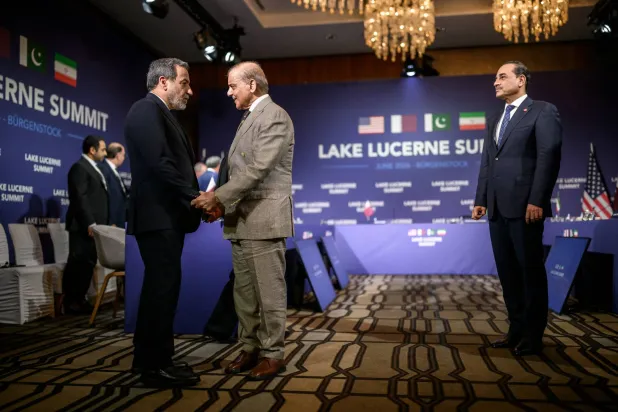
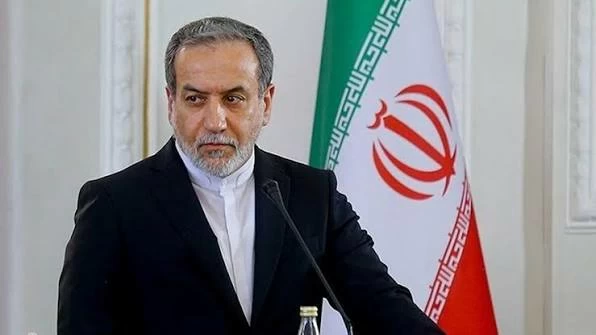
Iranian Foreign Minister Abbas Araghchi on Thursday accused the United States of 'breaking' the Islamabad memorandum of understanding, warning against any new American military 'adventure,' in a phone call with Pakistani Army Chief Field Marshal Asim Munir, amid escalating mutual strikes between Washington and Tehran and their expansion to countries in the region.
The Iranian Foreign Ministry said in a statement that Araghchi discussed with Munir 'the latest regional developments,' after the United States launched new strikes on Iran, and Tehran responded by targeting sites in countries allied with Washington in the Middle East.
The statement quoted Araghchi as strongly condemning the American attacks on various parts of Iran, considering them a 'clear violation' of the United Nations Charter and a 'blatant breach' of the terms of the Islamabad memorandum of understanding, which Tehran described as a 'war-ending' memorandum.
Araghchi said that the 'hostile statements' of American officials, and what he described as 'their admission of non-compliance' with the memorandum of understanding, constitute 'clear evidence of breaking the covenant' and the continuation of what he called Washington's 'war policies'.
Araghchi warned against any new 'adventure' by the US military, affirming, according to the statement, the 'firm determination and will' of the Iranian people and armed forces to defend Iran's sovereignty, territorial integrity, and national security.
A screenshot from a circulated video shows explosions in Bandar Abbas (social media).
The call with the Pakistani army chief came at a time when the memorandum of understanding, which helped temporarily halt fighting and open a path to resume negotiations, faces a severe test after the renewal of US strikes on Iran and Tehran's responses in the region.
The United States launched new airstrikes on Iran early Thursday, while Tehran responded by targeting Kuwait, Bahrain, and Jordan, in an exchange of fire that threatened the temporary agreement aimed at helping to end the war in the Middle East.
The Iranian Health Ministry said the US strikes over two days killed at least 14 people and injured 78 others, while CENTCOM said US forces struck 90 targets inside Iran in the latest round, including air defenses, missile and drone storage sites, naval capabilities, and military logistics infrastructure.
US President Donald Trump said that the recent Iranian attacks on ships in the Strait of Hormuz indicate the end of the fragile ceasefire, warning that any new attacks on shipping will make the US response 'much worse'.
Tehran insists that the Islamabad memorandum of understanding grants it a role in determining safe passage arrangements through the Strait of Hormuz, while Washington rejects any arrangements that give Iran sole control over the waterway, which is one of the world's most important energy transit routes.
Islamabad had on Wednesday called on all parties to exercise restraint. It plays the role of mediator in the temporary understanding, and Asim Munir, along with Pakistani Prime Minister Shehbaz Sharif, played a key role in concluding the memorandum of understanding for a 60-day ceasefire.
Read also
Original source: Asharq Al-Awsat



Comments (0)
Be the first to comment.