Mujtaba Rahman | France in the Grip of the Far Right

France is moving toward the historic possibility of electing a far-right president in 2027, as the National Rally party leads polls amid declining voter trust in traditional parties and worsening economic and immigration crises. While a victory in the second round is not guaranteed, the scenario has become realistic, and such an outcome could threaten the stability of the European Union and trigger a phase of political and economic turmoil in France and Europe.
France is heading toward the historic possibility of electing a far-right president in 2027, with the National Rally party leading polls amid a decline in voter confidence in traditional parties and intensifying economic and immigration crises. Although victory in the second round is not yet certain, the scenario has become a realistic one; its arrival at the Élysée Palace may not be limited to domestic change, but could threaten to undermine the balance of the European Union and trigger a period of political and economic turmoil in France and Europe.
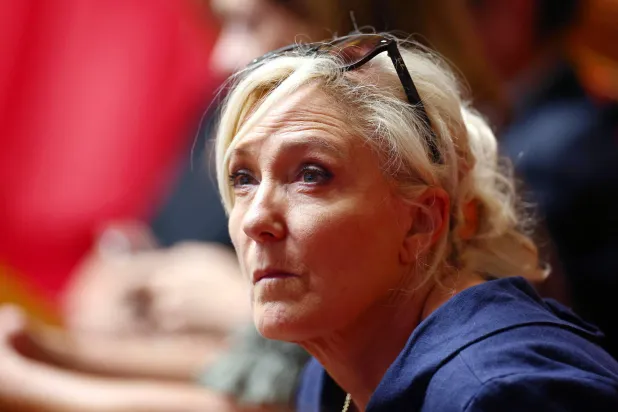
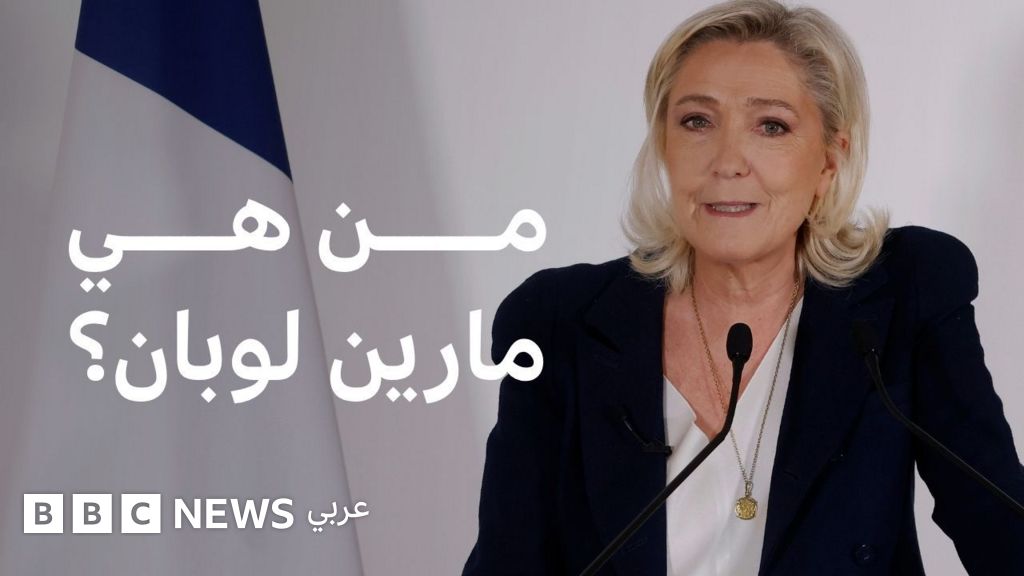
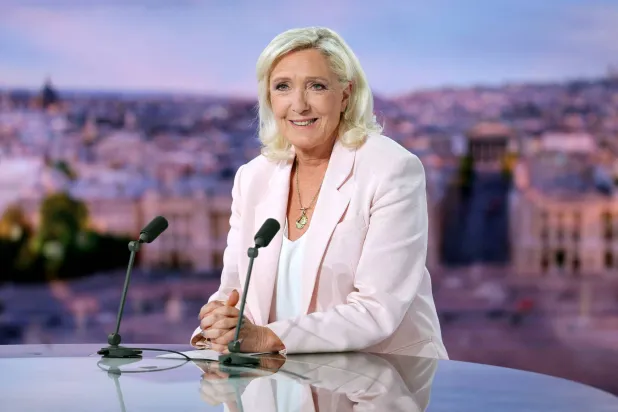
Next year, France could choose a far-right president for the first time since 1944. Election campaigns are already underway in preparation for the vote scheduled for April 2027, and opinion poll results consistently show the National Rally (RN) party leading by a comfortable margin. The popularity of the National Rally—founded by Jean-Marie Le Pen in 1972 as the 'National Front' before his daughter Marine renamed it in 2018—has grown gradually over the past 30 years, driven by anxiety over rising immigration rates and the economic difficulties facing France. This sentiment propelled Marine Le Pen to the second round of presidential elections in 2017 and 2022, before she lost by an overwhelming majority both times to Emmanuel Macron.
However, 2027 does not look like a repeat of those elections. Macron cannot run again due to constitutional term limits, and as the National Rally continues to gain support, its previously unified traditional voter base has fragmented. It is also likely that Le Pen will not run, having been convicted of embezzling European Union funds, although she is appealing the decision. Nevertheless, polls—such as the one published by the Odoxa institute in May—indicate that the National Rally party leader and potential candidate, Jordan Bardella, would secure more than 30 percent of the vote in the first round. No other candidate currently enjoys more than about 17 percent of voter support.
Although a far-right victory in the second round is by no means guaranteed, it is becoming a serious prospect for the first time. In other words, the 2027 elections could represent a moment for France similar to 2016 in the United States or Britain. A decade after the political earthquake caused by Brexit in the European Union’s structure and the rise of Donald Trump, which upended the American political landscape, signs are emerging of a potential similar rupture in French governance—a rupture whose repercussions could extend to the entire European Union.
Any far-right victory in France would have a much greater impact than Hungary’s or Italy’s experiences with far-right governance in recent years. As the fifth-largest Western economy, a permanent member of the UN Security Council, and a nuclear-armed state, France wields significant influence within the European Union. It is also a central, founding member of the bloc and still possesses about 12 sovereign territories around the world. Compared to former Hungarian Prime Minister Viktor Orbán or Italian Prime Minister Giorgia Meloni, having a far-right president in the Élysée Palace would grant them much greater leverage to execute a far-right strategy aimed at dismantling the EU’s supranational, rule-of-law-based structure. At a time when the European Union is seeking to strengthen its unity and global influence, assert its strategic autonomy from the United States, and stand up to Russia and China, the upcoming French elections carry significant risks.
Slow accumulation… then a sudden shift. Since 1958, when French leader Charles de Gaulle oversaw the drafting of a new constitution and founded the Fifth French Republic in the wake of a coup attempt and political turmoil, the French political scene has seen a predictable alternation between the center-right and center-left. French voters, who tend to be cautious but also skeptical of incumbent governments, were able to oust any camp in power with the certainty that nothing fundamental would change. But by 2017, the French began to demand something new. They were weary of the failure of both the left and the right to reduce unemployment rates and improve living standards, public education, and healthcare. Macron, who founded a new political party and ran under the slogan 'neither left nor right,' offered a revolutionary, painless vision. His approach was bolder and somewhat less corrupt than the fumbling management that preceded it, yet it achieved little more success. While he succeeded in lowering unemployment, he failed to raise the incomes of the working and middle classes. During his nine-year tenure, his failures drove more voters to believe that Bardella or Le Pen are now the only alternative, as they claim.
Read more: A shocking paradox: Paris may be more resistant to the far right than London; The right is not about to take over Europe; Marine Le Pen... the daughter of the far right; The far right raises the slogan of 'saving' women and does the opposite; 'We are the future'... the European far right draws inspiration from the Trump approach.
Many urban and educated voters still feel a sense of aversion to the far right’s simplistic populism and its racist origins, but many suburban, rural, and working-class voters are enticed by the National Rally’s platform to combat illegal immigration, crime, and the rise of Islamic extremism. These issues are real, but they are not as grave as portrayed by right-leaning French media and far-right candidates. For instance, after celebrations of a French football team's victory in the Champions League turned into riots in May, Bardella said on television that those scenes 'remind us of civil war' and urged the French to 'wake up,' because these rioters would soon 'break down the doors of apartment buildings and storm your homes.' He blamed part of the violence on immigration and the failure of integration policies in France. Usually, the strongest electoral strongholds of the National Rally are in villages inhabited entirely or predominantly by white residents, or in suburbs where crime rates are low. However, as in the United States and the United Kingdom, information bubbles on social media—digital or media environments, especially on social media, where people are only exposed to opinions and ideas that resemble their prior convictions, while opposing views are excluded or weakened—have reinforced conviction in this anger and sense of loss.
Original source: Independent Arabia


Comments (0)
Be the first to comment.