How to Understand the Limits of the Current US-Iran Confrontation?
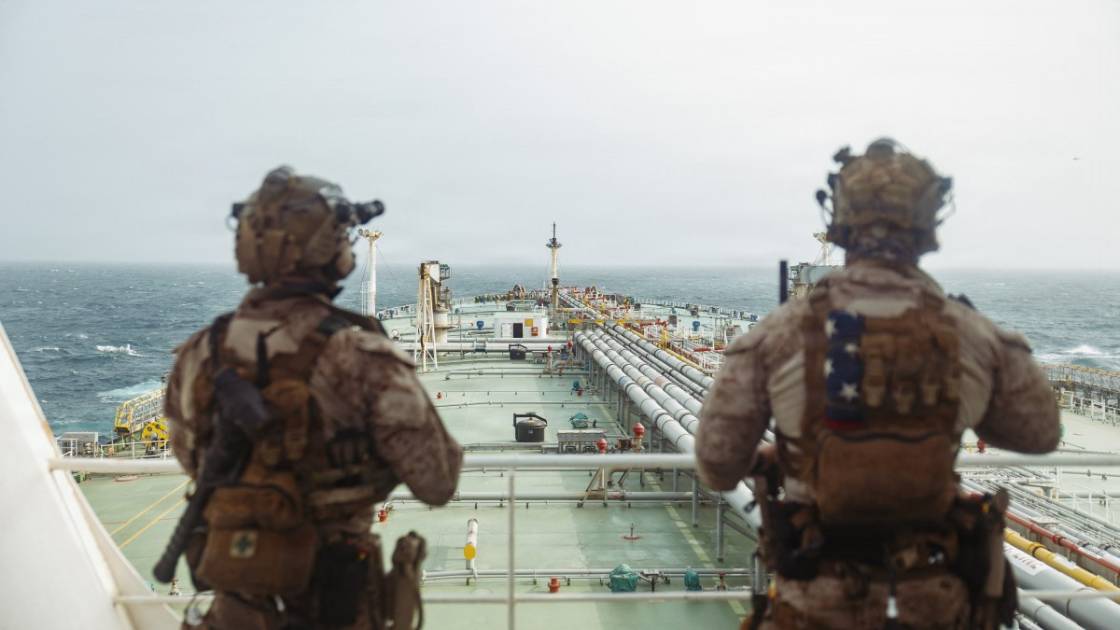
Summary: As US strikes and Iranian responses continue, these military developments raise questions about the nature, objectives, and ceiling of the current escalation, amid contradictory messages from both Washington and Tehran between threatening to proceed with military action while not closing the door to negotiation and mediation.
Between concepts of open war and the parties' ability to control the pace of military operations without sliding into a comprehensive escalation threatening an 'uncalculated cost in dimensions and repercussions' for all, the current round of conflict between Tehran and Washington, and the exchange of strikes that has continued for over a week after the collapse of the memorandum of understanding signed by the two sides earlier last month, raises questions about the limits of the current confrontation and the prospects of a return to full-scale, intensive war as the negotiation path between them remains stalled.
The renewal of strikes between the United States and Iran, and their gradual expansion, has revived fears of the region sliding into a more complex phase, especially as military calculations intertwine with political, economic, and energy security stakes. This means that any miscalculation or uncalculated expansion in the scope of operations could transform the confrontation from a controlled, rhythmic conflict into a war whose repercussions are difficult to contain.
The situation erupted about ten days ago over the Strait of Hormuz, where Tehran insists on controlling navigation and imposing the course ships must take, which Washington rejects. This led to the collapse of the memorandum of understanding signed between the two sides on June 17 last month, which stipulated the start of negotiations for 60 days, renewable, on the Iranian nuclear file and other issues with the aim of ending the war definitively.
Limits of mutual escalation and its objectives
As US strikes and Iranian responses continue, these military developments raise questions about the nature, objectives, and ceiling of the current escalation, amid contradictory messages from both Washington and Tehran between threatening to proceed with military action while not closing the door to negotiation and mediation.
Despite the mutual language of threats, observers and analysts say that both countries still fear, as of now, a scenario of a return to open war, maintaining a specific ceiling for strikes despite their gradual expansion, considering that Washington remains keen to deliver strikes that strengthen deterrence and maintain its dominant military position without engaging in a long war that drains its capabilities and imposes heavy political and economic costs regionally and internationally. In contrast, Tehran realizes that sliding into a 'comprehensive confrontation' with the United States carries an existential cost, but at the same time it refuses to accept the erosion of its deterrence capability or loss of its regional influence, complicating the calculations of both sides, raising questions about whether the rules of 'controlled escalation' are still able to control the rhythm of the conflict, or whether the region is now facing a moment of collapse of these rules.
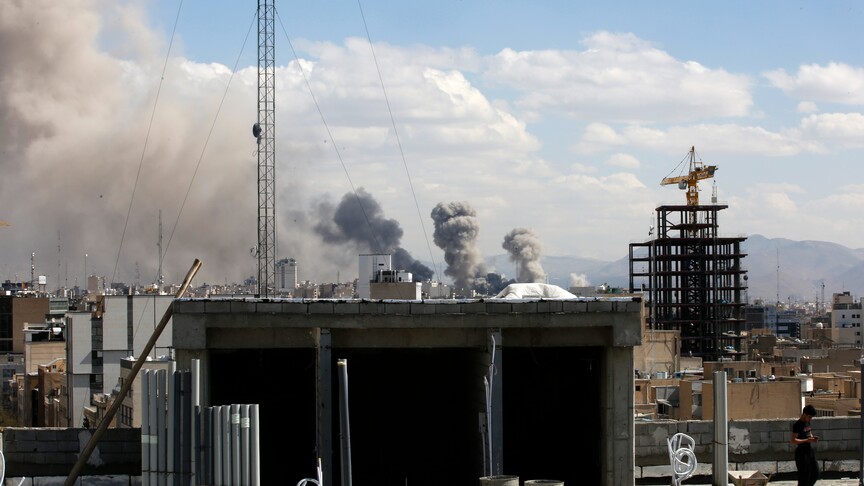
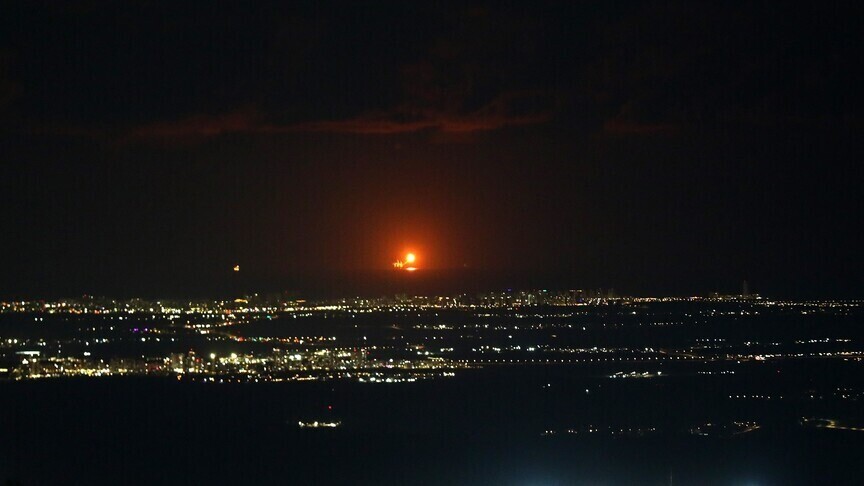
The renewal of strikes between the United States and Iran and their gradual expansion revives fears of the region sliding into a comprehensive war (AFP)
According to the assessment of Brigadier General Ayman al-Rousan, a Jordanian analyst specialized in defense affairs, 'The nature of the current confrontation between the United States and Iran indicates a transition from the stage of mutual deterrence to the stage of organized military attrition.' He explained in an interview with 'Independent Arabia' that the US operational focus 'is no longer limited to targeting traditional military sites, but has shifted to striking logistics infrastructure, command and control centers, transport networks, and ports, with the aim of reducing the operational capability of Iranian forces and isolating theaters of operation from supply lines.'
Al-Rousan mentioned that Washington is betting that 'weakening logistics capabilities will limit Tehran's ability to maneuver militarily and use the Strait of Hormuz as a strategic pressure card, leading to the imposition of a new military reality that gives it a stronger negotiating position, and perhaps pushing the Iranian leadership to accept more stringent negotiating conditions after weakening its military and economic tools.' He considered that the recent US strikes 'reflect a shift in the concept of war management, from targeting direct military capabilities to targeting the centers of gravity on which the Iranian military system is based, including logistics infrastructure, supply networks, energy facilities, and ports.'
While confirming that the US military objective of continuing to strike Iran is no longer 'just to destroy its military power but also to reduce its ability to continue fighting and prolong the confrontation, which falls within the strategy of attrition and strategic coercion aimed at imposing political will through continuous military and economic pressure,' al-Rousan points out that Iran 'so far is still able to absorb part of the strikes and expand the circle of response, whether by targeting US interests and bases in the region or by developing the use of missiles, drones, and hypersonic missiles capable of maneuvering, which has made the confrontation enter a more complex phase.' He believes that this complexity makes 'US military superiority insufficient to achieve decisive political goals, especially with the continued disruption of navigation in the Strait of Hormuz, confirming that military control does not necessarily mean actual control over sea lanes or imposing stability in a highly complex operational environment,' as he described.
For his part, Brigadier General Saeed Qozh, a Lebanese military and strategic specialist, believes that the current round of escalation 'is merely a continuation of the war that began last February 28, albeit at a lighter and less escalating pace.' He explained in his interview with us that Washington is primarily focusing on a set of military objectives it seeks to achieve, namely 'dismembering the southern and southwestern regions of Iran overlooking the Strait of Hormuz in order to isolate this area in case Washington wishes to carry out any future operation on the Iranian coast controlling the strait or its main islands in that region.'
Qozh continued: 'The nature and geographical scope of US strikes so far reflect an American desire to cut off lines, bridges, and supply routes to the Iranian coastal areas, while working to isolate the military and human force inside these areas overlooking Hormuz, by focusing on striking Iranian monitoring, radar, and surveillance equipment that tracks maritime navigation through Hormuz, as well as destroying weapons, missile, and drone storage used by Tehran to close the strait.'
According to Qozh, based on these military objectives, the United States 'may succeed in achieving most of them, but it cannot completely prevent the risk of Iran targeting ships and freedom of navigation in the Strait of Hormuz, as the nature of Iran's geography and the length of its coasts make it difficult to eliminate this risk entirely.'
Over the past days, Washington has expanded the range of targets struck in Iran to include bridges, which represents a major shift in the current round of escalation (AFP)
Original source: Independent Arabia


Comments (0)
Be the first to comment.