Palestinian town organizes self-defense against Israeli settler attacks
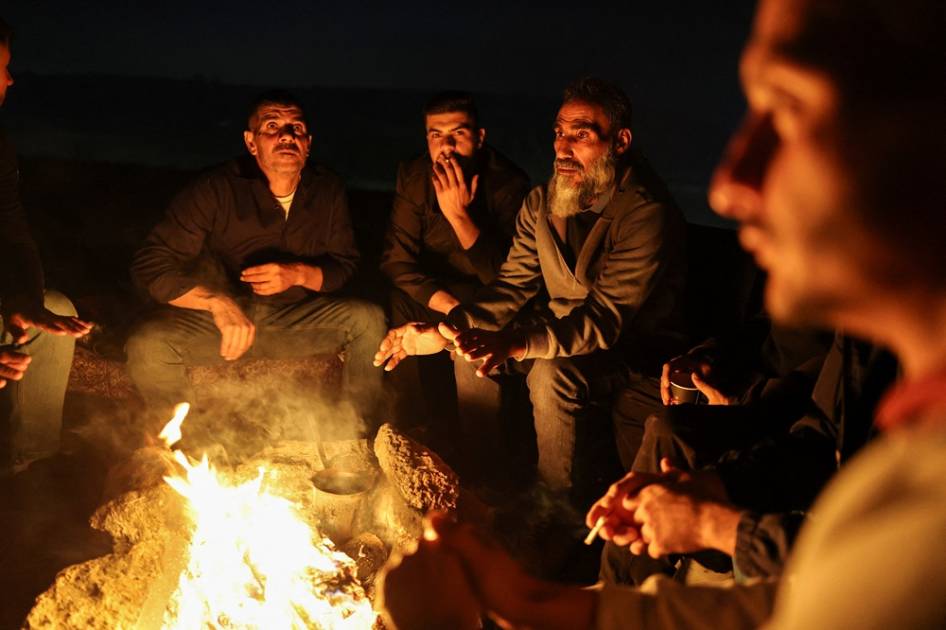
Residents of the town of Sinjil, north of Ramallah, have formed volunteer groups that patrol the hills at night, using vehicles, and WhatsApp groups to monitor settlers and confront their attacks, as the town's entrances are closed and it is isolated by a wall. They accuse the Israeli army of failing to protect them, with violence escalating since the October 7, 2023 attack.
On a mild night in June, about 15 Palestinians from the town of Sinjil in the occupied West Bank gathered on a hilltop to scan the dark valleys below for any movement that might signal an impending attack by Israeli settlers. They are part of a grassroots volunteer group, like others in the West Bank, that has stepped in to defend the town against escalating settler violence, which Palestinians say the Israeli military and government have shown no ability or willingness to stop.
"We face settlers backed by their government, we have no one, so we are forced to protect our town," said Fadi Alwan, a volunteer. His testimony reflects residents' belief that they must confront assaults with their own resources, in the absence of effective official protection.
A strategy to thwart a Palestinian state
Prime Minister Benjamin Netanyahu's far-right government has approved the establishment of hundreds of new settlements and outposts across the West Bank.
The Israeli government says it plans, through the strategic distribution of settlements, to thwart the establishment of a Palestinian state with the West Bank at its core, a key Palestinian goal and a long-supported two-state solution by world powers.
Most of the world considers all Israeli settlement activity in the West Bank, where the Palestinian Authority exercises limited authority and the Israeli military operates freely, to be illegal under international law, but Israel rejects this view.
Palestinians say that when they call the Israeli police or army, the response is delayed or comes to assist settlers committing violence, a claim the military denies.
Alwan said, "The army protects them, doesn't stop them. We call the army and police to no avail."
In response to a question about Sinjil and what residents describe as a campaign of escalating attacks, the Israeli military said troops deploy to disperse confrontations, but responsibility for the actions of Israeli civilians in the West Bank lies with the Israeli police, who did not respond to a request for comment.
Floodlights and WhatsApp groups
On June 26, as the men gathered around a fire on a hilltop in Sinjil, one used a floodlight to scan the hills for settlers. Others patrolled the town in vehicles, all following WhatsApp groups where residents can alert each other to potential attacks. Similar groups exist in other West Bank towns, but the patrols in Sinjil appear unusually organized.
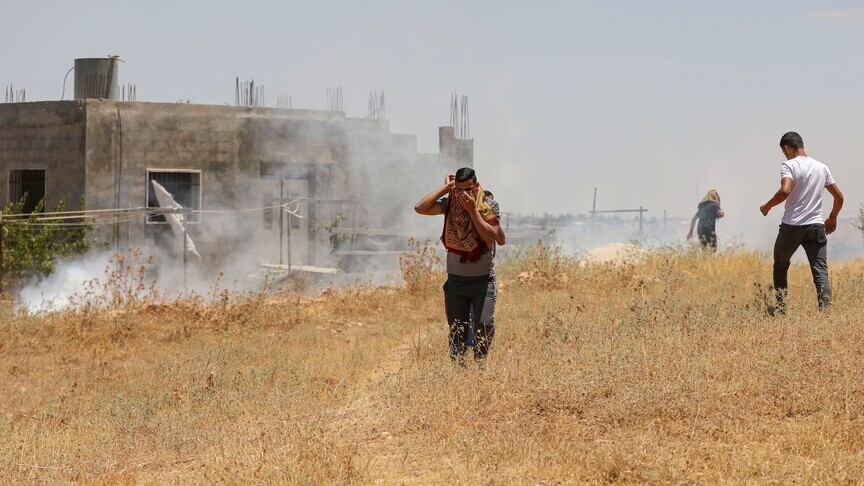
"If they approach, we head toward them and send alerts to the town groups," Alwan said. He recalled that a few days earlier he was beaten by a settler carrying a spiked club during a daytime attack while he was trying to harvest wheat, lifting his shirt to show a still-fresh wound.
He added that last year settlers fired live ammunition at a tent set up by volunteers, and the young men inside escaped only by luck. He said the army came the next day and dismantled the tent. The Israeli military did not comment on these allegations.
Alwan and other residents said they believe most of the settlers attacking their town come from six settlement outposts on the surrounding hills.
The Yesha Council, representing settlers in the West Bank, did not respond to a request for comment on the events in Sinjil and what local councils are doing to curb violence.
Read more
Israel bars Arab League chief from visiting West Bank
From outposts to 'Solomon's Pools': Israel maps West Bank annexation
Israeli settlers seize Palestinian dream home in West Bank
Town besieged by settlements and wall
Sinjil lies on the main road between Ramallah and Nablus, with settlements and outposts spread on hills north of the town.
Local officials say the Israeli military, in a move that further isolates the town, has closed four of its five entrances and erected a metal wall around it, separating it from 2,000 dunams (494 acres) of private land.
Sinjil Mayor Moataz Tawafsha said that after the war in Gaza erupted in October 2023, settler attacks escalated and the town needed to find a way to protect itself. He added, "It's as if we're living in a large collective prison. The municipality's primary responsibility became providing security and protection."
Tawafsha noted that settler attacks since October 2023 have resulted in the deaths of two people and the displacement of more than 100 individuals from the Palestinian Bedouin community living on the town's lands, in addition to 20 other families displaced from their homes in the town center during the same period.
Community protection and distress calls
Some Sinjil residents credit community protection for their survival. Palestinian Abdul Ghani Yousef Faqiha installed metal bars on his windows and a high metal fence around his garden after settlers threw a Molotov cocktail through his window while he and his family were inside about two years ago.
"The fire broke out and we couldn't control it. We tried to save the house, but we all suffered from the smoke," he said.
Faqiha used the town's WhatsApp group to call for help, and said young men from Sinjil, initially stopped by Israeli soldiers, arrived and helped get his father, who uses a wheelchair, out. He added, "Bless them, they really helped us."
His story, along with the volunteers' testimonies, paints a picture of a town trying to build a popular protection system against repeated attacks amid a complex security and political reality.
Original source: Independent Arabia


Comments (0)
Be the first to comment.