Huda Raouf | Escalation in the Strait of Hormuz... War of Routes and Return of the Siege

Summary Despite the escalation, neither side appears to seek an all-out war, creating a situation that can be described as a mutual strategic stalemate. Features of this stalemate: Iran cannot close the strait for long without harming its own interests, and the United States cannot force it open without significant risks. Both sides possess escalation tools but lack a clear path to victory, leading to a fragile stability where tension persists without turning into a full-scale confrontation.
In 2026, the Gulf region witnessed a qualitative escalation that redefined the nature of the conflict between Iran and the United States, not only in terms of tools but also in the geopolitical arena itself. The Strait of Hormuz is no longer just a maritime chokepoint or a temporary pressure card; it has become a center of gravity within a broader network of strategic corridors stretching from the Gulf to Eurasia. In this context, Iran is trying to promote that it has seen a clear shift in behavior from a policy of strategic patience to a pattern of "active deterrence," in contrast to an American predicament characterized by diminishing options and rising costs of decisive action.
This article aims to analyze the recent escalation on three levels: first, redefining the Strait of Hormuz as a tool that Iran wants to turn into a sovereign instrument; second, the shift of the conflict to what can be called a "war of corridors"; and third, explaining the mutual strategic stalemate between Tehran and Washington.
Iran is trying to highlight the end of strategic patience and the beginning of active deterrence, aiming to restore its tools of influence or exploit the recent escalation to acquire new levers of influence to compensate for losses suffered by itself, its tools, and its proxies over the years. For years, Iran adopted a policy of "strategic patience" based on absorbing pressures and avoiding direct confrontation while maintaining latent deterrence cards. However, the developments of 2026 revealed a clear shift towards a more stringent and explicit strategy in the use of force.
This shift is manifested in three main indicators:
Redefining the rules of engagement
Iran is no longer content with limited or indirect responses; it has begun to impose new rules of engagement based on the principle that any threat will be met with a direct or indirect response beyond the traditional framework, especially since the war was imposed on its territory and it could not avoid direct warfare as it had in the past, nor transfer any battles to neighboring countries.
Politicizing geography
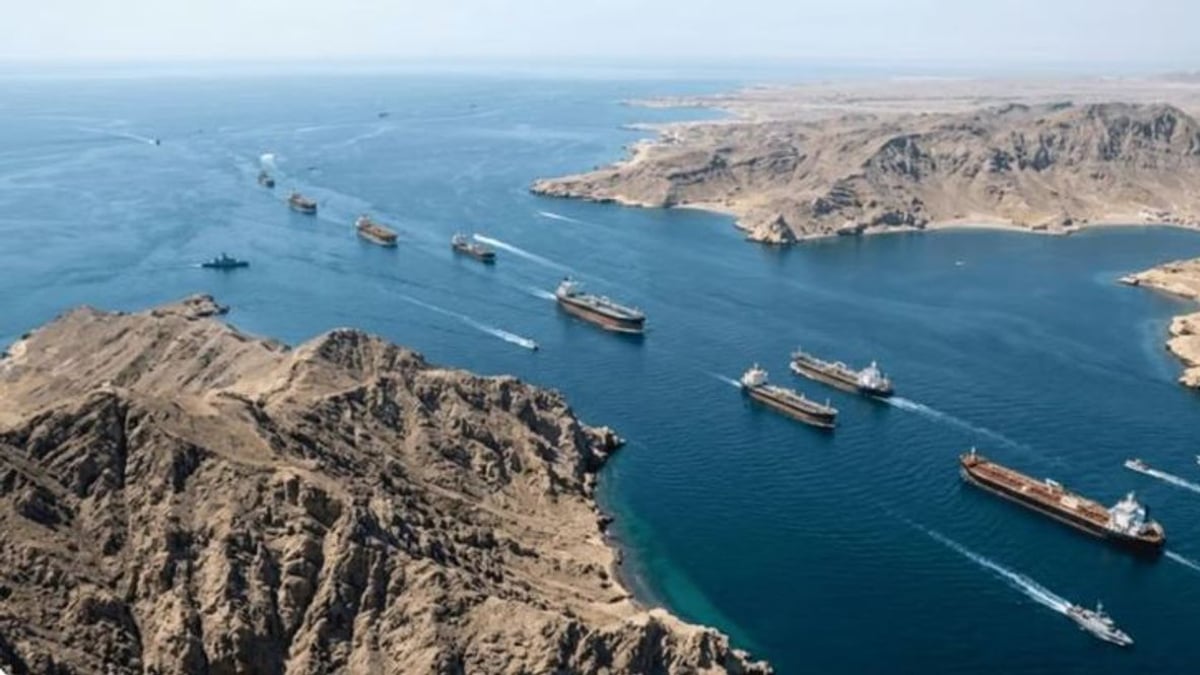
The Strait of Hormuz has transformed from an international corridor into a tool that Iran considers sovereign, used to reshape balances. Instead of accepting the principle of "freedom of navigation," Tehran has begun to promote the concept of "sovereign management of corridors," allowing it to control the terms of passage. Although Iran throughout the war spoke of coordination with Oman regarding passage through the strait, it sought to exclude Oman's sovereign right over its territorial waters and bombed ships that crossed the southern route designated by Oman, declaring that it only wants the route close to Iranian waters in an attempt to monopolize control over traffic and navigation in the strait, disregarding Oman's right.
Expanding the scope of deterrence
The Iranian response is no longer confined to the Gulf but has extended to include infrastructure and strategic sites in the region, reflecting a shift from tactical deterrence to multi-dimensional regional deterrence.
Secondly: "War of Corridors"
One of the most important shifts in this escalation is its transition from a conflict over a maritime strait to a broader struggle over strategic corridors. This shift can be described by the concept of "war of corridors," where transport, trade, and energy lines become major arenas of conflict.
Corridors as a tool of power and conflict
In a world increasingly dependent on supply chains, control over "flows" has become the decisive factor. Here, the United States seeks to reduce reliance on the Strait of Hormuz by developing alternative routes, whether maritime or land. In contrast, Iran views any alternative route as a direct threat to its geopolitical position and a strategic card it has seized through war, thus it seeks to obstruct or contain it.
The recent period has seen an escalation in targeting infrastructure related to corridors, such as bridges, railways, and cross-regional transport lines, aiming not only to cause physical damage but also to undermine any land alternatives and corridors that Iran could use to bypass the naval blockade imposed by Trump.
On the other hand, Iran represents an important link in the north-south corridors, and any weakening of it affects broader projects related to global trade. Thus, the conflict transforms from a regional dispute into part of a global competition to reshape economic geography, explaining why U.S. attacks have targeted infrastructure and bridges in northern and northwestern Iran, as well as operations on its southern and western borders to weaken its control over the Strait of Hormuz.
Read more
Oil retreats amid anticipation of new escalation with Iran
Iran between global ambition and realism constraints
Iran after Khamenei... the system on the path to redefining authority
Iran's targeting of oil tankers disrupts global energy security
The recent escalation between the two sides stems from a crisis of understandings and the failure of partial diplomacy. As part of attempts to contain the escalation, a memorandum of understanding was proposed containing several points to regulate navigation and reduce tension, but this initiative quickly failed, revealing the depth of structural differences between the two sides before proceeding to other subsequent items in the memorandum.
Likewise, the memorandum contained formulations open to contradictory interpretations, or both sides rushed to sign and then sought to gain time through conflicting interpretations. The United States saw it as a guarantee of freedom of navigation, while Iran considered it an implicit recognition of its right to manage the strait, leading to a clash of expectations and consequently the collapse of understanding.
It can be said that the issue is not about tactics but about conflicting strategic goals: Washington seeks to reduce Iranian influence, while Tehran seeks to entrench and enhance it. The ongoing conflict is one manifestation of a long history of tensions and mutual accusations that have made it difficult to build common ground, even on technical issues. As a result, the memorandum turned from a tool for de-escalation into an additional factor complicating it.
Despite the escalation, neither side appears to seek an all-out war, creating a situation that can be described as a mutual strategic stalemate. Features of this stalemate: Iran cannot close the strait for long without harming its own interests, and the United States cannot force it open without significant risks. Both sides possess escalation tools but lack a clear path to victory, leading to a fragile stability where tension persists without turning into a full-scale confrontation.
Original source: Independent Arabia


Comments (0)
Be the first to comment.