Sell-Off in Semiconductor Sector Pressures Wall Street Indices

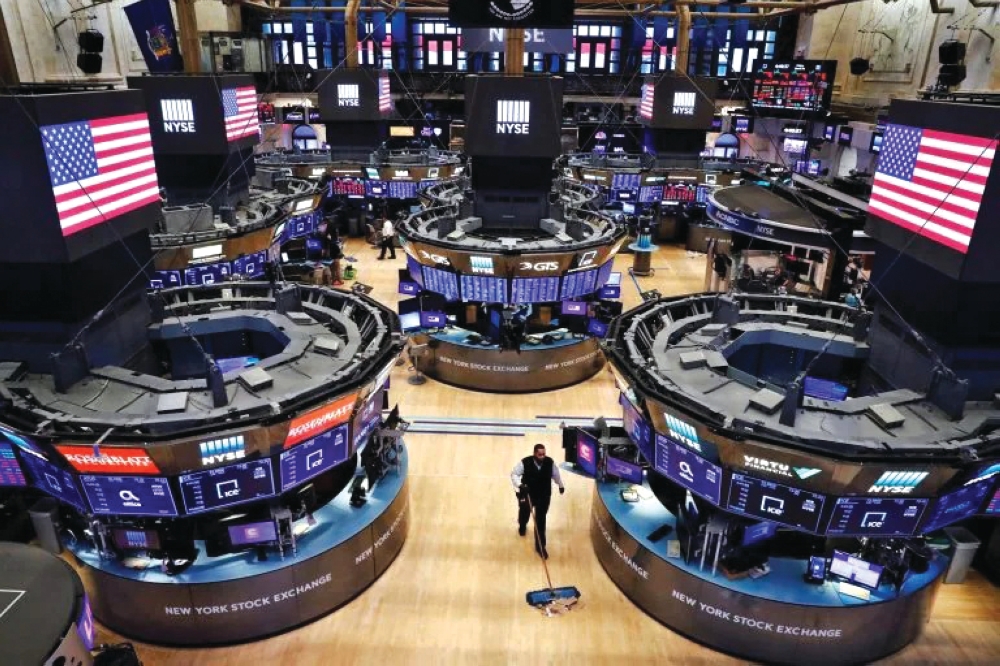
U.S. stocks extended their losses on Friday as a downturn in shares related to the artificial intelligence boom, which had driven much of the market's gains this year, turned into a broader wave of risk aversion.
Semiconductor stocks, which had been the main driver of the market's rise in recent sessions, led the sell-off early in trading, before losses spread to broader sectors as the session progressed. All three major U.S. indices closed lower, also posting weekly losses.
The Philadelphia Semiconductor Index posted its biggest weekly loss in over a year, and has fallen about 18% since the beginning of July. Despite that, the index is still up about 65% since the start of the year, compared to gains of nearly 9% for the S&P 500 over the same period.
A Reuters analysis showed that some investors in the artificial intelligence sector have begun preparing for a potential slowdown in the spending boom, which is approaching $1 trillion, while some active fund managers have already started reducing their exposure to the sector.
Ryan Detrick, chief market analyst at Carson Group in Omaha, Nebraska, said: 'It seems the market has grown tired of chip stocks. Semiconductor shares have declined in three of the last four weeks, and the concerns are the same: these stocks had risen to overvalued levels and are now gradually coming back down to earth.'
The S&P 500 fell 75.99 points, or 1.01%, to close at 7,457.78, while the Nasdaq Composite dropped 370.83 points, or 1.40%, to 25,511.12. The Dow Jones Industrial Average declined 394.01 points, or 0.75%, to 52,158.96.
The energy sector was the biggest gainer among the major S&P 500 sectors, benefiting from a sharp rise in crude oil prices amid signs of escalating combat operations in the war with Iran.
Strong start to corporate earnings season
The second-quarter earnings season is still in its early stages, with 49 S&P 500 companies having reported so far. According to data from the London Stock Exchange Group, over 90% of these companies have beaten market expectations.
Analysts now expect aggregate annual earnings growth for index companies of 26%, up from expectations of 19.2% on April 1.
Netflix shares tumbled after the company reported weaker-than-expected guidance, raising doubts about the sustainability of its strong content growth momentum.
Uber Technologies shares fell after the ride-hailing company announced its intention to acquire German delivery hero in a deal worth nearly $15 billion.
On the economic data front, consumer confidence in July rose to its highest level in five months, but the pace of single-family home construction and building permits declined, while industrial production increased by a marginal 0.1%.
Ad material
Ad material
Original source: Al Arabiya



Comments (0)
Be the first to comment.