Tightening of Terrorism Sentences: Is Tunisia Paving the Way to Dissolve the Ennahda Movement?

The judicial confrontation with prominent figures of Tunisia's Ennahda movement has entered a more decisive phase, after the Court of Appeal issued harsh sentences against former prosecutor general Bechir Akkari and movement leader Habib Ellouz in a case related to terrorism and political assassination files.
This development comes as Tunisian authorities continue to complete the accountability process in cases related to the post-2011 period, amid growing questions about whether these rulings represent merely a new judicial chapter or pave the way for political and legal transformations that could affect the future of the Ennahda movement and its position in political life.
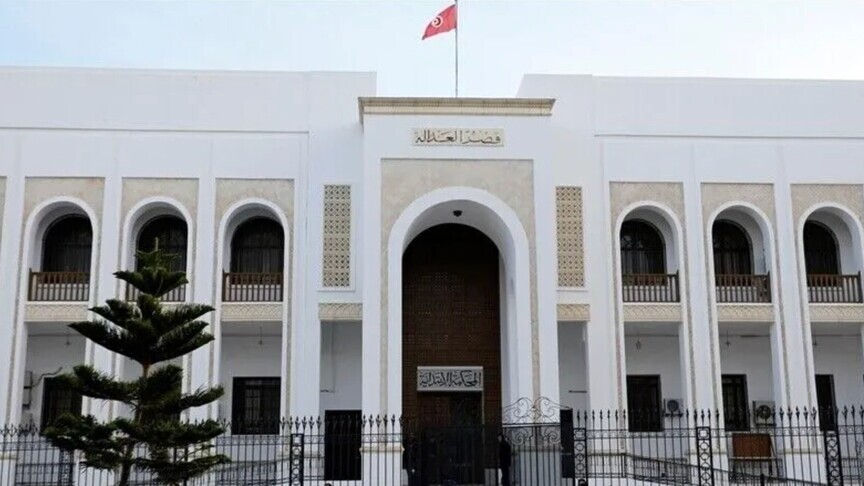
The specialized criminal chamber for terrorism cases at the Court of Appeal increased the sentence against former prosecutor general Bechir Akkari from 23 to 29 years, and raised the sentence against former Ennahda leader Habib Ellouz from 13 to 17 years.
The rulings came after their conviction in two cases involving irregularities in the investigation into the assassination of politician and human rights activist Chokri Belaid, along with terrorism-related charges including providing expertise and resources to individuals linked to terrorist crimes, as well as forgery.
These rulings bring back to the forefront one of Tunisia's most sensitive files: the political assassination and terrorism file, which for over a decade has been the focus of extensive political and judicial debate. Observers believe that the tightening of penalties reflects a stricter judicial approach to dealing with these cases.
Related News
In October 2025, the specialized criminal chamber for terrorism cases at the Court of Appeal in Tunis issued final sentences against 23 defendants in the Chokri Belaid assassination case, more than 12 years after the crime. The sentences ranged from death by hanging to varying prison terms.
Although the case has not exhausted all levels of appeal, the latest rulings represent a significant development in the path of accountability for defendants in terrorism and political assassination cases, reflecting an increasing trend toward closing one of Tunisia's most controversial files since 2011.
Prelude to a New Path
Tunisian extremist groups expert Dr. Atia Al-Alani believes that these rulings may represent the beginning of a legal path that could end with the dissolution of the Ennahda movement after exhausting all levels of appeal.
Al-Alani told Sky News Arabia that these rulings could be a prelude to the eventual dissolution of the Ennahda party after completing the third and final level of appeal before the Court of Cassation.
He added: In the view of a large segment of public opinion, these rulings are long overdue, 13 years after the facts at the heart of the charges. Some relate to political assassinations, others to recruiting and sending fighters to conflict zones, financing terrorism, and the secret apparatus.
He continued: The tightening of sentences on appeal reflects the seriousness of the charges against the defendants and is also linked to the involvement of some in other terrorism-related cases, leading to the merging of sentences and an increase in total prison years.
Al-Alani stressed that popular support for the political Islamist trend, as well as the jihadist trend, has declined significantly, making it unable to compete in electoral contests for the next two or three decades.
He indicated that a new political parties law is expected to be issued, banning parties based on religious, ethnic, or linguistic grounds, with stricter oversight of their discourse, programs, and funding sources.
For his part, extremist and terrorism groups expert Tarek Abu al-Saad believes that the importance of the latest rulings lies not only in the tightening of penalties but also in their indication of the evolution of the judicial path for terrorism and political assassination files.
Abu al-Saad told Sky News Arabia that these rulings could pave the way for classifying the Ennahda movement as a terrorist organization after proving assassination crimes with evidence, especially in light of a draft law submitted to the Tunisian parliament whose second article stipulates classifying the Ennahda movement as a terrorist organization and considers it a political and organizational extension of the international organization of the Muslim Brotherhood in Tunisia.
He added that the harsh sentences against Bechir Akkari, a former judge and undeclared secret member of Ennahda, and leader Habib Ellouz, represent a new milestone in the judicial prosecution path for the movement's leaders.
He continued: The tightening of penalties confirms that we are witnessing a transition from the accusation phase to the conviction phase and the confirmation or tightening of sentences before appeals courts in the cases of assassinations and the secret organization that came to light after the assassination of Chokri Belaid.
Abu al-Saad believes that these rulings are likely to increase political and organizational pressure on the movement and deepen its internal crisis, especially if coupled with new legislative measures related to the parties law or the classification of certain organizations.
Related News
Original source: Sky News Arabia



Comments (0)
Be the first to comment.