Burnham to become UK leader in unprecedented Labour move
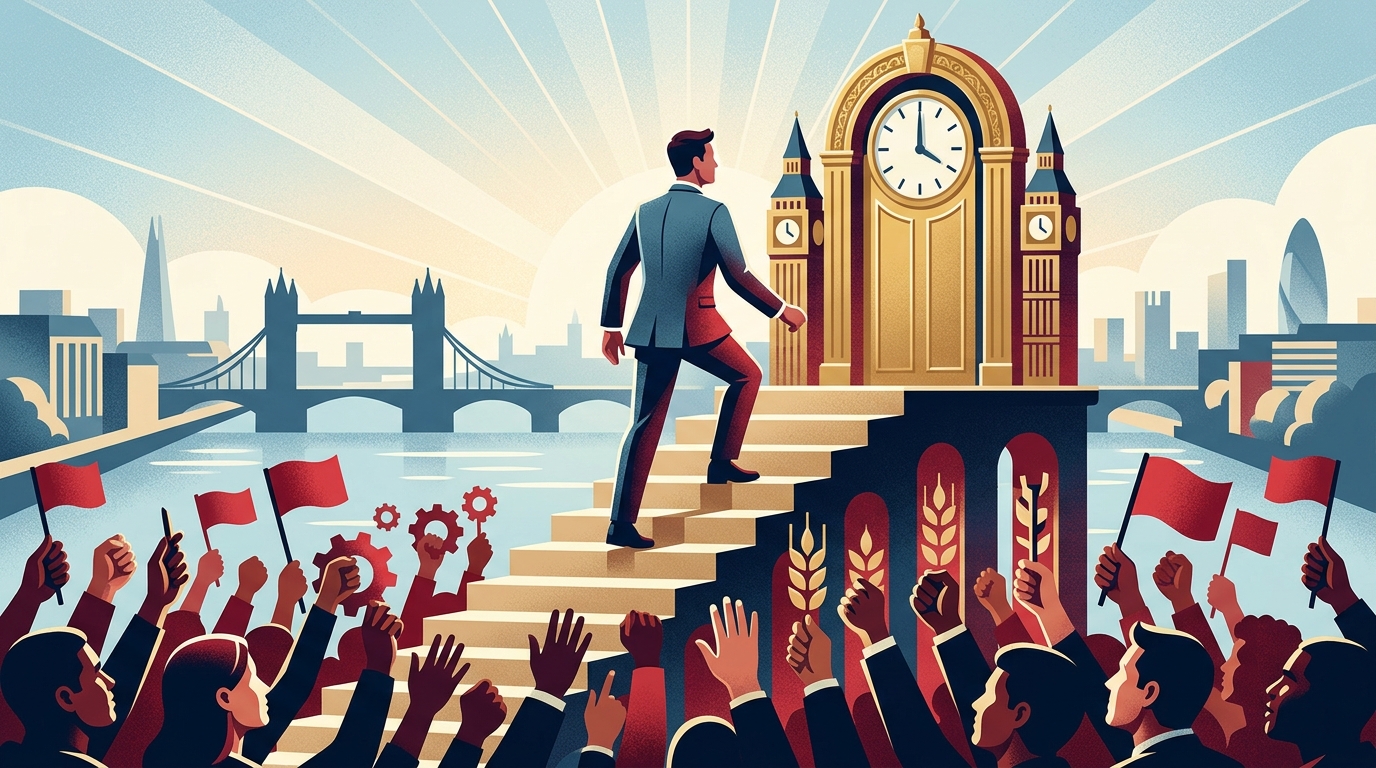
Summary: Andy Burnham is set to enter 10 Downing Street after securing the overwhelming support of Labour MPs as soon as nominations opened to succeed Prime Minister Keir Starmer, in an unprecedented scene in Labour's history, which has never ousted a sitting leader. So what has changed this time after failed attempts to rebel against Hugh Gaitskell, Neil Kinnock, Jeremy Corbyn and Gordon Brown? And what has come together in the 'King of the North' that has made MPs rally around him with such consensus?
The British Labour Party, in its history dating back to the early 20th century, has never seen a scene like the one Britain is experiencing these days, as Andy Burnham now stands before 10 Downing Street after securing the support of 322 out of 403 MPs as soon as nominations opened to succeed Keir Starmer. This result makes challenging Burnham impossible, and within days the King will summon him and task him with forming a new government, making him the seventh prime minister the country has known in a single decade.
Andy Burnham is a Labour politician born in 1970 near Liverpool. He held ministerial portfolios in the governments of Tony Blair and Gordon Brown, and served as Mayor of Greater Manchester from 2017 until his return to parliament last month, via a by-election tailor-made for him, in order to take power and lead the ruling party.
The essence of the precedent here is that Starmer did not leave voluntarily nor at a time of his own choosing, as Blair did in 2007 when he set his own departure date despite pressure. Starmer announced his resignation on June 22 last year after Burnham's victory in the 'Makerfield' by-election and calls from party MPs for an immediate challenge to his leadership.
Starmer's announcement came after a disastrous performance in the local elections in May last year, which triggered growing calls from MPs for a change in leadership and direction. The results were indeed shocking, as the party lost control of 35 local councils and about 1,500 seats, nearly 60 percent of the seats that were up for re-election, while BBC estimates indicated that Labour's national vote share did not exceed 17 percent.
Starmer, the lawyer who headed the Crown Prosecution Service before entering parliament in 2015, has led Labour since 2020, achieving a landslide victory in the 2024 general election before his popularity collapsed in government, due to many mistakes and setbacks in less than two years.
Seat dilemma: The challenge facing those aspiring to succeed Starmer was that the most prominent among them was not even an MP, as party rules require any leadership challenger to be a member of the House of Commons, which ruled out Greater Manchester Mayor Andy Burnham and London Mayor Sadiq Khan. Indeed, the party leadership tried to block Burnham early on, when in January last year he applied to stand as Labour's candidate in the by-election for the Gorton and Denton constituency, but the party's National Executive Committee rejected his application by eight votes to one, with Starmer himself among those voting against what was described as a potential route to challenge his leadership.
However, the party's collapse in the May elections turned the tables, paving the way for Burnham's return to Westminster through an exceptional gateway, as the MP for the Makerfield constituency, Josh Simons, resigned his seat to make way for Burnham to stand, the first time since the 'Leyton' by-election in 1965 that a contest was manufactured specifically to provide a seat for someone outside parliament.
The Leyton by-election occurred after MP Reginald Sorensen was appointed to the House of Lords, creating a vacancy in the House of Commons. The Labour Party hoped to return Foreign Secretary Patrick Gordon Walker to parliament after he lost his seat in the Smethwick constituency in the 1964 general election, but the result was contrary to expectations, and Conservative candidate Ronald Buxton won by just 205 votes.
The Leyton election represented an early setback for Prime Minister Harold Wilson's government just about 100 days after it came to power, while Makerfield recorded a notable Labour victory, with Burnham winning about 25,000 votes, and a margin over his rivals that exceeded polls. After that, events accelerated, and Labour MPs rushed to declare their support for the new MP as party leader and head of government.
Read more
Andy Burnham... the 'King of the North' feared by Starmer and Farage
Labour grandees' revolt against Starmer closes chapter on his tenure
British Labour... recurring divisions since its founding
Historical precedent
The historical precedent lies in the fact that Labour, unlike the Conservative Party which ousted Margaret Thatcher, Boris Johnson, and Liz Truss while they were in Downing Street, has never succeeded in removing a sitting leader. The first attempt came in 1960 when Harold Wilson challenged leader Hugh Gaitskell over the division on nuclear disarmament, and he only gained the support of 81 MPs. The attempt was repeated in 1961 through Anthony Greenwood, and Gaitskell was re-elected.
In 1988 came the most famous rebellion attempt, when Tony Benn, the symbol of the left wing, challenged leader Neil Kinnock, who was aligned with the more moderate social democratic current. Kinnock crushed him with 89 percent of the votes and remained leader until 1992.
In September 2006, a group of Labour MPs (including ministers and junior government officials who later resigned) signed a letter demanding Blair's immediate resignation to avoid the party's defeat in the next election. The rebellion was directly linked to supporters of Gordon Brown (then Chancellor of the Exchequer). Under the weight of this pressure and widespread internal rebellion, Blair was forced to announce that he would step down within a year, which indeed happened in June 2007.
For his part, Brown faced a series of internal coup attempts between 2008 and 2010 and withstood them all until losing the 2010 general election. The most recent incident was in 2016, after the Brexit referendum, in what was known as the 'Chicken Coup', when Owen Smith challenged leader Jeremy Corbyn. However, Corbyn survived the challenge, garnering about 62 percent of the votes from members, trade unionists, and supporters against 38 percent for Smith, and led the party into the 2017 election.
Why did they succeed now?
This time, factors came together that were absent in any of the previous attempts. First, the rebellion was not an ideological struggle between two wings as in 1960, 1988, and 2016, but rather an almost complete cross-faction consensus that staying with Starmer meant electoral annihilation, and the disastrous May election results provided indisputable numerical proof.
The second factor is the existence of a ready alternative who enjoys popularity beyond the party's borders, in contrast to the 2016 attempt which collapsed due to the absence of a convincing candidate. The third factor is that the rules of the internal game were reversed; after expanded voting systems protected leaders backed by the party base, as they protected Corbyn, this time the decision came from the parliamentarians themselves, as Burnham was nominated by about 80 percent of all Labour MPs, making him the only candidate for party leadership. In other words, MPs closed the race before it began.
Original source: Independent Arabia
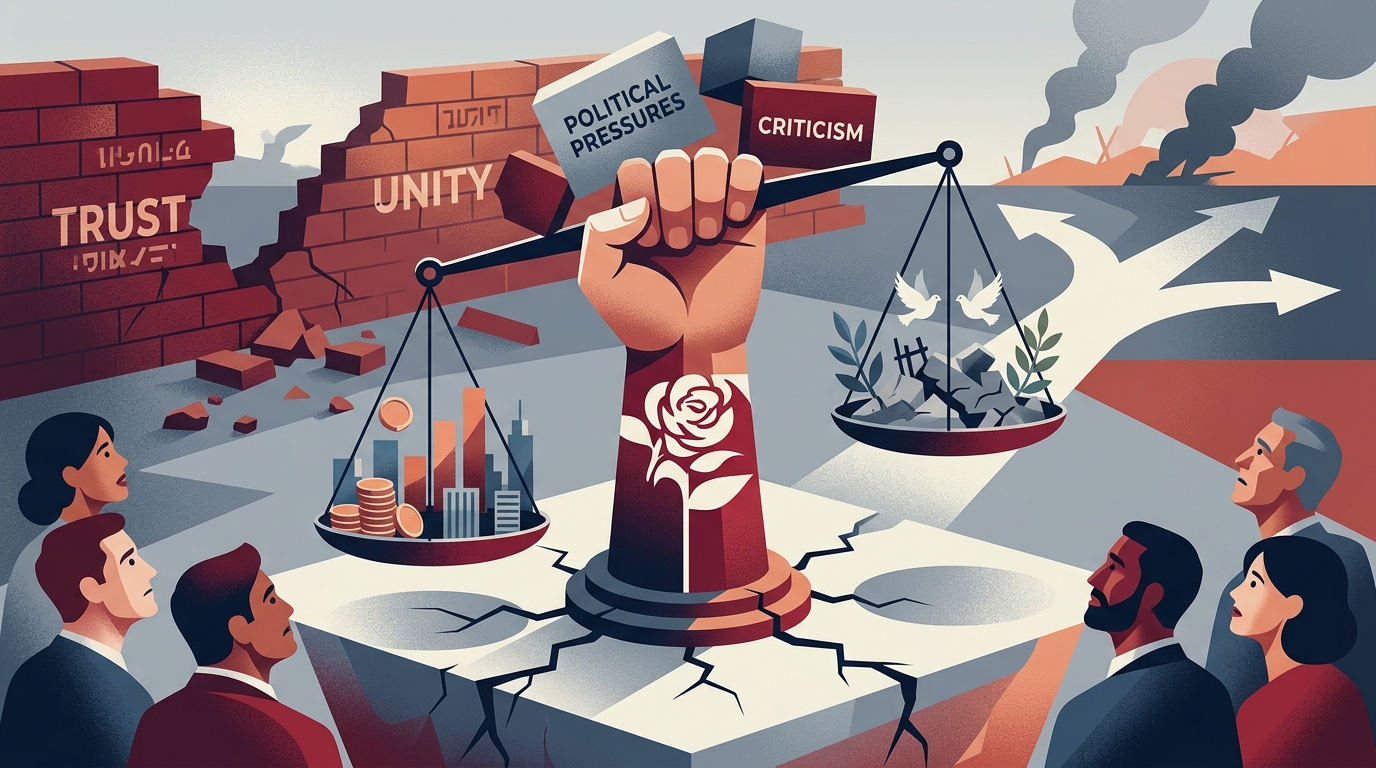



Comments (0)
Be the first to comment.