Crime with an Attractive Face... Tourist Settlement in the West Bank

Summary: Settlements and isolated outposts are no longer just residential barracks limited to accommodating extremist settlers, but have gradually turned into an attractive recreational investment sector, full of rural hotels, luxury guesthouses, and farms producing organic wine and cheese. The latest government plan extending until 2030 reveals an intersection between hotel budgets and plans for the military liquidation of what remains of Palestinian geography.
In the traditional landscape of the West Bank, attention often turns to the harsh tools of the Israeli army, represented by urban expansion of settlements, construction of military bypass roads, and direct land confiscation. However, there is another strategic arm growing rapidly and intelligently under the guise of investment and welfare, which observers agree to call 'tourist and recreational settlement'.
This modern pattern of soft settlement, embodied in the establishment of hotels, resorts, and rural guesthouses in the West Bank, does not represent just a marginal economic activity or a transient private sector investment, but rather a systematic geopolitical tool governed by an official Israeli vision seeking to bring about a radical change in the visual and historical identity of the region.
The danger of this path lies not only in its ability to whitewash the settlement system and isolate tourists and foreign delegations from the surrounding political and military reality, but also in transforming the West Bank in the collective consciousness from disputed territory to a safe rural and natural extension of the State of Israel, capable of accommodating long-term tourist stays rather than just quick visits. Settlements and isolated outposts are no longer just residential barracks limited to accommodating extremist settlers, but have gradually turned into an attractive recreational investment sector, full of rural hotels, luxury guesthouses, and farms producing organic wine and cheese. The latest government plan extending until 2030 reveals an intersection between hotel budgets and plans for the military liquidation of what remains of Palestinian geography.
6.6 million dollars from Israel's tourism development budget will be allocated as direct grants and incentives for building new hotels (Independent Arabia).
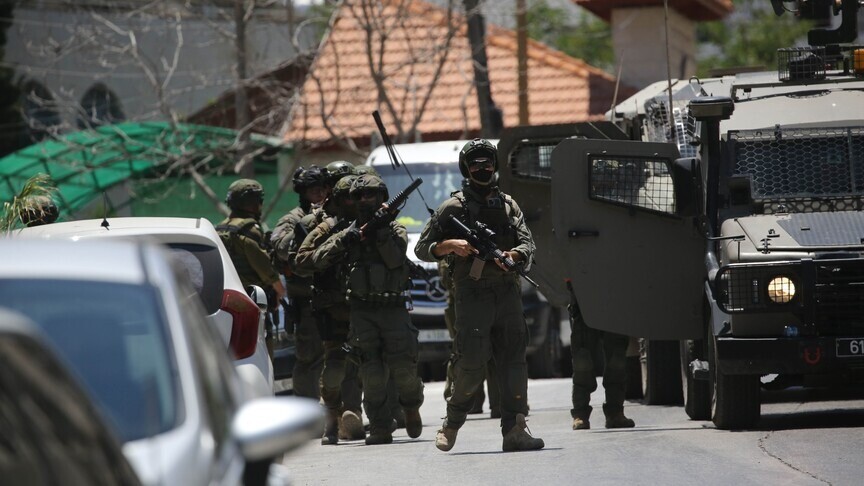
According to a report issued days ago by the Israeli movements Peace Now and Kerem Navot, the government of Benjamin Netanyahu is accelerating the implementation of a de facto annexation plan for the West Bank, through structural changes to the control apparatus, expansion of settlement, expulsion of Palestinian communities, and deepening Israeli influence in Area A, which is under Palestinian security and administrative control, and Area B, which is under Palestinian administrative control, according to the Oslo Accords.
The reports indicated that during the three years between 2023 and 2025, the Israeli government established 185 unauthorized outposts, expelled the residents of 118 Palestinian communities, established or legalized 102 new settlements, including 50 unauthorized outposts, approved the construction of 40,064 housing units, placed 1.07 billion square meters under the control of settlement outposts, constituting about 18% of the West Bank's area, paved new roads totaling 223 kilometers, seized 11.52 billion square meters of agricultural land, confiscated 59.959 billion square meters, and declared them 'state lands'.
Financing Engineering
In the latest and most institutionalized shift, Israeli media, led by Army Radio and Yedioth Ahronoth newspaper, revealed that the Israeli government has approved a new strategic plan aimed at injecting 27 million shekels ($9 million) to support and accelerate the settlement hotel sector in the West Bank. The real danger of this plan is not purely financial, but in its bureaucratic philosophy that dissolves planning knots. The explanatory memorandum of the decision acknowledged that the most prominent obstacle to the expansion of tourist investment there is the acute shortage of ready and licensed planning stock for hotel accommodation facilities. Accordingly, this government budget was divided into two strategic tracks extending from 2026 to 2030, starting with the transfer of 7 million shekels ($2.3 million) for preliminary planning and inspection, allocated as part of the current budget of the Israeli Ministry of Tourism to finance comprehensive land survey operations and the preparation of ready structural and regulatory plans,
Read more
Israeli settlers seize a Palestinian dream home in the West Bank
From outposts to Solomon's Pools... Israel draws a map of West Bank annexation
Israel accuses settlers of committing 'terrorist acts' in the West Bank
Israel approves plans for settlement construction in Hebron, West Bank
This measure exempts the settler investor from undergoing long legal battles to obtain building permits, as the ministry provides him with licensed land ready for immediate implementation, while 20 million shekels ($6.6 million) from the development budget allocated to the Israeli Ministry of Tourism will be disbursed as direct financial grants and material incentives to support the construction of new hotels, or the conversion of existing buildings and the expansion of tourist accommodation facilities and guesthouses in settlements. This new budget does not work alone, but comes to form a complementary link to a previous government decision issued last May, which approved a parallel plan to develop public tourism infrastructure in the West Bank, including roads, lighting, and water networks dedicated to tourist sites, with a budget of 50 million shekels ($16.6 million).
Investment Gap
The statements of Israeli Tourism Minister Haim Katz reflect the deep political dimension behind the government's rush towards this plan, as he publicly stated that it 'will enable the exploitation of the enormous tourist settlement potential inherent in the West Bank.' For the first time, the government adopts an integrated path linking planning, infrastructure, and direct financial support to increase the number of hotel rooms, with the aim of boosting the local economy and attracting incoming tourism.
This unprecedented government move came in response to official data and figures presented to the Israeli cabinet, which showed a vast superiority of tourism investments inside Israel compared to the West Bank. The figures revealed that over the last decade, only about 115 million shekels ($38.3 million) were invested in the hotel and leisure sector inside West Bank settlements. In contrast, nearly 2 billion shekels ($666.6 million) were invested in the internal hotel sector within the Green Line.
This comparison led ministers in the Israeli government and settlement councils to consider that disparity as a 'large investment gap and geographical obstacle' that must be immediately bridged by liquidating taxpayers' money and turning the West Bank into an extended tourist countryside economically and administratively subordinate to the heart of Israel.
Wide network
Original source: Independent Arabia


Comments (0)
Be the first to comment.