Camellia Entekhabi Fard | Iran after Khamenei... The Regime on the Path to Redefining Power

Summary: With the death of Ali Khamenei, the Iranian regime entered a new phase in which the military establishment, foremost the Revolutionary Guard, became more influential and powerful than before, and has been seeking to implement changes that it sees ending the conflict with the United States as a prerequisite.
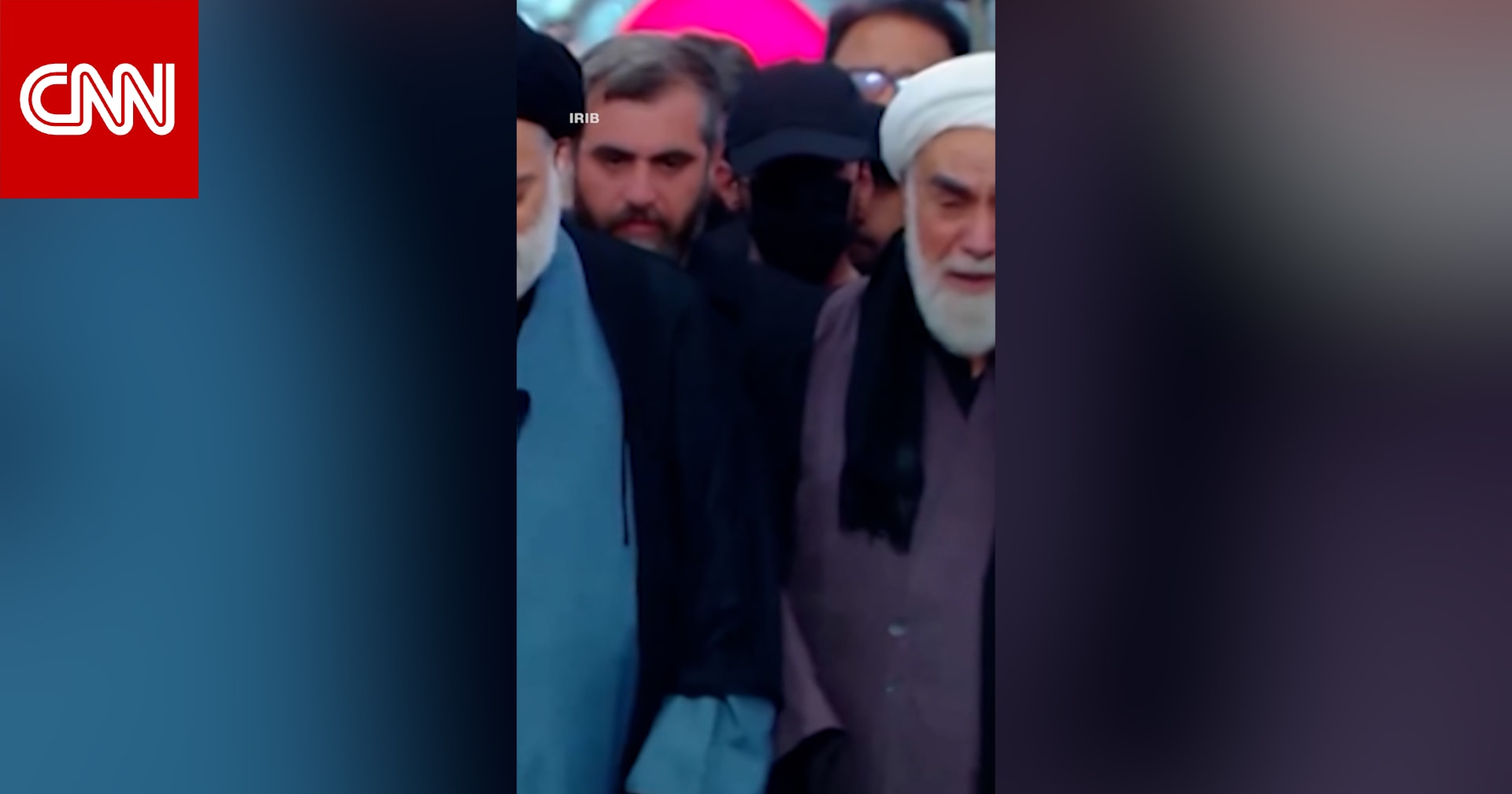
Ali Khamenei, the second Supreme Leader of the Iranian regime, was buried last Friday in the city of Mashhad, more than four months after his death. This is a long time to bury a political and religious leader, but it is not as long to bring about major and significant changes resulting from the killing of a dictator who held power for 37 years in one of the most influential countries in the world.
Iran's importance stems from being a vast country with a very special geopolitical position. It is the bridge connecting Central Asia to the modern Middle East, possesses some of the richest oil and gas reserves on earth, and controls the bottleneck of the world's most important economic waterway, the Strait of Hormuz. It is also a fertile country with diverse climate geography, unique natural resources, and a people who have contributed to shaping the history of civilization in the East. It is natural that a country with such unique characteristics, from ancient times to the future, remains a subject of interest and ambition, and enjoys exceptional importance.
For more than 47 years, a country with these attributes faced the challenge of being subjected to one of the rarest and most extreme forms of sectarian rule in modern times. A part of society represented an extension of the legacy of stagnation left by clerics and their followers since the Qajar era, and remained isolated and unable to show its strength during the reigns of the first and second Pahlavis, before, with the 1979 revolution and the arrival of clerics linked to Khomeini to power, it managed to seize Iran's wealth and strengthen its power bases that had gradually weakened. The funeral ceremonies for the second Supreme Leader of the Iranian regime, which lasted more than a week, beginning in Tehran and Qom, then moving to Najaf and Karbala, both within the Iranian regime's sphere of influence, before reaching Mashhad, carried an important political and social message: 'Look at our legitimacy.'
This is the legitimacy of a regime that eroded in the eyes of Iranians at home and abroad after the killing of thousands of protesters during the January 2026 protests, and then, during the 40-day war with the United States and Israel, and with the killing of regime leaders, it seemed to have reached the end of the road.
Alongside the former Supreme Leader, dozens of senior political and military officials were assassinated across Iran as part of an effort to topple the regime. However, the Iranian regime, thanks to the existence of the Revolutionary Guard institution, was able to withstand the severe strikes carried out by Israel and the United States, which extended to Iranian infrastructure, before entering, after 40 days, a ceasefire and a 60-day memorandum of understanding with the United States.
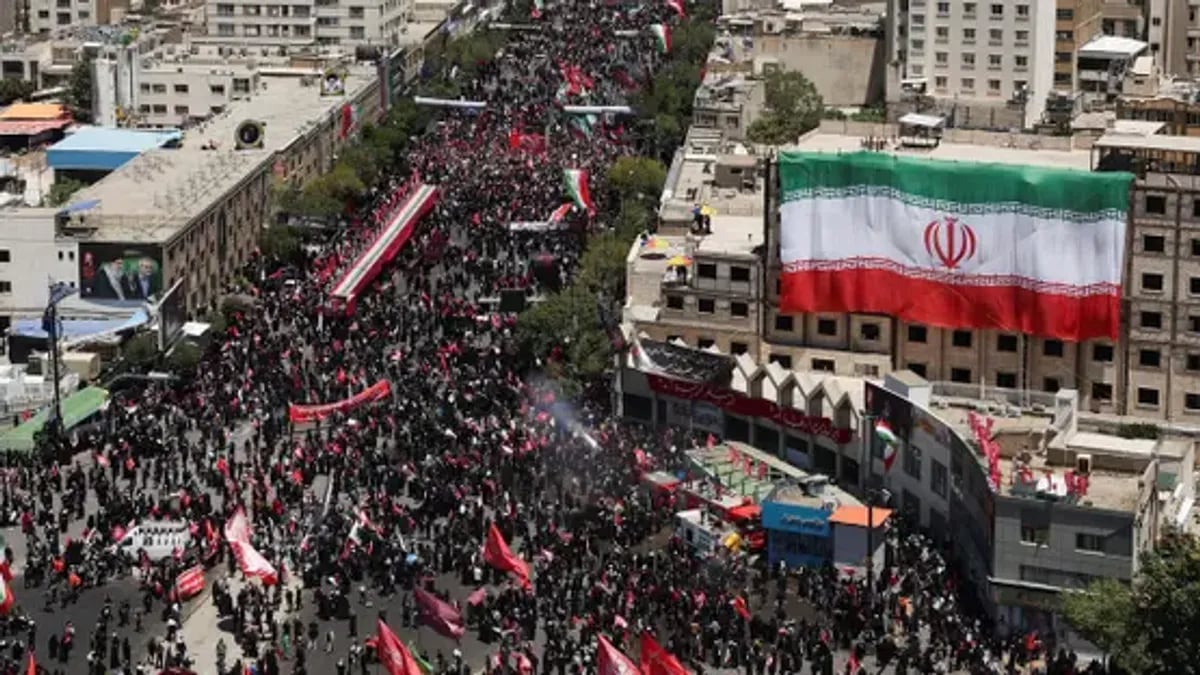
The mobilization of hundreds of thousands of regime supporters in various cities was a real and undeniable fact, but they took to the streets not only to bid farewell to their leader but also to confront their opponents. However, it should be noted that this comparison is not valid given that the Iranian people are deprived of the right to organize gatherings and express their opinions freely. But since the regime is able to provide safe conditions for the participation of its supporters, the week-long mourning ceremonies, in that form and style, were nothing more than a display of internal political weight and an attempt to consolidate the regime's position and international legitimacy under the leadership of a new Supreme Leader who has not appeared since the death of his father until now.
The extensive burial ceremonies for Ali Khamenei were organized with the aim of turning them into an occasion to demonstrate the regime's legitimacy, as his supporters and those associated with him were called to take to the streets to provide this legitimacy for the new political rulers and the ruling core within the regime.
The Revolutionary Guard managed, during the widespread popular protests last January, and then during the 40-day war, to save the regime from the risk of collapse. Therefore, it can be said that the military will maintain, in post-Khamenei Sr. Iran, a broad and prominent presence in internal and external affairs, until the authority of the new Supreme Leader is fully consolidated.
I believe that the Iranian regime is currently going through a transitional phase in which it seeks to consolidate a new identity imposed by the repercussions of the former Supreme Leader's death, the major war with the United States, and the arrival of new leadership to power. In light of this reality, its priority seems to be reaching a comprehensive agreement with the United States and ending the state of war to emerge from the impasse of internal and external conflicts.
It seems that the Iranian regime in its new form has become more willing to end the confrontation with the United States, citing the direct meetings and costly negotiations that the Revolutionary Guard conducted in the waters of southern Iran. Since the crisis of holding American diplomats in Tehran in 1979, the two countries have lived, for 46 years, in a state of constant alert and conflict, approaching the brink of war more than once.
In May 1980, then-US President Jimmy Carter ordered the execution of Operation Eagle Claw to rescue the diplomats held in Tehran. Carter mentioned in his memoirs that he was studying extensive plans to strike sensitive targets inside Iran, but the operation was canceled after encountering a sandstorm and technical failures in helicopters in the Tabas desert, before reaching the capital.
That was not the only time Iran and the United States approached military confrontation; it happened on three other occasions.
After the bombing of the Khobar Towers near the city of Dhahran in Saudi Arabia on June 25, 1996, which killed 19 American servicemen and wounded hundreds, the two countries again approached the brink of confrontation. Subsequent US investigations and indictments in the case accused elements of the 'Hezbollah al-Hejaz' organization, claiming that individuals in the Revolutionary Guard and Iranian security agencies provided support for the operation, which Tehran denied. Nevertheless, Washington explored military options against Iran, while the administration of President Bill Clinton, according to US accounts, preferred to wait for evidence that could be defended in court and before public opinion before undertaking any military action.
Original source: Independent Arabia



Comments (0)
Be the first to comment.