Israel paves way for largest settlement neighborhood inside Palestinian neighborhood in East Jerusalem
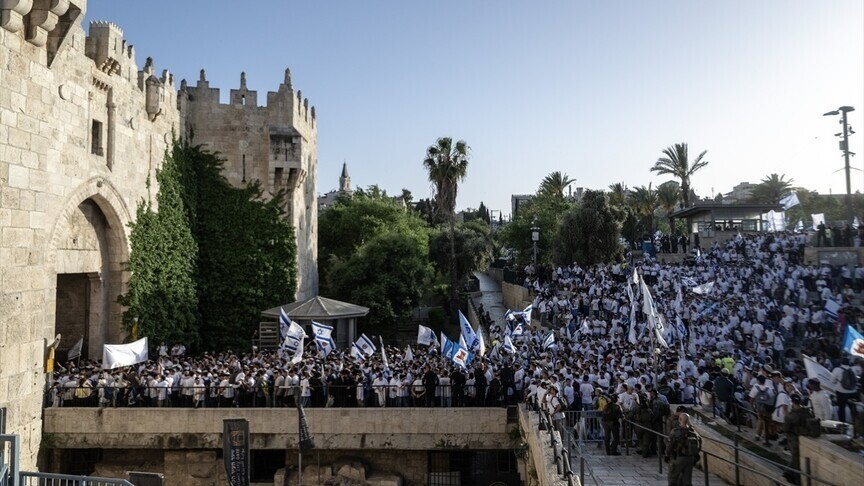
The District Committee for Planning and Construction of the Israeli Jerusalem Municipality approved depositing a plan that includes about 450 housing units in the Umm Leisun neighborhood
JERUSALEM / Said Amouri / Anadolu
A human rights group warned on Sunday of a new plan being advanced by the Israeli Jerusalem Municipality to establish a large settlement neighborhood inside the Palestinian Umm Leisun neighborhood in East Jerusalem, representing an escalation in the policy of settlement expansion within Palestinian neighborhoods.
The Israeli human rights group Ir Amim said in a statement that the District Committee for Planning and Construction of the Israeli Jerusalem Municipality approved depositing a plan that includes about 450 settlement units in the Umm Leisun neighborhood, after the project had been frozen for more than two years due to infrastructure-related obstacles.
It added that the intervention of the Jerusalem Municipality and its joining the project as the entity presenting the plan made it possible to overcome those obstacles, paving the way for its implementation.
The Umm Leisun neighborhood is located between the towns of Jabal al-Mukabbir and Sur Baher in East Jerusalem, and currently contains about 800 Palestinian housing units.
The new settlement project is expected to bring about a significant change in the urban and demographic character of the neighborhood by establishing hundreds of settlement units within an existing Palestinian residential area, according to the group's statement.
Ir Amim stressed that the project is unprecedented in its size within Palestinian neighborhoods in East Jerusalem.
It noted that it could accommodate about 2,000 settlers, exacerbating friction and undermining the stability of the area.
The rights group considered that the involvement of the (Israeli) Jerusalem Municipality in the project is not an ordinary planning decision, but rather reflects a 'clear political choice' to support settlements.
It also accused the municipality of favoring settlement agendas at the expense of Palestinian residents and their rights in the city.
The United Nations and most countries around the world consider Israeli settlements built on occupied Palestinian territory illegal under international law, and view them as undermining the prospects for a two-state solution.
Palestinians see such steps as part of an accelerated Israeli policy to create facts on the ground through settlement expansion and land confiscation, hindering the establishment of an independent Palestinian state.
In 1948, Israel was established on Palestinian land after the displacement of hundreds of thousands of Palestinians, and in 1967 it occupied the remainder of the Palestinian territories, continuing its control over them.
Original source: Anadolu Agency





Comments (0)
Be the first to comment.