Australia: Economic crises boost anti-Muslim party
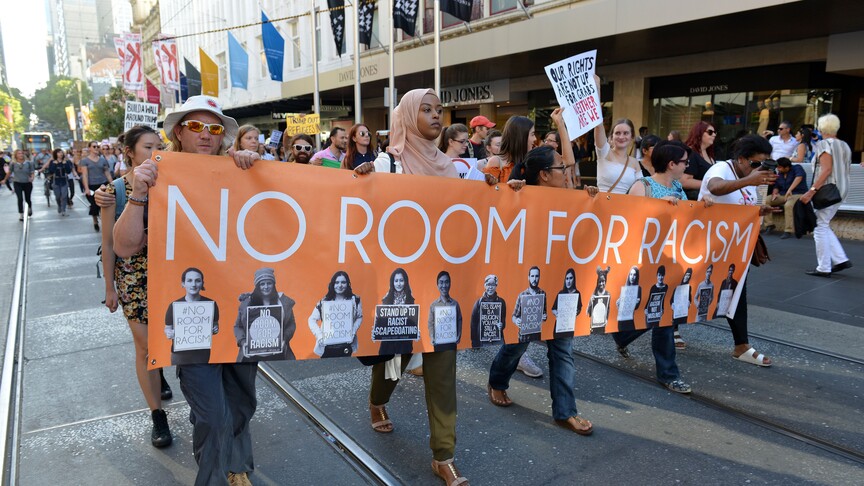
Australia's far-right One Nation party is experiencing an unprecedented rise after nearly three decades on the political fringe, driven by economic crises and a decline in opposition, a development that has raised growing fears of an increase in anti-Muslim and anti-immigrant rhetoric.
Melbourne / Anadolu
** Experts in statements to Anadolu:
- The economic pressures facing Australian society have played a significant role in changing voter attitudes
- The rapid rise of the extremist One Nation party may threaten multiculturalism and deepen social divisions
- The rise of the far right in Australia is part of a wave seen in Europe and the United States
- The One Nation party's rhetoric under the slogan of 'Australian values' hides a racist tendency based on xenophobia
Australia's far-right One Nation party is experiencing an unprecedented rise after nearly three decades on the political fringe, driven by economic crises and a decline in opposition, a development that has raised growing fears of an increase in anti-Muslim and anti-immigrant rhetoric.
This rise comes months after a crisis within the conservative coalition of the Liberal and National parties following its defeat in the general election held in May 2025.
This allowed the One Nation party to expand its political presence, benefiting from growing public discontent over rising living costs, the housing crisis, and escalating debate over immigration.
Opinion polls conducted by RedBridge Group, YouGov, Newspoll, and Resolve Poll between late May and the end of June showed the party's support rising to around 30 percent, after it had received 6.4 percent of the vote in the last general election.
The party also strengthened its political presence after former Deputy Prime Minister and former National Party leader Barnaby Joyce joined it in December 2025, followed by its first electoral breakthrough in its history by winning a seat in the House of Representatives during the by-election in the Farrar district in New South Wales.
The One Nation party was founded in 1997 in Queensland (northeast) under the leadership of Senator Pauline Hanson.
The party adopts a populist nationalist agenda focusing on opposition to immigration, multiculturalism, and Islam, along with calling for withdrawal from some international organizations and reducing foreign trade agreements.
** Opposition and economic crises fueled the rise
Bulent Dala, executive director of the Australian Multicultural Foundation, said the leadership crisis that hit the conservative opposition coalition was one of the most prominent factors contributing to the party's rise.
He told Anadolu that the economic pressures facing Australian society have played a significant role in changing voter attitudes.
Dala pointed out that rising living costs, the housing crisis, and economic uncertainty have given the populist rhetoric adopted by the party a wider space to influence.
He added that the slogans the party promotes are not new, but they have begun to find greater resonance as economic pressures mount and international tensions impact the global economy.
** Anti-Muslim rhetoric
The name of party leader Pauline Hanson has been associated in recent years with a series of statements that sparked widespread controversy, including her entering the federal parliament wearing a niqab in a protest move, along with earlier statements in which she said 'there is no good Muslim'.
In her latest remarks, Hanson claimed during a speech before the National Press Club that Muslims are 'invading Australia,' sparking a new wave of criticism.
Dala warned that rhetoric targeting Muslims and immigrants undermines social harmony, stressing that blaming a religious group or social category for economic and security crises represents a selective and dangerous approach.
He added that this type of political discourse only deepens social division and increases levels of anger and polarization within the country.
** Fears of far-right escalation
Dala noted that Australian security agencies have previously considered neo-Nazi groups as the biggest security threat in the country, criticizing the One Nation party's disregard for this issue compared to its constant focus on Muslims and immigrants.
He said the real danger lies in the growth of far-right movements, especially with their expanding online activity and increasing ability to influence young people.
The party also sparked controversy by proposing the abolition of the official multiculturalism policy and replacing it with a 'single culture' model.
Dala considered this proposal unworkable, noting that Australia has historically been built on immigration, and one cannot speak of a single dominant ethnic identity there.
** Warnings of repeating historical experiences
For his part, political science professor Joseph Camilleri said that what Australia is witnessing is not an isolated case but comes within a broader wave of the rise of far-right parties in Europe and the United States.
He explained to Anadolu that large segments of voters have begun to lose trust in traditional parties, while many feel their voices are no longer represented within the political system, prompting some to adopt protest options by supporting populist parties.
Camilleri warned that this scene recalls the political and economic conditions that Europe witnessed during the 1920s and 1930s, which paved the way for the rise of far-right currents that later led to major wars and conflicts.
He added that the rhetoric promoted by the One Nation party under the slogan of 'Australian values' hides at its core a tendency based on favoring the traditional Anglo-Australian identity, which includes a clear degree of racist and xenophobic tendencies.
He also pointed out that the party has recently received increased financial support from some interest groups, warning that its access to power could pose a threat to the democratic system, as previous historical experiences with similar parties in other countries have shown.
Although the current balance of power makes it unlikely for the party to come to power alone, observers believe that increasing its parliamentary representation may give it greater influence on government policies, especially in the areas of immigration, security, and multiculturalism.
Attention is turning to the Victoria state election scheduled for November 20, 2026, which is seen as an important test to measure whether the party's rise represents a temporary wave or the beginning of a broader shift in the Australian political mood before the general election scheduled for 2028.
Original source: Anadolu Agency






Comments (0)
Be the first to comment.