Pakistan Revives Mediation Amid Ceasefire Dispute
Pakistan has intensified its efforts to bring Iran and the United States back to the negotiating table in an attempt to salvage the collapsed interim agreement, as the two sides continued their attacks for the tenth day.
Pakistan has stepped up its efforts to bring Iran and the United States back to the negotiating table in an attempt to salvage the collapsed interim agreement, while the two sides continued their attacks for the tenth consecutive day amid escalating disputes over the Strait of Hormuz and conditions for a ceasefire.
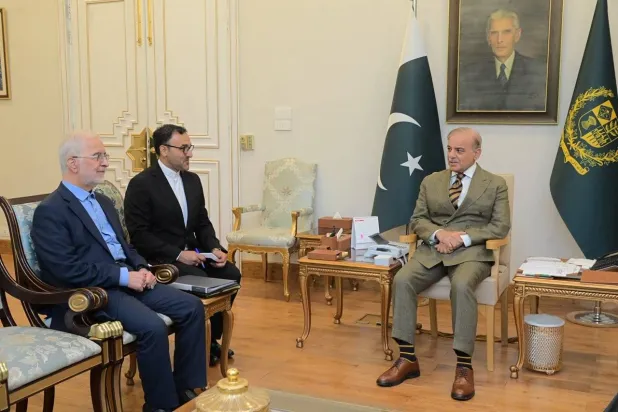
Iranian Interior Minister Eskandar Momeni began a series of meetings in Islamabad on Tuesday, meeting with Pakistani Army Chief General Asim Munir before meeting with Prime Minister Shehbaz Sharif, as part of Pakistani efforts to revive the diplomatic track.
Sharif expressed deep concern over the escalation, calling on the parties to exercise restraint and avoid steps that would further destabilize the region.
A statement from Sharif's office quoted him as urging the parties to refrain from any steps that would further destabilize the region. He added that he informed Momeni that Pakistan would continue its efforts that contributed to the memorandum of understanding that halted the war in June.
Authorities did not disclose details of the closed-door talks, nor was it clear what new arrangements could be reached to stop the fighting, or whether the efforts aimed at reviving the previous agreement in a modified form.
Pakistan's political leadership and Munir, who commands the army and defense forces, played a key role in the mediation that led to the memorandum of understanding signed between the United States and Iran in June.
Islamabad is currently working to persuade both sides to resume negotiations to address outstanding issues in the agreement.
Reuters reported on Monday, citing two Pakistani government sources, that Momeni asked Islamabad to resume its role as mediator in the conflict between Iran and the United States. The sources said the visit was the second by the Iranian interior minister to Pakistan in less than a week.
Iranian Foreign Ministry spokesman Esmaeil Baghaei confirmed on Monday that diplomatic efforts are still ongoing through countries acting as mediators, despite the escalation of military operations and the collapse of arrangements that were supposed to end the fighting.
Iranian Foreign Minister Abbas Araghchi speaks with Pakistani Prime Minister Shehbaz Sharif in the presence of Pakistani Army Chief General Asim Munir before the quadrilateral meeting at the Bürgenstock resort in Switzerland (Reuters)
The interim agreement, signed last month, faltered as attacks resumed, while ship traffic through the Strait of Hormuz slowed significantly.
The dispute over freedom of navigation in the waterway remained a major obstacle to re-establishing the agreement.
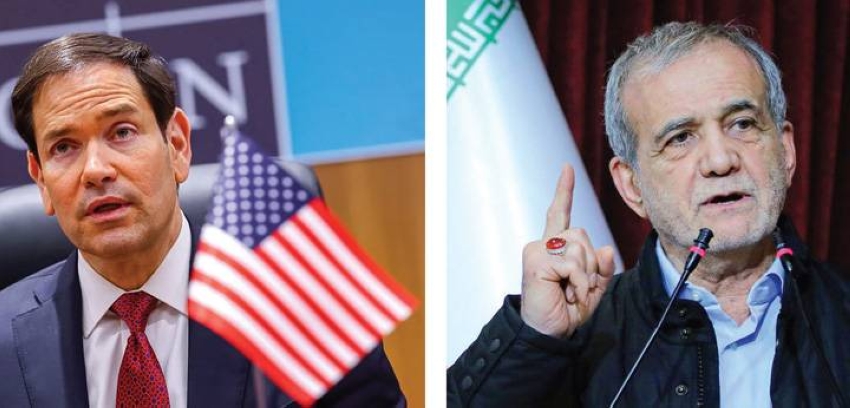
In a sign of keeping the door open for diplomacy, US Secretary of State Marco Rubio said on Sunday that the United States remains ready to negotiate with Iran, but stressed that any talks 'must be genuine.'
Rubio did not specify the conditions Tehran must meet, nor was it clear whether Iran would present proposals that US President Donald Trump could consider a basis for serious negotiations.
Reuters quoted a senior Iranian official as saying that mediators presented Tehran with a proposal to halt attacks for ten days, aiming to calm the war and find ways to revive the interim agreement, without disclosing the identity of the mediators or details of the discussions.
However, the Jerusalem Post reported on Tuesday, citing two sources familiar with the negotiations, that Tehran was the one that proposed the truce initiative, before Qatari, Egyptian, Omani, and Pakistani officials conveyed it to the United States and added other elements during their talks with both sides.
0 seconds of 0 secondsVolume 90%
Press shift question mark to access a list of keyboard shortcuts
00:00
00:00
00:00
According to the newspaper, Washington rejected the proposal in its current form and demanded a longer cessation of fighting, and that at least partial understandings on freedom of navigation in the Strait of Hormuz be reached before any truce takes effect, with remaining details to be completed during the proposed pause.
The two sources said some officials in Trump's administration described the Iranian initiative as 'absurd' and 'illogical.' The newspaper quoted a US official as saying that Trump is focused on ensuring that 'Iran pays the price' for violating the memorandum of understanding and the killing of American servicemen.
The official added that the strikes would continue until the president decides otherwise, but he also noted that talks between the two countries are still ongoing.
Trump wrote on his social media platform on Monday: 'Every time Iran kills an American soldier, they will pay a multiple price for it,' a stance that reflects the difficulty of the Pakistani mediators' task, despite the continuation of communication channels and attempts to reach a new formula to stop the fighting.
Read also
Original source: Asharq Al-Awsat


Comments (0)
Be the first to comment.