By Name: Delegations from 5 Arab Countries Attend Funeral of Ali Khamenei
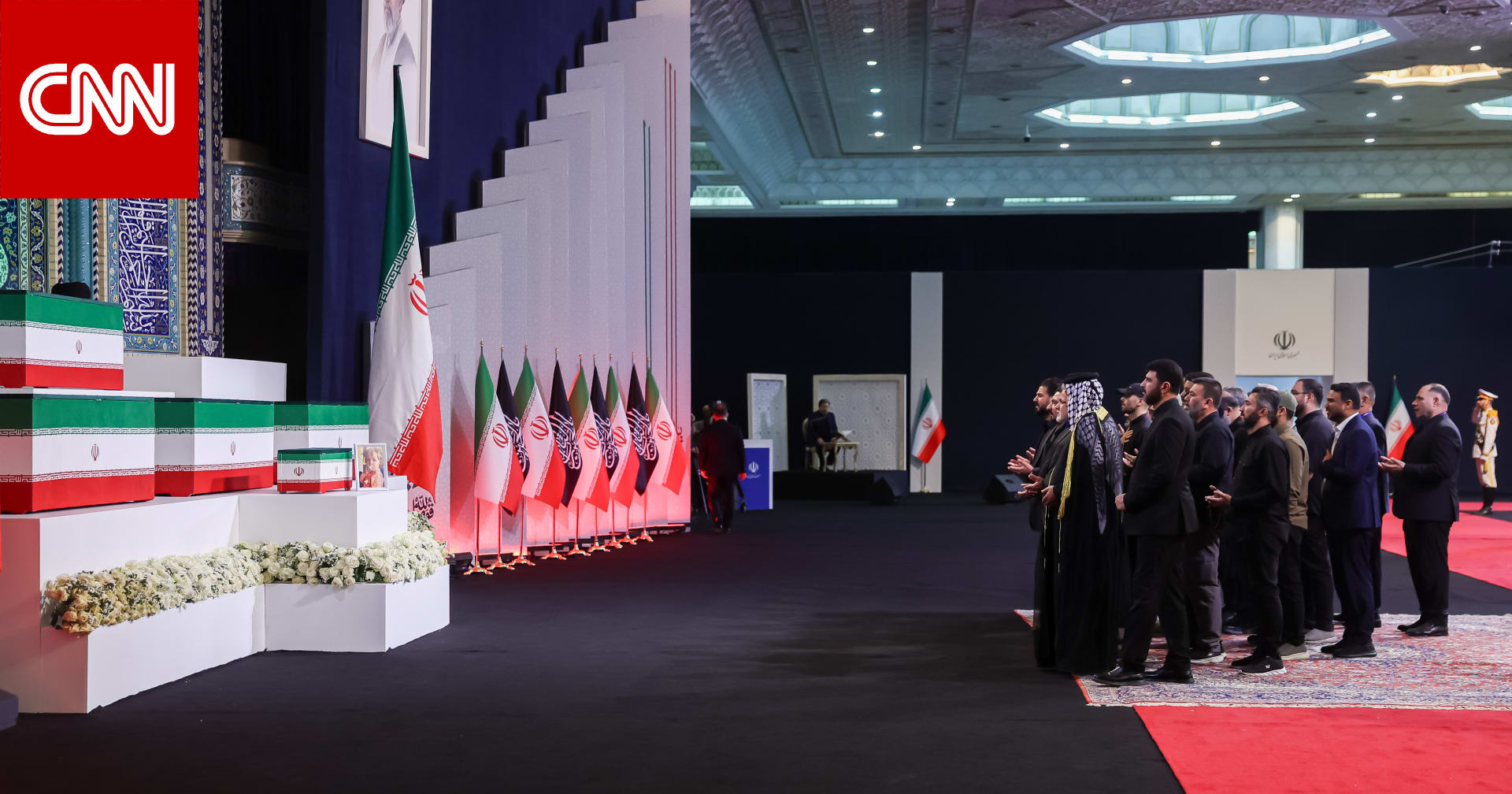
(CNN)-- Several top Iranian officials took part on Friday in the funeral ceremony of former Supreme Leader of Iran, Ayatollah Ali Khamenei.
Also attending the ceremony were a number of senior foreign officials to offer condolences and pay tribute to the late leader, in a sign of their continued support for the new Iranian leadership.
Below are the most prominent Iranian figures present at Khamenei's funeral on Friday:
Chief negotiator Mohammad Baqer Qalibaf: who led negotiations with the United States, which resulted in a temporary agreement last month.
Iranian President Masoud Pezeshkian: who emerged as one of the political survivors during one of the most turbulent periods in the Islamic Republic's history, maintaining a degree of popular support despite the pressures of war and attacks from both hardliners and opposition forces.
Iranian Foreign Minister Abbas Araghchi: one of the most outspoken politicians and a key member of Iran's negotiating team with the United States.
Most prominent foreign attendees:
Iraqi President Nizar Amidi.
Georgian President Mikheil Kavelashvili.
President of Tajikistan Emomali Rahmon.
Turkish Vice President Cevdet Yılmaz.
Pakistani Prime Minister Shehbaz Sharif.
Lebanese Defense Minister Michel Mansi.
Afghan Foreign Minister Amir Khan Muttaqi.
Saudi Deputy Foreign Minister Walid al-Khuraiji.
Chairman of the State Council of Oman Abdulmalik bin Abdullah al-Khalili.
Qatari Shura Council Speaker Hassan bin Abdullah al-Ghanim.
Hezbollah official and former Lebanese minister Mahmoud Qamati.
What to expect during Khamenei's funeral ceremonies?
The funeral ceremonies for Ayatollah Ali Khamenei will last several days. Below are the main expected milestones over the next week:
July 3: Tehran receives foreign delegations today, welcomed by senior Iranian officials, including President Masoud Pezeshkian and Parliament Speaker Mohammad Baqer Qalibaf.
July 4: The public part of the funeral ceremonies begins at 6 a.m. local time, with the opening of Imam Khomeini Mosalla in Tehran to receive mourners around the clock.
July 5: The second day is dedicated to holding funeral prayers for Khamenei and members of his family, with public farewell ceremonies to continue afterward.
July 6: Tehran will host the main funeral ceremonies, expected to start at 6 a.m. local time, followed by a funeral procession including funeral prayers along a 10-kilometer route from Imam Hussein Square to Azadi Square.
July 7: A prayer service will be held at Jamkaran Mosque in Qom, one of the most important holy cities, located about 150 kilometers south of Tehran. A funeral procession may also be organized there if conditions permit.
July 8: Khamenei's body will be transferred to Najaf, Iraq, a step by which Iranian authorities seek to show that their revolutionary ideology still transcends borders. An official reception ceremony is planned, attended by the Iraqi Prime Minister, senior government officials, and religious leaders, before the procession moves to the shrine of Imam Ali, one of the most important sites for Shiite Muslims. Afterward, the body will be transported by helicopter to the shrine of Imam Hussein in Karbala, about 80 kilometers away, before being flown back to Iran.
July 9: Khamenei will be buried at the shrine of Imam Reza in Mashhad, one of the holiest cities for Shiite Muslims, and the city where he was born.
Original source: CNN Arabic


Comments (0)
Be the first to comment.