Chemical Weapons Organization Restores Full Rights and Privileges to Syria
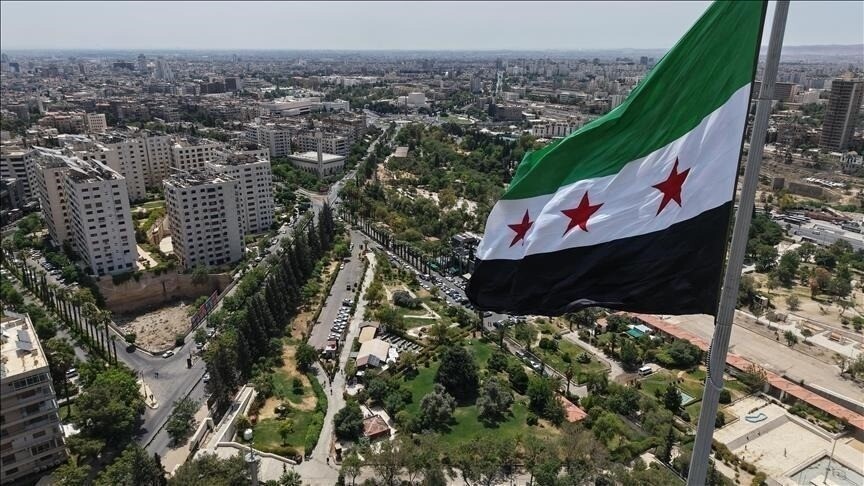
The decision comes after some of Damascus's membership rights were suspended in 2021, and after it recently announced progress in clearing remnants of its chemical weapons program.
ISTANBUL / Laith al-Junaidi / Anadolu
The Executive Council of the Organization for the Prohibition of Chemical Weapons (OPCW) on Thursday adopted a decision to restore Syria's full rights and official privileges under the Chemical Weapons Convention.
Syria's Permanent Representative to the OPCW, Muhammad Kutub, said that the OPCW Executive Council adopted the decision by consensus today, concerning the restoration of the Syrian Arab Republic's rights and privileges under the Chemical Weapons Convention.
Kutub added, according to Syria's Al-Ikhbariya channel, that the decision 'represents an important step in the path of restoring Syria's full role within the organization.'
He also emphasized that the decision reflects 'growing international confidence in the progress made by the Syrian Arab Republic in cooperating with the Technical Secretariat, addressing the legacy of the chemical weapons program from the era of the deposed regime, and fulfilling its obligations under the convention.'
Kutub stressed that 'the restoration of rights and privileges represents, for the Syrian people, more than just an institutional procedure.'
He considered the decision to be 'a welcome message for Syria's return to its natural place within the organization, a message of justice for the victims who suffered from the use of chemical weapons, and a restoration of the rights of their state, which were suspended in 2021 as a result of the crimes and violations committed by the deposed regime.'
Last May, Syrian Foreign Minister Asaad al-Shibani announced new progress in the file of clearing remnants of chemical weapons linked to the era of the ousted regime, after finding quantities of ammunition, materials, and equipment for manufacturing and storage, and securing them for destruction.
The Assad regime committed a major chemical massacre in the Eastern Ghouta and Moadamiya al-Sham areas on August 21, 2013, resulting in the deaths of more than 1,400 civilians, including hundreds of children and women, and injuring more than 10,000 others.
Following the attack, the Syrian regime joined the OPCW on September 13, 2013.
In the same month, the UN Security Council adopted Resolution 2118 concerning Syria's chemical weapons.
The OPCW and the United Nations formed a joint inspection mission on chemical weapons in Syria.
The organization announced the end of the mission's task in Syria on August 19, 2014, after destroying the regime's declared stockpile of chemical weapons.
However, it later became clear that the destruction was limited to the sites that the Assad regime had reported; its forces later committed a large number of attacks with chlorine and sarin gases in several cities, most notably Aleppo in northern Syria.
On April 21, 2021, the states parties to the OPCW decided to suspend some of Syria's membership rights in the organization.
The decision came after the organization confirmed the use of chemical weapons in attacks that took place in the town of Latamneh in Hama province, central Syria, in March 2017, and in the city of Saraqib in Idlib province, northwestern Syria, in February 2018.
In November 2025, Syria reactivated its permanent mission to the OPCW in The Hague, Netherlands, and its Foreign Ministry appointed Muhammad Kutub as its permanent representative.
Original source: Anadolu Agency


Comments (0)
Be the first to comment.