From Supporting Assad to Partnering with al-Sharaa: How Have Syrian-French Relations Changed Between the Two Eras?
A notable development in Syrian-French relations following a visit by the French president to Damascus, which has long witnessed fluctuations in diplomatic ties between the two countries over the past 26 years during the rule of former Syrian President Bashar al-Assad.
From Supporting Assad to Partnering with al-Sharaa: How Have Syrian-French Relations Changed Between the Two Eras?
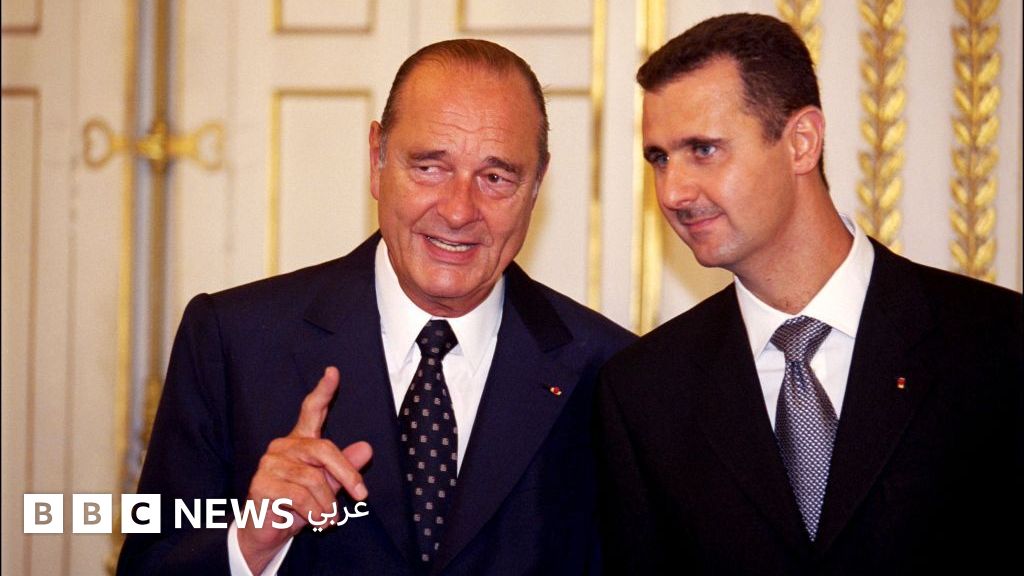
Image caption, The assassination of former Lebanese Prime Minister Rafik Hariri, a friend of French President Jacques Chirac, marked a turning point in Syrian-French relations.
Published 14 minutes ago
Reading time: 6 minutes
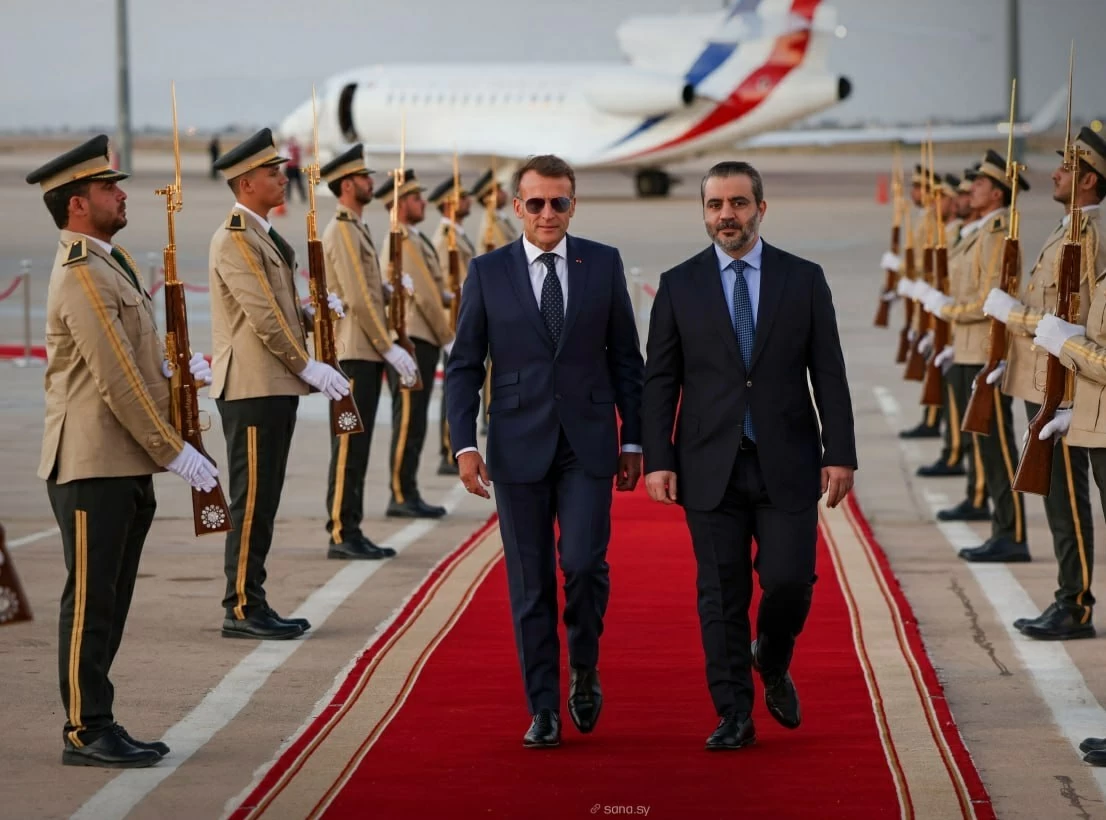
French President Emmanuel Macron made an official visit to Damascus on Tuesday to discuss ways to strengthen bilateral ties, a step reflecting the continued political rapprochement between the two countries since the political change in Syria in late 2024. The visit included the signing of bilateral agreements in several fields and an announcement that ambassadors would soon be exchanged.
Throughout history, relations between the two countries have gone through periods of development and momentum, as well as fluctuations, but the most notable moment in this relationship was the presence of French President Jacques Chirac as the only Western leader at the funeral of the late President Hafez al-Assad in 2000.
Marc Pierini, a visiting scholar at the Carnegie Europe Center, says: 'I remember the official funeral ceremony for the late Syrian President Hafez al-Assad in June 2000, when I was serving as the European Union ambassador to Damascus. Among the then 15 EU member states, only Jacques Chirac and Romano Prodi, who was then President of the European Commission, attended the funeral.'
Macron affirms to al-Sharaa his support for Syria's stability after two explosions in Damascus
Pierini, who was EU ambassador to Syria, explains that Chirac's attendance at Assad's funeral was to 'encourage the new president, Bashar al-Assad, to take decisive steps toward economic and political reforms.'
President Chirac also awarded Bashar al-Assad the Legion of Honour in 2001.
However, relations between the two countries deteriorated under President Jacques Chirac in 2005, shortly after the assassination of Lebanese Prime Minister Rafik Hariri, who was a personal friend of Chirac.
At the time, accusations were directed at the Assad regime for involvement in Hariri's assassination, prompting Chirac to cut high-level contacts with Syrian officials.
Moreover, France and the United States issued a joint statement calling for an international investigation into Hariri's murder and for the full withdrawal of Syrian forces from Lebanon after their 29-year presence there.
Skip most read and continue reading
Is there a bias from FIFA towards the Argentine national team in the World Cup?
Resignation 'to relieve the government of embarrassment' raises the question: How are ministers chosen in Egypt?
The United States announces new strikes on Iran, and Trump threatens to increase the intensity of strikes
Fadel Shaker after his release: 'Today, new lines of freedom were written for me'
Image caption, The assassination of former Lebanese Prime Minister Rafik Hariri, a friend of French President Jacques Chirac, marked a turning point in Syrian-French relations
Support for protests in Syria
With the arrival of former French President Nicolas Sarkozy to power in France, Sarkozy pursued a policy of openness toward Syria.
He hosted Bashar al-Assad in Damascus in July 2008, aiming to encourage regional peace talks between Syria and Israel.
Later, in September of the same year, the former French president visited Damascus and received a lavish official welcome before dining with Assad at the People's Palace in Damascus.
UN Security Council condemns attacks on US and French embassies in Damascus
In 2011, diplomatic relations between the two countries deteriorated again after the US and French embassies in Damascus were attacked shortly after the US and French ambassadors visited opposition strongholds in the city of Hama in central Syria.
At the time, Paris strongly criticized what it called an attack on its embassy in Damascus, describing it as a flagrant violation of international law.
In 2012, during the era of French President François Hollande, the violent situation in Syria led Hollande to announce the closure of the French embassy in Damascus on March 2.
Image caption, French President Emmanuel Macron threatened in 2018 to launch strikes in Syria if there was 'compelling evidence' of the Syrian government's use of chemical weapons against Syrian civilians
Chemical weapons attack
In 2018, Syria returned to France the Legion of Honour medal that Chirac had awarded to Bashar al-Assad, days after the office of French President Emmanuel Macron announced its intention to withdraw the medal as a 'disciplinary measure' against the Assad regime, after accusing the Syrian president of launching chemical weapons attacks on civilians during the war that tore the country apart.
At the time, the French president stated that his country had evidence that the Syrian army had launched a chemical weapons attack on Douma.
He also threatened, at the time, to launch strikes inside Syria if there was 'compelling evidence' of the Syrian government's use of chemical weapons against Syrian civilians.
Macron threatens strikes in Syria if Damascus's use of chemical weapons against civilians is proven
Syria returns a medal to France that it had awarded to President Assad 17 years earlier
Image caption, Rifaat al-Assad, the uncle of Bashar al-Assad, lived most of the time in France from the mid-1980s, taking it as his exile after being accused of attempting to overthrow his brother, then-President Hafez al-Assad, in the mid-1980s
Rifaat al-Assad's assets in France
Skip podcast and continue reading
Worth attention
In-depth explanation of the most important events and topics to help you understand the key changes around you and their impact on your life
Episodes
End of podcast
From the mid-1980s, France was for years the exile home of Rifaat al-Assad, the uncle of Bashar al-Assad, after he was accused of attempting to overthrow his brother, then-President Hafez al-Assad.
In September 2021, France's highest court upheld a conviction against Rifaat al-Assad for acquiring properties in France worth millions of euros using funds embezzled from the Syrian state, following a criminal complaint filed in 2013 by the organization Sherpa, which defends victims of economic crimes, stating that the value of his real estate holdings far exceeded his known income.
Then-Syrian President Bashar al-Assad allowed his uncle Rifaat to return to the country to avoid imprisonment in France, on condition that he return without any political or social role.
Rifaat al-Assad: Who is the uncle of the Syrian president being tried in Europe?
Death of Rifaat al-Assad, accused of the 'Hama massacre'
Rifaat al-Assad returned to Syria in 2021, fleeing prison in France, then fled Syria in 2024 immediately after the fall of Bashar al-Assad's regime, until he died in January in Dubai, United Arab Emirates.
During his visit to Syria on Tuesday and his meeting with the head of the transitional authority, Ahmed al-Sharaa, French President Emmanuel Macron announced from Damascus that his country would return more than 50 million euros of 'illicit' funds seized from Rifaat al-Assad to the Syrian people, to be allocated to financing 'concrete' development projects on the ground.
Original source: BBC Arabic


Comments (0)
Be the first to comment.