Cultural Invasion
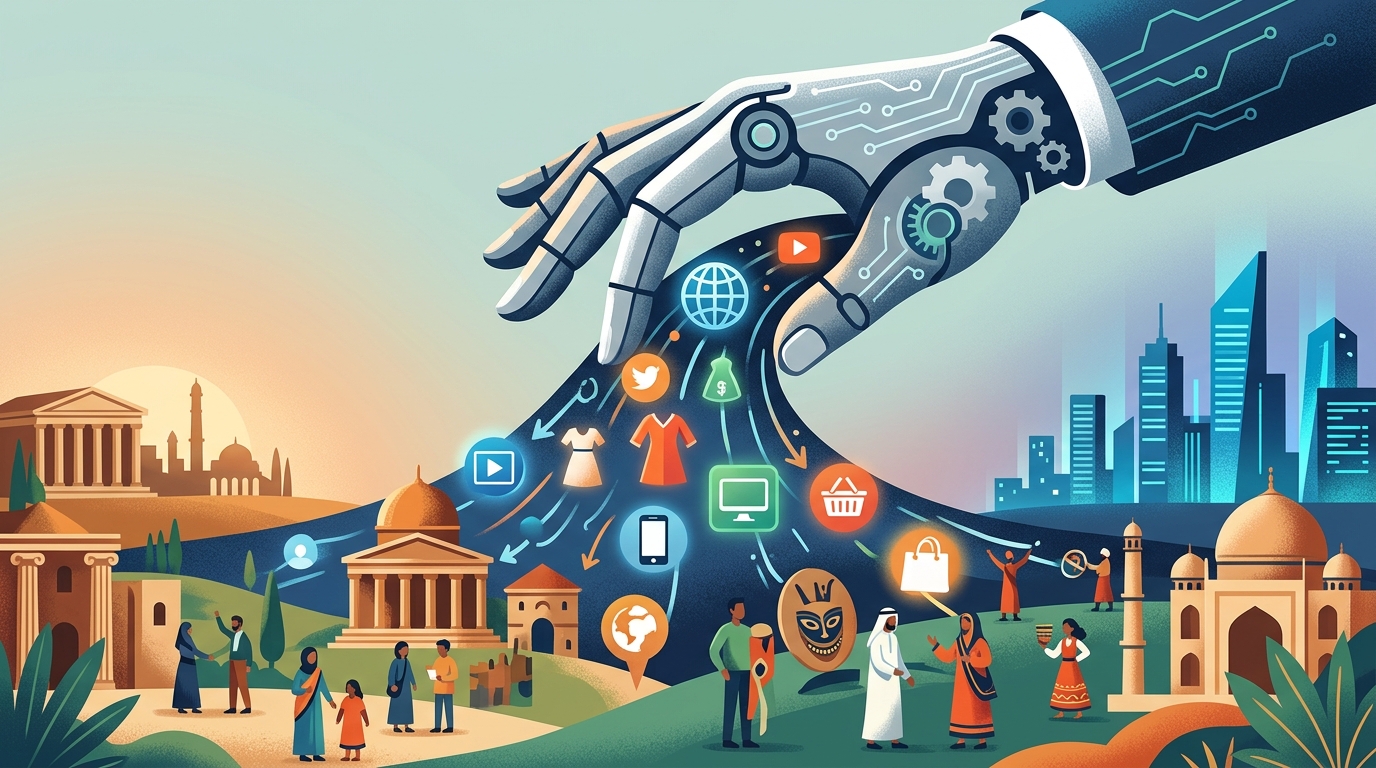
The concept of 'cultural invasion' is one of the most controversial in media and cultural studies. It refers to the transfer of values, symbols, lifestyles, and cultural models from a media and economically powerful society to a weaker one, making the local culture less present or less able to compete with the incoming culture. It specifically denotes an unequal exchange, when a state or major media companies possess the tools of production, distribution, language, image, and technology, and thus impose their cultural presence through...
The concept of 'cultural invasion' is one of the most controversial in media and cultural studies. It refers to the transfer of values, symbols, lifestyles, and cultural models from a media and economically powerful society to a weaker one, making the local culture less present or less able to compete with the incoming culture. It specifically denotes an unequal exchange, when a state or major media companies possess the tools of production, distribution, language, image, and technology, and impose their cultural presence through news, films, series, advertisements, music, and digital platforms.
The concept of 'cultural invasion' or 'media imperialism' emerged in the post-World War II context, and became more evident in the 1950s and 1960s with the independence of many Asian, African, and Latin American countries. These nations gained political independence but remained economically, technically, and media-dependent on the major Western centers. In this context, international communication researchers began to observe that global news often comes from major Western agencies, and that films, TV programs, and advertisements from the United States and Europe not only convey entertainment but also carry consumer values and images of modernity, success, women, family, work, and daily life. Hence the question arose: who benefits from this cultural flow?
One of the earliest experts in this field is American researcher Herbert Schiller, who published his famous book 'Mass Communications and American Empire' in 1969 and another book 'Communication and Cultural Domination' in 1976. Schiller argued that American media control is not merely a harmless spread of popular culture through films, series, music, and advertisements, but part of a global economic and political system that makes developing countries consumers of symbols, images, programs, and consumption patterns produced in Western countries, especially the United States. Schiller's importance lies in linking media to transnational corporations, advertising, and the economic structure of communication, not just media content.
British researcher Oliver Boyd-Barrett is also among the leading scholars in international communication and media control studies. Since the 1970s, he has contributed to the theoretical understanding of cultural invasion by focusing on the structure of the global media system, not just media content. Boyd-Barrett stated that cultural hegemony begins with control over the sources of news production and media content distribution, hence he coined the term 'media imperialism,' which refers to the dependence of many countries on media institutions, news agencies, and technologies from industrialized nations, making information flow one-way from the center to the periphery. His research emphasized that media influence is exerted not only through films or programs but also through communication infrastructure, media ownership, and news distribution networks, granting major states and companies ongoing power to shape global public opinion.
Currently, in the digital age, many researchers no longer view cultural invasion as a one-way process in which a single culture imposes its complete dominance over others. Instead, they see the digital reality as more complex, as local audiences have become more capable of producing, reinterpreting, and resisting content, and new cultural and media centers have emerged in many countries and regions outside the West. Therefore, the concept of cultural invasion retains its analytical value, but in a different and renewed form, focusing on the power imbalance in the digital environment, and on control over platforms, data, and software, rather than solely on the transfer of media messages between countries.
Original source: Al-Riyadh




Comments (0)
Be the first to comment.