Egypt supports Somalia's unity with African alliances and logistical and military aid
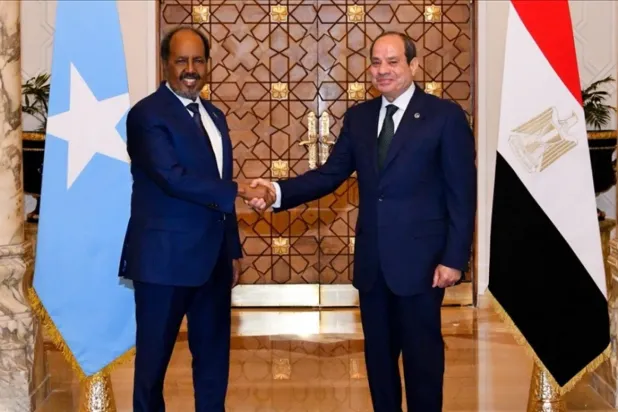
At a time when Egypt renewed its rejection of any attempts that would undermine the unity of Somali territory, specialists confirmed that Cairo continues to take practical steps to preserve Somalia's unity.
Iran escalates against Yemen's sovereignty... and pushes Houthis to undermine the truce
The crisis between the Yemeni government and the Houthis over the operation of Iranian flights to Sanaa airport entered a new phase of escalation, after the Yemeni Ministry of Defense announced targeting the airport runway to prevent an Iranian plane from landing that tried to reach the capital outside legal and sovereign procedures.
While observers of the Yemeni affairs fear that Iran is seeking to push the Houthis to further escalation and undermine the truce in place since 2022 and thwart peace efforts, the Yemeni presidency and government affirmed raising political, military, and diplomatic readiness to deal with the repercussions of the development, while ensuring not to expand the military confrontation.
The Yemeni move came days after official warnings in which the government rejected any flights to Sanaa airport that do not pass through state institutions, stressing its readiness to provide alternatives that ensure the continuation of civil aviation through the national carrier.
While Houthi sources reported that the plane, which was carrying a delegation from the group, later landed at Hodeidah airport, the Yemeni authorities held the group responsible for the escalation, accusing it of insisting on imposing air arrangements outside approved frameworks.
A circulating image of the Iranian plane after its arrival at Hodeidah airport (X)
This development is the first field measure taken by the Yemeni government since the crisis erupted over the Houthis' insistence on receiving Iranian flights at Sanaa airport, despite the government's rejection of operating any flights outside official channels, and its proposal of alternatives it said would ensure the continuation of civil aviation while preserving state sovereignty.
The Ministry of Defense said in a brief statement that the armed forces targeted the airport runway after the 'Iranian-backed terrorist Houthi militia prevented the Yemeni national airline from landing at Sanaa airport and insisted that Iranian aviation violate Yemeni territory,' affirming that the goal of the operation was to prevent the Iranian plane from landing.
The ministry had previously issued a public warning calling on citizens to evacuate Sanaa International Airport and stay away from its vicinity, stressing that it would deal with any party or plane attempting to violate Yemeni airspace or violate procedures and instructions issued by the competent authorities.
It explained that these measures come to protect the safety of citizens and take necessary precautionary measures to confront potential security developments, affirming the readiness of the armed forces to deal with any field developments in a way that preserves national sovereignty and safeguards the country's security and stability.
First presidential statement
The military move came after a statement by the Chairman of the Presidential Leadership Council, Dr. Rashad al-Alimi, in which he held the Houthis fully responsible for the escalation, affirming that the group insisted on receiving a new Iranian flight despite efforts by brothers and friends and mediations that sought to contain the crisis and prevent it from sliding into further tension.
Al-Alimi said that the government exhausted all political and legal options before reaching this stage, explaining that it offered to resume civilian flights via 'Yemenia Airways' as the legally mandated national carrier, and also proposed transporting the Houthi delegation from Tehran to Sanaa on a plane chartered by the national company, ensuring the continued operation of the airport and respecting Yemeni sovereignty and international commitments.
But the Houthis - according to the statement - rejected all those initiatives and insisted on receiving the Iranian plane outside state institutions, which the Yemeni president considered evidence that the group's goal is not to serve citizens or alleviate their suffering, but rather to entrench division and impose a fait accompli that serves external agendas.
Al-Alimi also considered that the continued support of the Iranian regime for these steps and its use of means and companies subject to international sanctions does not change the fact that the Houthis bear direct responsibility for the escalation, affirming that the Yemeni state will not allow its keenness on peace to become a cover for undermining its sovereignty.
In light of these developments, the Chairman of the Leadership Council directed the government, armed forces, and security agencies to raise the highest levels of readiness and take all political, diplomatic, legal, and military measures permitted by the constitution and international law to protect the airspace and land, sea, and air ports.
Government in continuous session
Amid this escalation, the Yemeni Cabinet held an emergency session in the interim capital Aden chaired by Prime Minister and Minister of Foreign Affairs Dr. Shaya al-Zindani, dedicated to discussing the developments resulting from the reception of the new Iranian flight at Sanaa airport.
The cabinet affirmed that the government exhausted all initiatives aimed at sparing Yemen and the region further escalation, but the Houthis continued to reject legal solutions and invited external interventions.
Houthi elements during a rally in Sanaa in solidarity with Iran (EPA)
The cabinet announced that the government remains in continuous session to follow up on the developments of the crisis and take necessary decisions urgently, and also approved the formation of a government crisis management team to coordinate military, political, diplomatic, legal, and media efforts, while following up on developments and submitting periodic reports to ensure swift response.
The cabinet directed the Ministries of Defense and Interior and all competent authorities to raise the level of readiness and enable the armed forces and security agencies to carry out their constitutional duties in protecting the sovereignty of the republic, defending its airspace and ports, and preventing any attempt to impose facts contrary to the constitution and law.
No expansion of confrontation
In a second statement, Chairman of the Presidential Leadership Council Rashad al-Alimi said that the measures taken by the armed forces came after completing military, security, and political assessments, affirming that the priority was to protect civilian lives and public property and not to expand the scope of confrontation in a way that serves what he described as Iranian objectives of using Yemen as an arena for its regional conflicts.
Al-Alimi affirmed that the state will not allow any plane to violate Yemeni airspace in the future, whether through Sanaa airport or any other airport, stressing that any attempt to impose a fait accompli that affects the country's sovereignty will be met with measures guaranteed by the constitution and law.
He explained that the decision to deal with the developments was not a retreat from the duty to protect sovereignty, but a responsible sovereign decision taken from a position of confidence in the capabilities of the armed forces, and after proving the readiness of state institutions to defend its land and airspace, while ensuring to spare Yemenis the repercussions of escalation.
The head of the Yemeni governing council reiterated that the government was and still is the most keen on continuing the operation of Sanaa airport in a legal and safe manner, referring to the initiatives it proposed to operate flights via 'Yemenia Airways,' in addition to its willingness to facilitate the transport of the Houthi delegation on a plane chartered by the national company.
Al-Alimi accused the Houthis of rejecting government initiatives and insisting on imposing arrangements that serve their agendas, holding the group directly responsible for the escalation, and holding Iran responsible for continuing to support these practices which he said violate Yemen's sovereignty and Security Council resolutions.
Original source: Asharq Al-Awsat


Comments (0)
Be the first to comment.