Ethiopia: Launch of 'National Dialogue' Amid Political Tensions
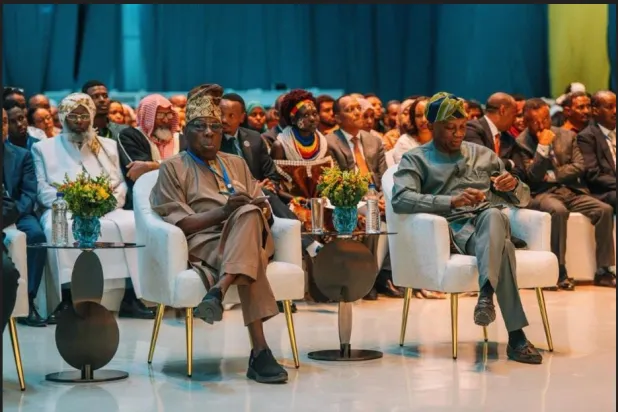
The 'National Dialogue' conference kicked off in the Ethiopian capital Addis Ababa on Wednesday, in the first comprehensive step of this process that the country initiated in 2021.
The 'National Dialogue' conference kicked off in the Ethiopian capital Addis Ababa on Wednesday, in the first comprehensive step of this process that the country initiated in 2021, amid the absence of the most prominent armed opposition groups in the country, particularly representatives of the Tigray People's Liberation Front.
An Ethiopian political analyst said in an interview with Asharq Al-Awsat that this launch is a key pillar for saving the Ethiopian state. He stressed that 'the absence of the most prominent opposition leaders in Amhara and Tigray, especially armed ones, poses a dilemma, but it comes within the framework of political disagreement, which is healthy as long as it does not turn into armed conflict,' and called for 'everyone to rally around the national dialogue.'
The forum was announced to convene on June 13 and will last for three weeks, described as a 'pivotal milestone in the national dialogue process that began in 2021,' according to the Ethiopian News Agency.
The dialogue comes after a landslide victory for the ruling Prosperity Party in parliamentary results, allowing it to form the government and continue under Abiy Ahmed.
The conference's agenda includes eight main items, as previously announced by the head of the Ethiopian National Dialogue Commission, Mesfin Araya, most notably 'nation-building,' which covers issues related to national identity, historical narratives, social cohesion, and the future of the Ethiopian state, as well as 'structure and system of governance,' the federal system, power-sharing mechanisms, constitutional governance, and institutional frameworks for managing the state, in addition to 'the status of federal cities,' focusing on discussing the administration, governance, and role of Addis Ababa and Dire Dawa in the national system.
Abiy Ahmed during the Ethiopian 'National Dialogue' conference on Wednesday in Addis Ababa (Ethiopian News Agency)
In an opening speech at the conference, Ethiopian Prime Minister Abiy Ahmed said on Wednesday that 'the Ethiopian National Dialogue conference, with its broad scope, inclusive process, long duration, and potential outcomes, can in many ways serve as a model for the rest of Africa.'
He warned that 'failing to seize such opportunities could lead to writing a painful page in history characterized by division rather than development,' in reference to (the absence of anti-state Tigray representatives).
Abiy Ahmed also warned of 'vultures circling in the skies of Ethiopia,' and the Ethiopian News Agency said it was a reference to entities seeking to exploit national differences. He stressed that 'Ethiopian citizens alone should decide how to share national interests and reject any attempts at coercion or imposing will upon them.'
Ethiopian political analyst Zahed Zeidan believes that the national dialogue represents a key pillar for saving the Ethiopian state, pointing out that those running this dialogue represent a broad spectrum and these sessions aim to ease political tensions and build consensus among different parties.
Zeidan stressed that the success of this process is not just the will of the prime minister alone, but the will of the entire Ethiopian people, to secure a safe and stable future free from any armed conflict within the country.
The 'National Dialogue' is a process launched by the Ethiopian government in 2021 and managed by a national commission, inaugurated in February 2022, consisting of 11 commissioners, aimed at addressing the root causes of conflicts and promoting sustainable peace and reconciliation after wars and upheavals, especially in the Amhara and Tigray regions.
Prominent opposition representatives from the Amhara and Tigray regions (especially the leadership of the Tigray People's Liberation Front) did not participate in the preparatory sessions for the forum, although the Ethiopian News Agency reported in April about 'the participation of regional political parties and representatives from the Tigray region in the first rounds of the forum organized by the Ethiopian National Dialogue Commission,' without naming them.
This potential absence is a repeat of the absence of Tigray opposition from the seventh general elections, where the Tigray region in the north was excluded amid continued tension between regional authorities there and federal authorities in the capital. In the Amhara region, which has about 20 million people, the Fano movement threatened to disrupt the electoral process, and the election commission canceled voting in only eight out of 137 constituencies.
Part of the Ethiopian 'National Dialogue' conference on Wednesday in Addis Ababa (Ethiopian News Agency)
The Amhara Fano Movement (AFNM) and the Tigray People's Liberation Front (TPLF) have repeatedly announced their refusal to engage in the Ethiopian national dialogue run by the government in Addis Ababa, considering it a sham process serving the interests of the ruling party.
Ethiopia has experienced numerous crises, including the outbreak of war between the Tigray People's Liberation Front and federal forces between 2020 and 2022 in the Tigray region, which claimed hundreds of thousands of lives, in addition to nearly a million displaced people.
Previously, in August 2023, Addis Ababa accused the armed Fano movement in the Amhara region of attempting to overthrow both local and federal governments, after days of fighting that prompted authorities to temporarily declare a state of emergency at the time as clashes continued between them.
Despite these obstacles, Zeidan stressed the importance of 'the fusion of all ideas, whether positive or negative, supportive or oppositional, and even those that call for some conflicts or armed movements, under the dome of the national dialogue meeting venue,' explaining that 'everyone expressing their opinions clearly and frankly would reduce tensions, as the claims and demands of each party would be identified.'
Regarding challenges, Zeidan pointed out that the most prominent 'is the lack of response from some armed parties, which may pose a dilemma, given the absence of Tigray and Amhara leaders, but the existence of political disagreement is healthy and natural for the country's renaissance, as long as it does not turn into armed conflict.'
Original source: Asharq Al-Awsat

Comments (0)
Be the first to comment.