From Baklava to Tiramisu: 20 of the World's Most Famous Desserts
In the world of food, as in language or culture, determining what is 'foreign' is not straightforward. Tiramisu relies on chocolate, coffee, and sugar that reached Italy through global trade, while the roots of one of Hong Kong's most famous desserts extend to Portugal.
(CNN) — From childhood sweets to favorite ancestral recipes, the foods we love are tied to personal memories accumulated over time, and this is especially evident with desserts. Despite the nostalgia these sugary treats evoke, some desserts transcend local flavor boundaries to become global.
Serving dessert at the end of a multi-course meal is relatively recent. In some regions, such as Africa and Asia, desserts are a foreign element to local cuisine. But in the world of food, as in language or culture, defining 'foreign' is not simple.
Knafeh, the Levant
Credit: Shutterstock
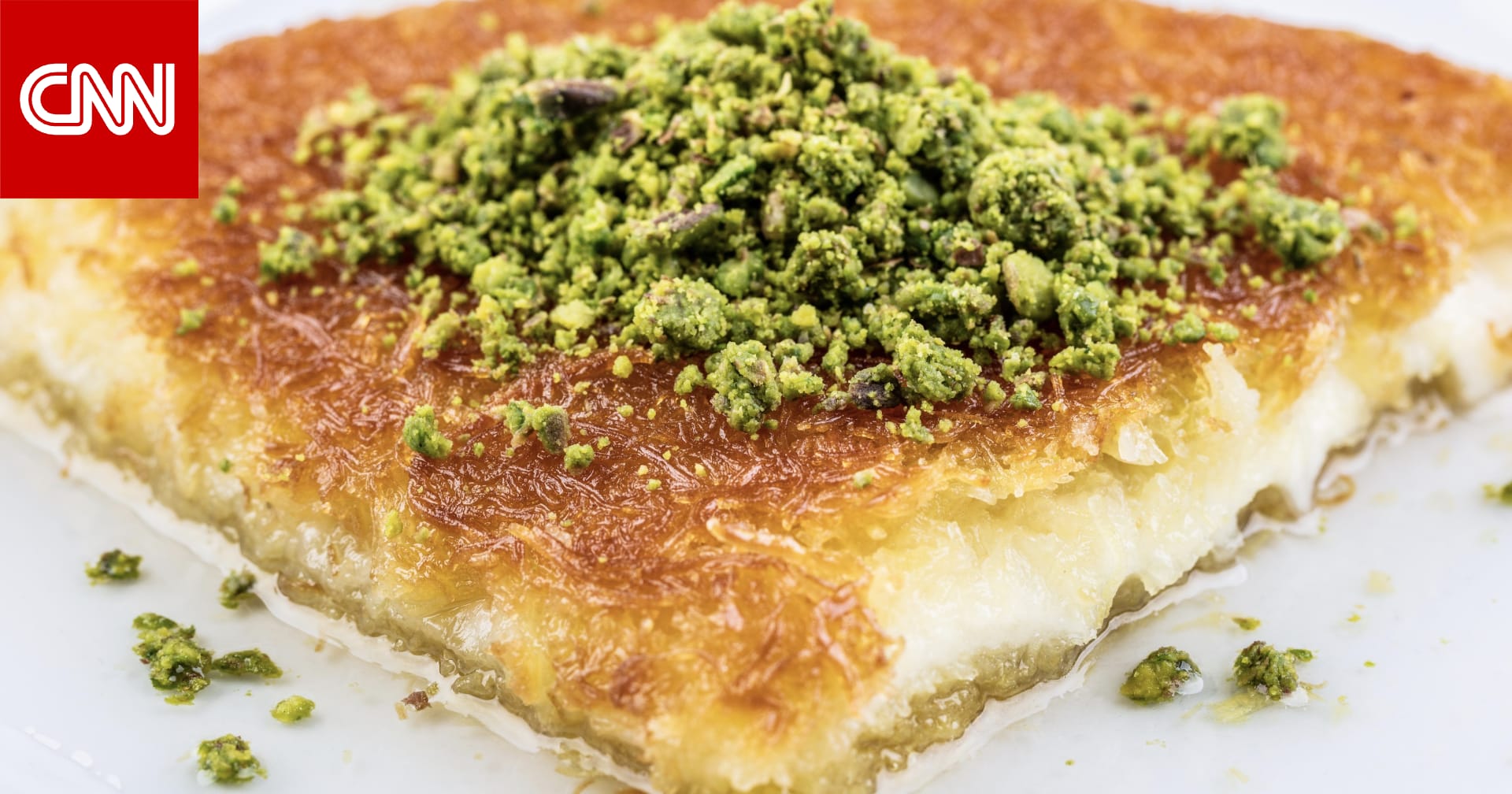
A layer of golden dough covers a filling of cream, nuts, or salty cheese. Knafeh is soaked in syrup, offering a rich balance of texture and flavor. Like many Middle Eastern desserts, knafeh is drenched in aromatic sugar syrup that imparts flavors of rose or orange blossom.
While queues form in cities like Amman and Alexandria for pieces of knafeh, the Palestinian city of Nablus is most closely associated with the origin of this dessert, known as its traditional home.
In the Nablus version, a filling of tangy goat cheese is covered with thin strands of dough or a smooth layer of baked semolina.
Alfajores, South America
Credit: Shutterstock
This dessert is among the most famous in Argentina and Peru. You'll find it in neighborhood bakeries. The first bite reveals a crumbly shortbread layer, followed by a sweet caramel-like dulce de leche filling, made by slowly cooking sweetened milk until it reaches a rich, smooth consistency.
The simplicity of this dessert has made it an ideal base for creativity across Latin America, with variations including coating in dark or white chocolate, rolling in coconut, or adding spices, while the classic version remains one of the most comforting and widespread snacks in the world.
Gelato, Italy
Credit: Shutterstock
Italian gelato tops the list of most famous frozen desserts thanks to its distinctive characteristics. Its lower fat content and slightly higher serving temperature compared to ice cream give its flavors more clarity, whether you choose refreshing lemon, rich hazelnut, or classic chocolate.
In Italy, eating gelato is not limited to summer; it is an essential part of the culinary experience year-round, to the extent that enthusiasts visit the Gelato Museum in Bologna, where tours include expert-guided tastings in the museum's café.
Chocolate Fondant Gâteau, France
Credit: Shutterstock
As soon as you break into a warm piece of chocolate fondant gâteau, liquid chocolate flows from its center.
This rich, dark cake relies on a delicate balance between baking time and temperature. If taken out of the oven too early, the batter remains too liquid; if left too long, it becomes closer to a brownie. When the timing is perfect, it combines a soft chocolate cake texture with a melted chocolate center.
Gazelle Horns, Morocco
Credit: Shutterstock
Amid the great diversity of Moroccan pastries, gazelle horns remain among the most popular varieties. Their preparation requires time and effort, and they are served at occasions, celebrations, and special feasts throughout the year.
In the traditional version, a thin layer of dough is wrapped around a filling of ground almonds scented with orange blossom water. They are baked until lightly golden, giving the dough a soft texture that melds with the filling.
Gazelle horns are prepared throughout Morocco, as well as in Tunisia and Algeria, but the most aesthetically distinctive version comes from the Moroccan city of Tetouan, where bakers use decorated molds to imprint the dough before baking.
Cannoli, Sicily
Credit: Shutterstock
This famous Sicilian dessert combines a crispy shell with a creamy cheese filling, in a recipe that reflects the island's rich history and cultural diversity.
The origins of cannoli trace back to the Carnival celebrations in the city of Palermo, where the traditional recipe was filled with soft sheep's milk ricotta.
The rich filling, especially with the candied citrus fruit often added, reveals Arab influence in Sicilian cuisine, as these flavors are still widely popular throughout the Middle East.
Brownies, United States
Credit: Robert Lachman/Los Angeles Times/Getty Images
Brownie lovers differ on the best way to prepare this classic American dessert: dense and fudgy or light and cakey? And do you choose a corner piece or one from the center of the pan?
One of the earliest recipes appeared in the 1906 book 'Boston Cooking School Cook Book' by Fannie Farmer, where unsweetened chocolate was used to give brownies their dense, distinctive texture.
Over more than a century, brownies have become a staple dessert, used in sundaes and transformed into one of the most popular ice cream flavors.
Burma, Middle East and Turkey
Credit: Shutterstock
Crispy golden knafeh strands wrap around a rich nut filling in the dessert 'burma,' which is a relative of baklava, known for its aromatic flavor and elegant appearance.
Unlike baklava, burma is often fried before being soaked in aromatic syrup, giving it a richer flavor and crispier texture.
While baklava hides its filling between thin layers of dough, burma is rolled and cut into slices that reveal its colorful filling of pistachio, pine nuts, or walnuts, making it a popular gift option.
Black Forest Cake, Germany
Credit: Shutterstock
In addition to fairy tales and hilltop castles, Germany's Black Forest region is famous for having the country's most famous cake named after it, even if it is not its original home.
The cake consists of dark chocolate cake layers soaked in cherry syrup mixed with Kirschwasser, a brandy made from sour cherries, then stacked on a thin chocolate base with abundant layers of whipped cream and fresh cherries.
To finish, the cake is covered with an additional layer of cream and decorated with chocolate shavings and cherries.
Baklava, Turkey
Credit: Shutterstock
Dozens of thin layers melt in every bite of this syrup-soaked dessert, which is among the most prominent legacies of the Ottoman Empire.
Although baklava remains a beloved dessert in the Levant, the Balkans, the Caucasus, and North Africa, Turkey is considered its most prominent home.
In Turkish pastry shops, it is served in large trays cut into diamond shapes, filled with ground nuts and drenched in honey-rich syrup.
Japanese Cheesecake
Credit: Shutterstock
If you are a cheesecake lover but find the New York version a bit heavy, Japanese cheesecake might be a completely different experience. It combines the rich taste of cheesecake with the light texture of sponge cake, balancing its airy fluffiness with creamy cheese flavor.
Original source: CNN Arabic




Comments (0)
Be the first to comment.