How do the accelerating Egyptian-Turkish understandings reflect on conflict files in the region?
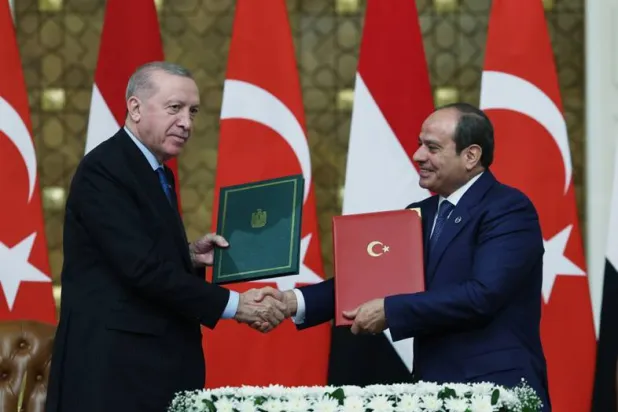
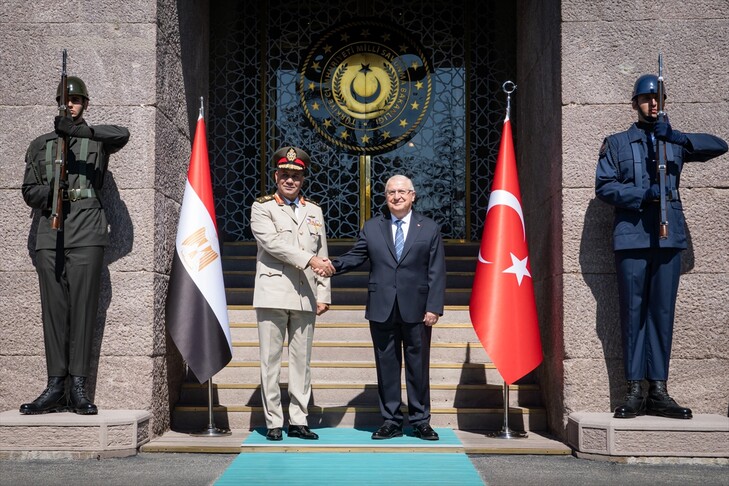
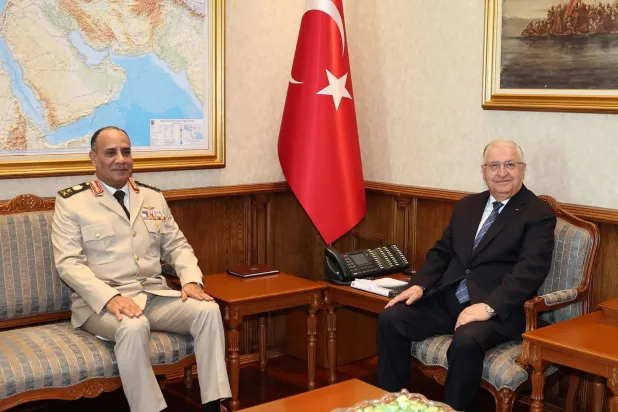
Mutual visits between Egypt and Turkey have multiplied at various official levels recently, culminating in the first visit of its kind by an Egyptian defense minister to Ankara in 13 years.
In his first foreign visit since becoming prime minister, Iraqi Prime Minister Ali al-Zaidi arrives in Washington carrying an agenda that appears economic on the surface, but hides one of the most sensitive rounds of negotiations between Baghdad and Washington.
The anticipated meeting with US President Donald Trump on Tuesday comes not only amid the escalating US-Iranian confrontation and fears of the repercussions of any potential closure of the Strait of Hormuz, but also with the Trump administration seeking to redefine Iraq's role in the Middle East by reducing Iranian influence and turning Baghdad from a conflict zone into a key economic and security partner for the United States.
The statements made by al-Zaidi before the visit reflect a clear attempt to redefine the nature of the relationship with Washington. Instead of a relationship dominated by counterterrorism and the US military presence, the Iraqi prime minister seeks to move it to a new phase centered on investment, development, and technology.
Al-Zaidi wrote in an article published by the Washington Post that his goal is 'transitioning from crisis management to creating opportunities,' stressing that Iraq wants to become an economic partner, not just a security file in US policy.
Prime Minister Mr. Ali Faleh al-Zaidi begins today, Monday, an official visit to the United States of America, heading a high-level official delegation in his first foreign visit since the formation of the government. The visit, which came at the invitation of US President Donald Trump, aims to develop the trajectory of Iraqi relations... pic.twitter.com/2sNKFAszJR
— Prime Minister's Media Office (@IraqiPMO) July 13, 2026
Al-Zaidi began his meetings with a closed-door session with Tom Barrack, the US Special Envoy to Iraq and Syria, on Monday evening at the Iraqi delegation's residence. The meeting appeared closer to a preparatory session to set the agenda for talks with the Trump administration, discussing the issue of monopolizing weapons by the state, ending the existence of armed factions outside government control, curbing Iranian influence, and also the future of the US military presence after the end of the international coalition's mission on September 30.
Later, US Defense Secretary Pete Hegseth is scheduled to hold an honorary reception for the Iraqi prime minister before meeting senior Pentagon officials, after which al-Zaidi will meet members of Congress in both chambers.
On Wednesday, al-Zaidi will meet the President of the World Bank and the head of the International Finance Corporation, then the Iraqi community from the states of Michigan, Texas, and California, as well as private sector representatives and scholarship students. He will then travel to Houston, Texas on Thursday, where he will visit Halliburton, Chevron, and Exxon Mobil, and meet the head of the US Chamber of Commerce.
A roundtable meeting will be held with representatives of energy companies operating in Iraq and companies wishing to work in Iraq.
Al-Zaidi returns to Washington on Friday to participate in the high-level business summit organized by the US Chamber of Commerce, where participants will discuss 'prospects for economic partnership between Iraq and the United States,' along with financial, banking, and digital technology files, and opportunities to expand cooperation between the two countries.
Baghdad's Priorities
Al-Zaidi wants to present his government as an economic reform government; this is reflected in the composition of the Iraqi delegation, which includes 27 ministers and senior officials, including the ministers of oil, electricity, trade, and foreign affairs, the central bank governor, the national security advisor, in addition to businessmen.
Iraqi government spokesman Haider al-Aboudi told reporters that the oil file occupies an important aspect of the discussions, to find new outlets for Iraqi oil exports, to avoid the damage of any closure of the Strait of Hormuz.
Nearly 90 percent of Iraq's oil exports, which amount to 3.4 million barrels per day, pass through the strait.
The prime minister had stated that Iraq seeks to increase its oil production to 7 million barrels per day over the next three years.
Iraqi officials indicated that the main message carried by the delegation is to convince the US investor that Iraq is seeking long-term partnerships in energy, digital economy, artificial intelligence, and infrastructure. However, Washington views this economic agenda from a different angle; it believes that the success of any US investments first requires a stable security environment that encourages US companies to come to Iraq; which brings the file of armed factions back to the forefront of discussions.
Iraqi Prime Minister Ali al-Zaidi receiving US envoy Tom Barrack at his residence in Washington on July 13, 2026 (Government Media)
What Trump Wants
Although the visit's schedule officially focuses on economy and investment, security files will be strongly present at the White House table.
The Trump administration's priorities are three main issues: ensuring the Iraqi state's monopoly on weapons, ending the influence of armed factions linked to Iran, preventing Iraqi territory from being used as a platform to target US forces or interests, and building an economic partnership that gives US companies an advanced position in oil, energy, and infrastructure projects.
Washington believes that the success of al-Zaidi's government in implementing its commitments regarding the monopoly of weapons by the state will be the real test of its new relationship with the US administration.
For his part, al-Zaidi is trying to convince the US administration that his government has made rapid progress in less than sixty days, both in fighting corruption and in integrating some factions into state institutions, but he realizes that Washington will measure his success by his ability to deal with the factions most closely linked to Tehran, and he asks Washington to provide intelligence, technical, and military support to his government.
The positions of these factions have complicated the mission days before the visit, as the group calling itself the 'Islamic Resistance in Iraq' announced its refusal to hand over weapons, set a series of political conditions, and warned against replacing military occupation with economic occupation through US companies.
Moreover, the leader of Kata'ib Hezbollah, Abu Hussein al-Hamidawi, escalated his rhetoric, calling on the government to what he called 'compliance with the will of the resistance,' and affirming the faction's continued link to the Iranian axis.
Washington realizes that these positions are not only aimed at the Iraqi government, but also constitute a direct message to the Trump administration that reducing Iranian influence inside Iraq will not be an easy task.
Iraqi Prime Minister Ali al-Zaidi and Iranian President Masoud Pezeshkian at Najaf airport in Iraq before the funeral of Supreme Leader Ali Khamenei (Reuters)
Between Washington and Tehran
Al-Zaidi finds himself facing a complex equation; he wants to build a strategic relationship with the United States, but at the same time he cannot enter into a direct confrontation with Iran, which still holds extensive political and security influence inside Iraq. For this reason, he has stressed on more than one occasion that Iraq 'will not join any axis,' and that Baghdad seeks to play a mediating role between Washington and Tehran, not to be part of the conflict between them.
Original source: Asharq Al-Awsat
Comments (0)
Be the first to comment.