Internet cut off... thousands of dead vanished!
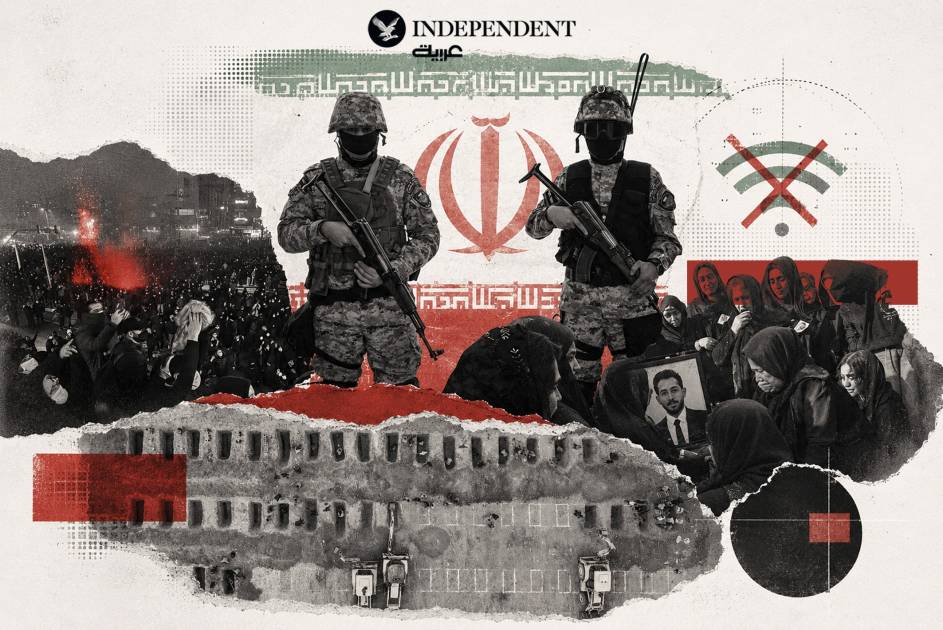
Summary: The international mission of the United Nations was able to collect testimonies from witnesses and victims, and evaluate digital materials showing security forces firing live ammunition at crowds that did not pose an imminent threat to life. This included deliberately firing metal pellets at victims' faces, repeating the pattern seen in the 2022 protests when protesters were blinded by eye injuries. On January 10 alone, about 500 protesters appeared to have been injured by metal pellets in their eyes and admitted to a hospital in Isfahan.
Under the cover of electronic darkness, the Iranian regime committed the largest mass killing in Iran's modern history within 48 hours. At the height of popular protests that shook Iranian cities and shook the Supreme Leader with chants of "Death to the dictator" in January, the authorities found no way to confront a sweeping tide of angry young men and women except by blocking the internet on the evening of January 8, so that their actions would not be exposed as they targeted young heads with live bullets.
Despite the regime's attempt to commit its crimes in secrecy and silence, the smell of the victims' blood reached all parts of the country, and dozens of photos and videos of those black bags containing the bodies of thousands leaked out. Iranian authorities say the number of those killed does not exceed 3,117 people, but UN experts and human rights monitors speak of numbers far exceeding this figure, perhaps no less than 30,000 dead or more.
Protests erupted inside Iran on December 28, 2025, following a sharp collapse in the currency's value, amid rising inflation, chronic mismanagement by the state of basic services, including access to water, and a growing deterioration in living conditions. The protests began in Tehran and quickly spread throughout the country, turning into a popular uprising demanding an end to the repressive rule of the Islamic Republic system, and calling for human rights, dignity, freedom, and democracy.
Black bags and a mysterious number
More than six months after the protests, the actual number of those victims who went out seeking freedom and an end to 47 years of repression remains unknown. But according to Amnesty International, evidence based on documented video clips and eyewitness testimonies reveals that security forces carried out unlawful mass killings across Tehran province. Video footage shows a temporary morgue set up inside an annex building of the Iranian Forensic Medicine Organization in Kahrizak near Tehran, after the official morgue in the building was filled. Other footage shows bodies wrapped in black bags lying on the ground, indicating that the actual death toll far exceeds a few thousand.
The scene in front of Kahrizak morgue (Reuters)
In an interview with Independent Arabia, former UN war crimes prosecutor Payam Akhavan said investigators still do not know the actual death toll due to internet cuts and media blackout, "and because the Islamic Republic, responsible for the mass killing of protesters, does not want the world to know the scale of these crimes." He added, "What we know is that senior officials, including the Attorney General and the head of the judiciary, described the protesters as enemies of God. This is a charge punishable by death under the penal code of the Islamic Republic." "We also know that heavy weapons were used against protesters, ranging from snipers, machine guns, and assault weapons to armor-piercing weapons."
In its report on the protests, the head of the UN Independent International Fact-Finding Mission on Iran, Sara Hossein, explained that the Iranian government avoided providing a transparent account of the crisis, including by imposing a complete cut of internet and mobile communications since January 8. Reports indicate that security forces used widespread lethal force against protesters, including assault rifles and heavy machine guns, resulting in an enormous number of deaths. Also, images of grieving relatives searching for their loved ones in the temporary Kahrizak morgue in Tehran, among what appeared to be hundreds of body bags piled on top of each other, were shocking and painful. In contrast, the government said that at least 300 of its security forces were among the dead, and that public and private property were damaged.
Despite the communications blackout, the UN international mission was able to collect testimonies from witnesses and victims, and evaluate digital materials showing security forces firing live ammunition at crowds that did not pose an imminent threat to life. This included deliberately firing metal pellets at victims' faces, repeating the pattern seen in the 2022 protests when protesters were blinded by eye injuries. On January 10 alone, about 500 protesters appeared to have been injured by metal pellets in their eyes and admitted to a hospital in Isfahan. Estimates indicate that about 24,000 protesters were detained, including children, journalists, and human rights defenders. The judiciary called for punishing detained protesters "as soon as possible" and "without any leniency," and threatened to prosecute those it described as "rioters" on charges of moharebeh (enmity against God), a crime punishable by death.
How to calculate the death toll
Akhavan explained the mechanism investigators rely on to estimate more than 30,000 dead during the protests, which saw at least one million people demonstrating in the streets. He noted that in addition to the killings that occurred on the streets, more than 40,000 people were arrested and imprisoned. The Iranian regime's track record indicates that many were subjected to torture and sexual violence, and a number were executed.
The Iranian regime continues to execute political prisoners (AFP)
He added that when collecting this data and viewing it in its overall context, the minimum death toll is 7,000 people, a figure based, he said, on a confirmed list of names prepared by the Human Rights Activists News Agency. In addition to these, there are 11,000 other names still under verification, and the confirmed number of dead will rise as these names are verified.
Akhavan, a legal expert who has worked for several international judicial bodies including the International Criminal Court, pointed to a major problem of underreporting of victims due to fear of the authorities, noting reports of secret burials, morgues filled with black body bags, and even running out of bags and using refrigerated trucks to transport bodies for secret burial. He spoke of testimonies indicating that medical workers were tortured or killed for providing aid to the wounded.
Read more
Executions continue... Iran hangs 3 men convicted of raping minors
From livelihood to bullets of oppression... stories of children killed in Iran protests
Survivors' accounts: deliberate injuries to genitals during Iran protests
160 schoolchildren killed in Iran protests
Original source: Independent Arabia



Comments (0)
Be the first to comment.