Iran After Khamenei: Can Mojtaba Lead a System Weakened by War and Crises?
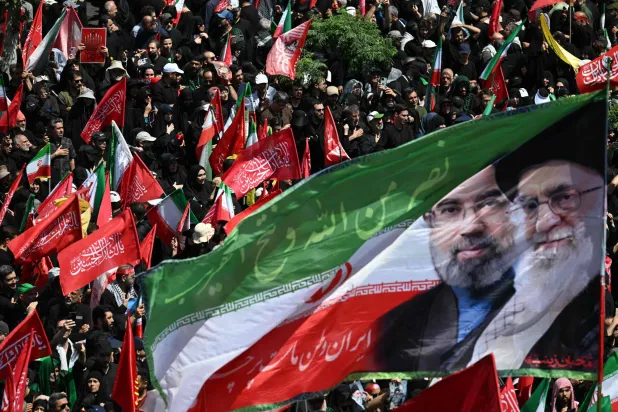
With the departure of Iran's Supreme Leader Ali Khamenei, the country enters a phase considered one of its most sensitive since its founding in 1979.
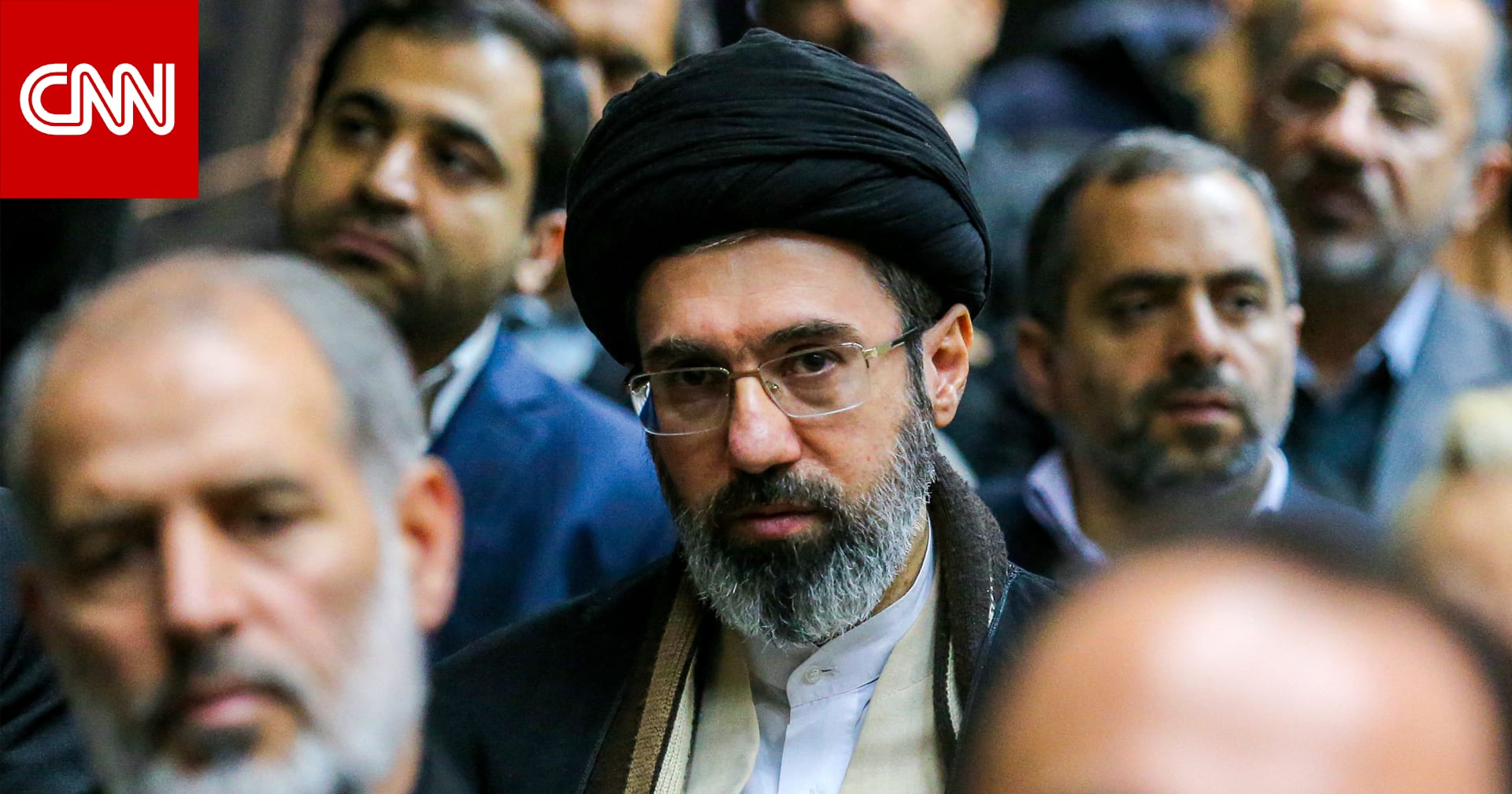
With the departure of Iran's Supreme Leader Ali Khamenei, the country enters a phase considered one of its most sensitive since its founding in 1979. The man who dominated the state's apparatus for nearly four decades leaves behind a system facing unprecedented challenges, intertwining the effects of war, economic pressures, and internal divisions, while attention turns to his successor and son, Mojtaba Khamenei, a figure who remained out of the spotlight despite his name being mentioned for years within power circles.
This transition raises fundamental questions about the future of the system, the limits of influence of military and religious institutions, and the ability of the new leadership to maintain state cohesion in a phase described as the most complex in decades.
End of a 37-year era
Khamenei had described in late 2024 the ideal life as one in which a person receives an education, lives into his eighties or nineties, and then 'attains martyrdom.'
A little over a year later, Khamenei, aged 86, met this fate, as he was killed last February at the start of the US-Israeli war on Iran, an end that his supporters considered a culmination of his revolutionary career, according to the Financial Times.
Khamenei will be buried on Thursday in the city of Mashhad, his birthplace, in a ceremony that is not just the conclusion of a multi-day funeral, but also symbolizes the end of an era spanning nearly 37 years, during which he remained the most influential figure in shaping Iran's policies and maintaining the system's cohesion.
During his rule, he reshaped state institutions, from Shia religious institutions to the Iranian Revolutionary Guard, and strengthened support for armed groups across the region, and led widespread crackdowns on waves of domestic protests, which made him in his later years an increasing target of public anger.
0 seconds of 0 secondsVolume 90%
Press shift question mark to access a list of keyboard shortcuts
00:00
00:00
00:00
Mojtaba Khamenei: An Enigmatic Successor in Turbulent Times
His son and successor, Mojtaba Khamenei, takes the helm of a country exhausted by war and suffering from deep economic imbalances.
Despite the transfer of power to him, the contours of his governance style remain unclear, as he has not been seen publicly since his appointment in March, and little is known about his vision for managing the country.
Due to his lack of the legacy his father enjoyed, and decades of experience wielding power, analysts and officials expect that the next phase will see a greater role for influential institutions, led by the Revolutionary Guard, while Mojtaba retains the final say in critical decisions.
The question remains whether this model is sufficient to ensure the system's survival.
The Financial Times quoted an insider as saying that the system had reached a stage where even Ali Khamenei was no longer able to solve the country's problems, due to the complexity of internal and external challenges, adding that his son is now in a position to open a new chapter with the support of the most influential institutions.
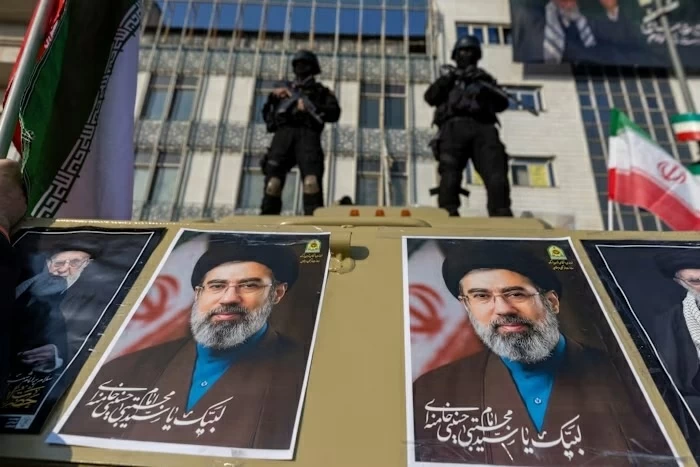
A man holding a picture of the new Supreme Leader of Iran, Mojtaba Khamenei (AP)
Increasing influence of military institutions
The Iranian Revolutionary Guard, led by its new commander Ahmad Vahidi, continues to expand its influence over security files, foreign policy, and broad sectors of the economy, and its presence was strengthened during the recent war.
Mojtaba Khamenei is also expected to rely on religious institutions that mobilize supporters during crises, in addition to economic patronage networks, and regional proxies such as Hezbollah in Lebanon, despite the decline these actors have experienced recently.
Iranian analyst Saeed Laylaz said that the networks built during Ali Khamenei's era helped the state withstand the war, adding that Mojtaba will have the final say on major decisions, but institutions will play a larger role compared to his father's time.
0 seconds of 0 secondsVolume 90%
Press shift question mark to access a list of keyboard shortcuts
00:00
00:00
00:00
Internal crises precede the power transition
Even before the outbreak of war, the Iranian system was facing a worsening crisis, resulting from years of sanctions, international isolation, and economic stagnation.
This crisis peaked with the anti-system mass protests in January, which ended in a violent crackdown that killed thousands, further eroding the legitimacy of the ruling authority in the months before Khamenei's death.
Iran was keen to turn the funeral ceremony, which lasted six days and during which Khamenei's coffin was moved from Iran to Iraq and then back to Mashhad, into a political message reflecting its defiance of pressures, presenting the participating crowds as evidence that the system not only survived the war but still retains a loyal popular base.
The funeral also gave the new leadership an opportunity for public appearance after months of absence.
Ahmad Vahidi, who took command of the Revolutionary Guard after his predecessor was killed during the war, appeared for the first time since the end of the conflict, while parliament speaker Mohammad Bagher Ghalibaf, who bolstered his position during the war, participated alongside President Masoud Pezeshkian, Judiciary Chief Gholam Hossein Mohseni-Eje'i, and several senior officials.
Former President Mahmoud Ahmadinejad also appeared, despite his past differences with the system, and after months of speculation about his fate, especially after the neighborhood where he lives was bombed, an incident that killed a number of his bodyguards.
0 seconds of 0 secondsVolume 90%
Press shift question mark to access a list of keyboard shortcuts
00:00
00:00
00:00
Mojtaba's absence raises questions
In contrast, Mojtaba Khamenei was absent from all funeral ceremonies, and has not given any video or audio speech since assuming the post of Supreme Leader.
Mojtaba was known for rarely appearing in public even before assuming the post, but his continued absence has raised widespread questions among Iranians who were accustomed to his father's regular appearances and frequent speeches, which formed one of the most important tools of governance.
Officials and politicians within the system, along with some foreign diplomats, confirm that his absence is due to security considerations, and that he is still running state affairs.
They say he has recovered from injuries sustained in the raids that killed his father, his wife, his sister, his brother-in-law, and his 14-month-old niece, who will all be buried in Mashhad.
First political test
Mojtaba's first major decision revealed a cautious approach.
Last month, he authorized President Masoud Pezeshkian to sign a memorandum of understanding to reopen the Strait of Hormuz, which has become one of Iran's most prominent leverage points, and to begin negotiations with the United States to reach an agreement to end the war, while being careful to distance himself from the agreement.
Despite announcing in a written statement his opposition to the agreement 'in principle,' he clarified that he allowed it to proceed after it received approval from the Supreme National Security Council, which includes senior military commanders and is headed by the President.
He also stressed that the responsibility for achieving the economic gains from the agreement, including the release of frozen Iranian assets, rests with President Pezeshkian.
These steps indicate that Mojtaba is trying to continue the balancing policy his father followed in managing the centers of power and competing factions within the system.
Original source: Asharq Al-Awsat


Comments (0)
Be the first to comment.