Israel and Turkey: The Clash of High Platforms Descends onto Syrian Soil
Tensions between Turkey and Israel are escalating on the Syrian front, moving from diplomatic rhetoric to military friction. The deployment of a new Turkish radar system in Damascus has heightened Israeli concerns, as both nations maneuver for influence in a post-Assad Syria, raising the prospect of either direct confrontation or the establishment of a deconfliction mechanism.
Political researcher Abdelhamid Hammam believes the new radar, which has a range of 150 to 200 kilometers, will impede the movements of Israeli aircraft in Syrian airspace and limit the scope of their operations. He added, "The matter goes beyond Israeli access to Syrian skies and the protection of its forces and advanced bases beyond the buffer zone, as it also restricts the movement of fighter jets in their strikes against Iran."
This development comes amidst growing competition between Ankara and Tel Aviv for influence on the Syrian stage.
The scope of friction between Turkey and Israel is expanding from political discourse to the Syrian field. While Ankara has controlled vast areas in the north since the war years, the south is suffering from a continuous Israeli incursion. This power struggle between foreign forces resurrects the challenge of national sovereignty over the entirety of Syrian territory, revealing an intense battle that grows fiercer with every military move or diplomatic statement from either side.
Strained Relations
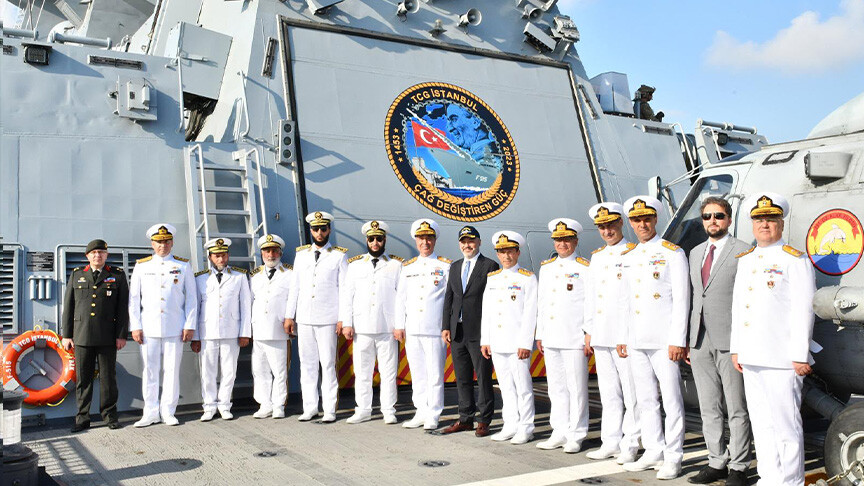
Turkish-Israeli relations have deteriorated significantly, and the war of words between the two sides has escalated. Turkish President Recep Tayyip Erdogan described "Zionism" as an existential threat to Turkey, considering Israeli operations in Syria and Lebanon a danger to his country. The conflict worsened with the statement by Turkish Foreign Minister Hakan Fidan, who said, "The Israelis have become a burden that humanity can no longer bear, and Ankara does not mind a confrontation if necessary."
Tel Aviv did not delay its response; Israeli Foreign Minister Gideon Sa'ar considered Fidan's statement an incitement to genocide, saying, "Dehumanizing the Jewish people as an unbearable burden is horrific, classic language that evokes the literature of the worst exclusionary regimes in history."
In early July, Ankara, through Erdogan himself, warned against Tel Aviv's military operations in the Middle East, reflecting a direct threat to Turkish national security and stability in the Eastern Mediterranean, in addition to its covert movements in the African continent and the Mediterranean basin. This led Israeli Prime Minister Benjamin Netanyahu to describe him as an anti-Semitic "dictator" and accuse him of committing genocide against the Kurds.
The Fighter Jet Deal
This comes at a time when Israeli concerns are rising following the US-Turkish rapprochement, particularly the position of President Donald Trump in announcing his country's readiness to lift the CAATSA sanctions imposed on Ankara in 2020 due to its 2017 purchase of the Russian S-400 air defense system, and his intention to deliver a deal of F-35 fighter jets, which increases Turkey's military presence as a regional power in the region.
The conflict began to surface when military teams visited two airbases in Syria (T4 and Palmyra) in Homs Governorate, as well as the main airport in Hama, in March 2025. The purpose was to inspect the status of these sites after the fall of the former Syrian regime and to assess the technical condition of runways and fighter hangars. Tel Aviv had rushed to strike these sites for fear of Turkish influence reaching southern Syria or any locations close to it.
Read more
Volatile Lira threatens economic recovery in Syria
The Fourth Meeting: Syria and America from estrangement to cooperation
Beyond Syria's unity
Who is behind attempts to export an image of an unsafe Syria?
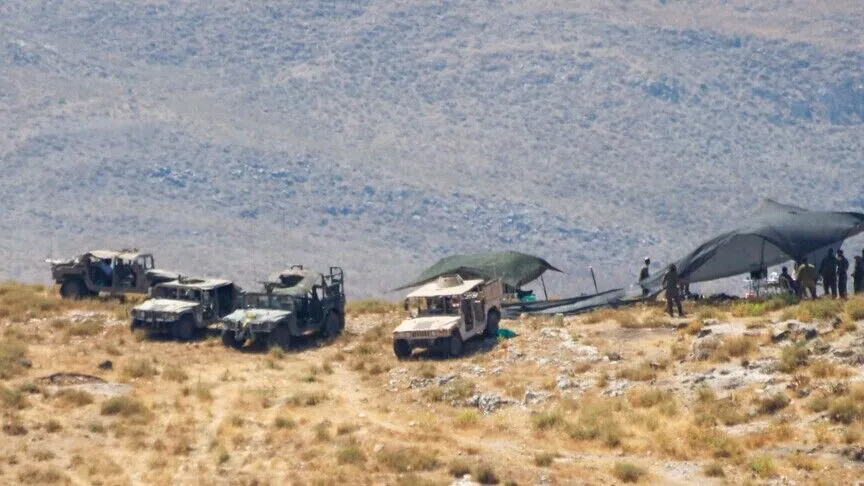
Israel is working to tighten control over the southern region and expand a "safe zone" under the pretext of protecting its northern borders from dangers threatening its national security, especially with the arrival of Islamists to power in Syria, despite all the assurances given by the new rulers to build good neighborly relations with the countries of the region.
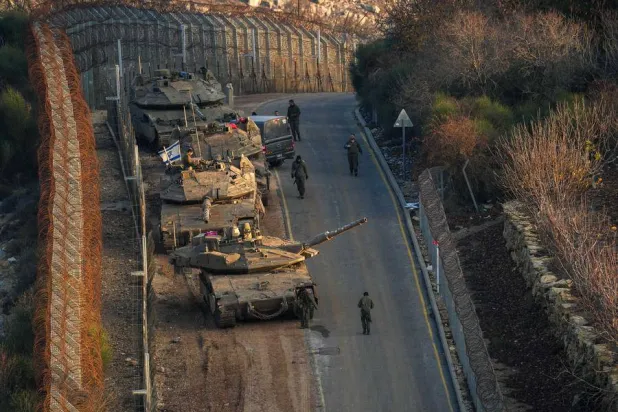
With the fall of Bashar al-Assad, Tel Aviv pushed its army to move on the Syrian border and deep beyond the ceasefire line of May 31, 1974. It proceeded to breach the international agreement, penetrate into southwestern Syrian territory, and take control of the strategic Mount Hermon.
Israel did not stop there but continued its incursion into areas toward the countryside of Daraa and Quneitra to the countryside of the capital, Damascus, by setting up temporary checkpoints and harassing local residents, in addition to opening channels of communication with members of the Druze community. This separatist reality was fueled by a dispute between local factions led by the Sheikh of the Druze Unitarian community, Hikmat al-Hijri, and the Damascus government over how to manage the governorate, as well as fighting between Bedouins and members of the community.
The Turkish Radar
Meanwhile, anxiety in Tel Aviv increased with the Turkish army installing an HTRS-100 air traffic control radar at Damascus Airport in southern Syria. According to observers, this type of system restricts the movement of the Israeli Air Force, which had eliminated most air defense, surveillance, and radar platforms after the fall of the former regime, in addition to destroying approximately 80 percent of the army's strategic weapons and capabilities, especially sensitive military sites such as airports and missile depots.
The new radar, which has a range of 150 to 200 kilometers, would limit the movement and activity of Israeli aircraft penetrating Syrian airspace, according to political researcher Abdelhamid Hammam, while explaining the capabilities of the new air surveillance equipment. He added, "The matter goes beyond Israeli access to Syrian skies and the protection of its forces and advanced bases beyond the buffer zone, as it also restricts the movement of fighter jets in their strikes against Iran."
In light of these developments, Syria will face several scenarios, including direct engagement, turning the land and sky into an arena of conflict and score-settling, and beginning a battle of attrition. Alternatively, the conflict may remain limited to the ongoing war of words—which seems likely as Tel Aviv searches for a new enemy to test its strength—or exploring a deconfliction agreement. Perhaps the discussion regarding such a system suggests that both parties have no intention of direct collision.
The deconfliction system recalls the Russian experience with Israel during the years of the Syrian war. This mechanism aims to exchange information; a mechanism Ankara used in Syria and Iraq to prevent clashes east of the Euphrates River between Turkey and the US, and west of the Euphrates between Russia and Turkey. With the activation of deconfliction, the ongoing dispute could be resolved by agreeing on specific coordinates and zones where entry is prohibited.
New Realities
On the other hand, Turkish concern does not stem from the possibility of a limited military escalation, but from the realization that this escalation may be part of a broader reshaping of the regional order, and its repercussions will not be limited to Syria but will extend to a complex network of relationships and alliances to affect the balances of the entire Middle East.
In an interview with the Director of the Istanbul Institute for Thought, Bakir Atjan, he explains to Independent Arabia that the Turkish position in the event of any Israeli escalation in Syria could be an attempt to impose new realities on the ground, especially in light of the complexities of the Syrian landscape and the multiplicity of international and regional actors.
Original source: Independent Arabia
Comments (0)
Be the first to comment.