Israel: Netanyahu will not visit the US next week
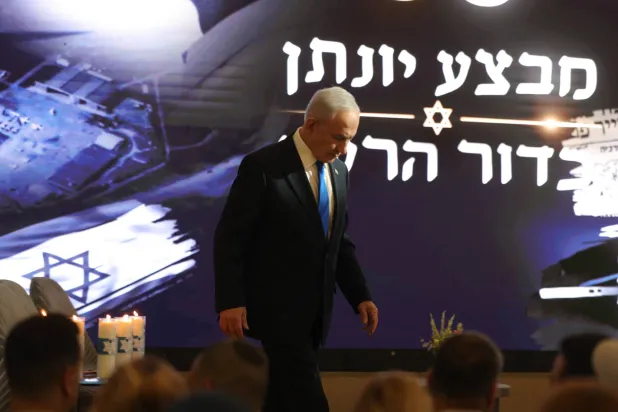
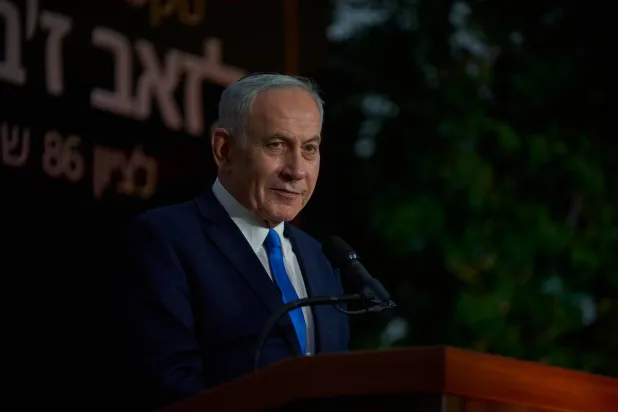
The office of Israeli Prime Minister Benjamin Netanyahu announced Thursday that Netanyahu will not travel to the United States next week.
Washington expands strikes to northern Iran... and intensifies pressure on 'Hormuz'
The United States expanded the scope of its strikes on Iran on Thursday to areas in the north of the country and around Tehran, after its operations in previous days focused on the coast, islands, and military installations around the Strait of Hormuz, while it disabled an oil tanker that it said attempted to breach the naval blockade imposed on Iranian ports.
Tehran warned that the Strait of Hormuz represents a 'red line that cannot be crossed,' and a spokesman for the Joint Chiefs of Staff operations threatened to target infrastructure across the region if the United States carried out President Donald Trump's threats to strike Iranian bridges and power plants.
The spokesman said that 'all infrastructure in the region will be crushed under the steel strikes of the Iranian armed forces' if Washington targets Iranian infrastructure, adding that the response would be broader and more destructive than previous attacks.
He added: 'We will not allow under any circumstances, in any way, the United States, as a foreign country from outside the region, to interfere in the Strait of Hormuz. This is an Iranian red line that cannot be crossed.'
The US Central Command (CENTCOM) said the latest waves of bombing targeted command centers, air defense sites, missile capabilities, drones, and coastal surveillance facilities.
Washington says the campaign aims to undermine Iran's ability to threaten commercial ships and force it to reopen the Strait of Hormuz.
Iranian state media reported that US strikes hit areas around the capital Tehran, where air defenses were activated, and also spoke of attacks in Semnan province, which includes sites linked to ballistic missile production and Iran's space program, expanding the geographic map of attacks after they had mainly focused on coastal areas and islands near the Strait of Hormuz.
Iranian media also reported explosions or strikes in the provinces of Hamadan and Lorestan in the west of the country, alongside continued strikes on the coasts of the Persian Gulf and the Gulf of Oman where Hormozgan is opposite the Strait of Hormuz, and Ahvaz in the southwest, and Markazi, and Balochistan in the southeast.
A US fighter jet takes off from the aircraft carrier USS George H.W. Bush while sailing in the Arabian Sea (CENTCOM)
CENTCOM's waves
CENTCOM said US forces carried out two waves of strikes on Iranian military targets on Wednesday. The first wave targeted coastal defense systems and cruise missile storage and launch sites on Greater Tunb Island.
It added that US forces later launched a second wave targeting sites in several cities and areas, including Bandar Abbas, which houses Iran's largest port and key naval and Revolutionary Guard facilities on the Strait of Hormuz.
The command said US forces bombed 'Iranian command centers, air defense sites, missile and drone capabilities, and coastal surveillance facilities.' In previous nights, US forces had targeted sites in the ports of Bandar Abbas, Bushehr, Chabahar, Jask, Konarak, and Abu Musa Island, as part of a campaign stretching from the Persian Gulf to the Gulf of Oman, focusing on military assets that Washington says Iran uses to monitor navigation and target ships.
Smoke and flames rise from Chabahar port on the Gulf of Oman after explosions at dawn Thursday (Reuters)
Three US officials told Reuters that the strikes aimed at forcing Iran to open the Strait of Hormuz also target destroying Iranian military capabilities before moving to operations they described as 'more complex,' without clarifying their nature.
On the ground, Iranian media reported at dawn Thursday explosions in the port of Bandar Abbas, Rask, Chabahar, Qeshm Island, Konarak, and Sirik, and also spoke of strikes in the vicinity of Ahvaz and Khandab near Arak, in central Iran.
State media said air defenses were activated in Tehran to deal with what it described as 'enemy threats,' while IRNA said no immediate official reports of casualties in the capital.
0 seconds of 0 secondsVolume 90%
Press shift question mark to access a list of keyboard shortcuts
00:00
00:00
00:00
An attack occurred near Baqaei Military Hospital, owned by the Revolutionary Guard in Ahvaz, and Iranian media reported that a center for treating children with cancer was targeted, leading to its temporary evacuation and patients' families taking to the surrounding streets, according to Iranian authorities. No US comment was issued specifying whether the area or nearby facilities were among the declared targets.
The Iranian army had announced the death of seven of its personnel in a strike that targeted the barracks of the 388th Mechanized Infantry Brigade in Bampur, Balochistan province. It said US forces fired 13 missiles at the site, and the dead included conscripts and regular service members, vowing a 'decisive response.'
According to Iranian data, more than 35 people have been killed and over 300 wounded since the strikes resumed, while government spokeswoman Fatemeh Mohajerani said at least 30 civilians have been killed in recent days. No independent tally of losses was available.
The blockade paralyzes navigation
The expansion of strikes coincided with the start of the US naval blockade on ships heading to or from Iranian ports and coastal areas, as shipping data showed a further decline in traffic through the Strait of Hormuz.
Data from the Kepler platform showed that only nine ships crossed the strait on Wednesday, compared to 13 the previous day, and most used the route close to the Iranian coast. No supertankers or LNG carriers were observed transiting the waterway on the first full day of the blockade.
According to the data, five empty ships entered the Gulf, including three small oil tankers and two grain carriers, while four ships left carrying LPG, coal, fuel oil, and fertilizers.
Firing of ammunition from an unspecified location during strikes that US Central Command said targeted Iran (Reuters)
About 20 percent of global oil and gas shipments passed through the strait before the war erupted, but attacks on ships and mutual threats led to a sharp decline in traffic, prompting some tankers to turn off tracking devices or postpone their crossings.
CENTCOM said a US aircraft disabled the oil tanker 'Pilma,' flying the flag of Curaçao, while it was empty and heading to Kharg Island, Iran's main oil export terminal in the Persian Gulf.
It added that the ship 'ignored multiple warnings' during its attempt to violate the blockade, before a US aircraft fired Hellfire missiles at its smokestack, disabling it and preventing it from continuing to sail to Iran.
The US command announced that its forces had redirected two ships and disabled a third since the blockade was resumed. Washington says the restrictions target traffic associated with Iranian ports, while it will continue to support the passage of other ships that do not violate the blockade.
Original source: Asharq Al-Awsat


Comments (0)
Be the first to comment.