‘Just want to go back’: Lebanese await return as army enters ‘pilot zone’

Lebanese army deploys into southern Lebanon's Zawtar al-Gharbiya as implementation of US-brokered framework deal begins.
The Lebanese army has deployed into a designated 'pilot zone' as displaced families await clearance to return to their homes.
The deployment is part of a US-brokered framework agreement that calls for a gradual Israeli withdrawal and the Lebanese army's role in preventing Hezbollah from reestablishing a presence in the area.

By Zeina Khodr
Published On 22 Jul 202622 Jul 2026
Zawtar al-Gharbiya, Lebanon – We arrived at the entrance of Zawtar al-Gharbiya just as the Lebanese army moved in.
The soldiers’ arrival on Tuesday marked the start of the implementation of a United States-brokered framework agreement between Lebanon and Israel that involves a gradual Israeli withdrawal and the deployment of the army to prevent the Lebanese group Hezbollah from re-establishing a presence.
Residents of all ages gathered along the roadside, hoping to re-enter Zawtar al-Gharbiya, one of three 'pilot zones' outlined in the agreement signed last month.
“These months spent in displacement can’t be considered living,” said Um Mohammed, tears streaming down her face. “I just want to go back to see if our home is still standing.”
She had to wait.
The army was not allowing returns until engineering units cleared the area of unexploded ordnance. “It’s too dangerous,” said a soldier. Hours later, two Red Cross paramedics were wounded in a landmine explosion while they were searching for bodies.
Many waited for hours under the scorching sun, with some opting to stay overnight.

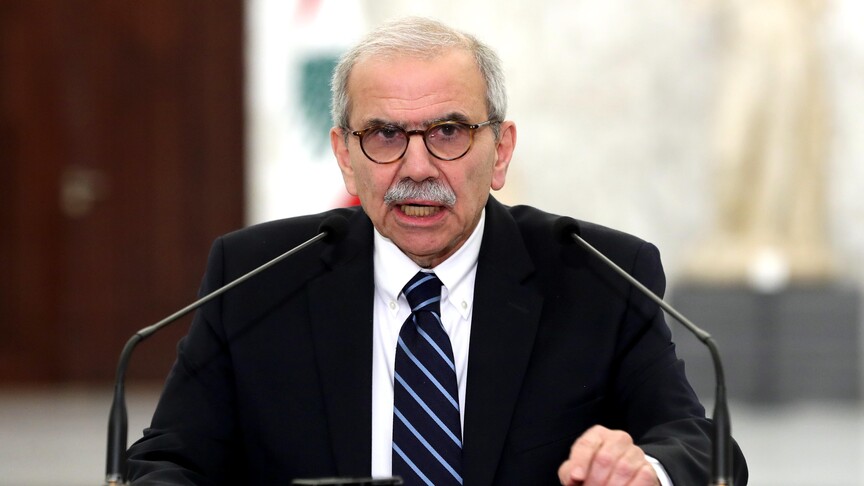
The following morning, it was Prime Minister Nawaf Salam who entered the town. He planted the Lebanese flag near a flattened building in what was seen as a political statement and message.
“We have insisted since the beginning that our goal is the complete Israeli withdrawal from all our territory,” said Salam. “What we are seeing today is just the beginning, but we remain determined and steadfast, and will continue to mobilise all political and diplomatic efforts to secure a full withdrawal from all of Lebanese territory.”
It didn’t go down well with the families waiting outside.
“What is he talking about?” asked Abu Mohammed. “This is just one town. Israel occupies dozens of villages, and they won’t leave another village until they decide if the Lebanese army did what it is asked to do and that is to push the resistance out of the area.”
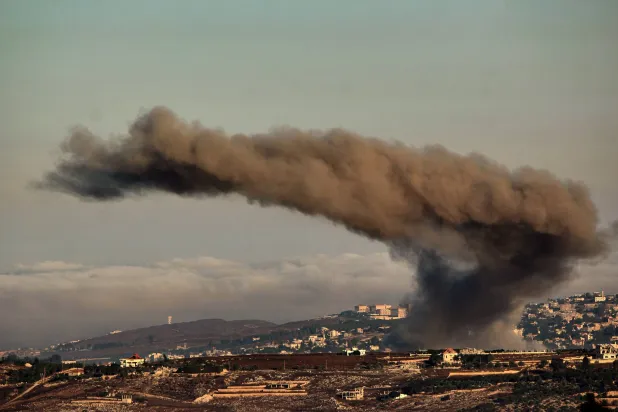
Israel and Hezbollah have been fighting since October 2023, with varying levels of intensity. Israel has twice escalated the conflict – first in September 2024 and then in early March this year following the start of the US-Israeli war on Iran.
Hezbollah is still popular among many in Lebanon’s south who see the government’s decisions to declare the group’s military wing illegal, demand its disarmament and engage in direct talks with Israel as a form of surrender.
“There is no security. There are no guarantees; Israel will kill us,” said Rukaya Maatouk, a resident of Zawtar al-Gharbiya. “They are positioned in the eastern part of the town,” added Maatouk. “The solution is for the Israeli army to leave south Lebanon altogether and if diplomacy doesn’t work … then our men … the resistance will return our land.”
The Lebanese state has been absent in southern Lebanon for decades. Restoring trust will be hard. “I want all of the south liberated,” said Um Mohammed.
“It is not enough that they left Zawtar al-Gharbiya. And we are hearing that the Israeli military wants to be able to return to the village to check if Hezbollah returned. What kind of an agreement is this … what did the Lebanese government agree to?”
Balance of power
The framework agreement signed in the US on June 26 has received a mixed response from the deeply divided Lebanese society.
President Joseph Aoun himself has described it as not ideal but the best option available given the realities on the ground and the balance of power.
“Give me the alternative,” said Aoun. “Our objectives are clear, and we will not compromise on Lebanon’s rights.”
But Lebanon has little leverage and is relying on the US to pressure Israel to leave.
Hezbollah and its supporters say Lebanon should have aligned with Iran when negotiating an end to Israel’s occupation. “This is an agreement that won’t work. We don’t support directly talking to Israel. And we don’t accept peace with Israel,” said Ahsan Yaghi, a resident of Zawtar al-Gharbiya.
All eyes are now on the Lebanese army, which is supposed to prevent Hezbollah’s return to villages in southern Lebanon.
In many ways, it is expected to do Israel’s bidding – but so far, it has been reluctant to confront Hezbollah.
And it may be more than a coincidence that the army commander, General Rodolphe Haykal, did not accompany Salam during his visit to Zawtar al-Gharbiya. He is likely to visit the town at a later time.
The demining process poses a significant risk; two Red Cross paramedics were injured by a landmine while searching for bodies. Prime Minister Nawaf Salam's visit and flag-planting symbolize the government's commitment to full sovereignty. Displaced families continue to endure uncertainty, hoping to find their homes intact.
Original source: Al Jazeera


Comments (0)
Be the first to comment.