Qatar and Oman Discuss Efforts to De-escalate Tensions in the Region

During a phone call between the foreign ministers of the two countries..
Istanbul / Anadolu
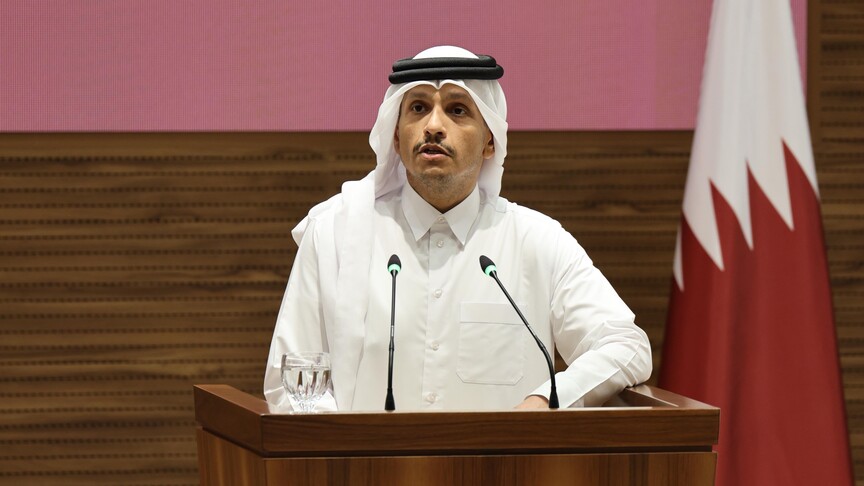
Qatari Foreign Minister Mohammed bin Abdulrahman discussed with his Omani counterpart Badr al-Busaidi, on Tuesday, efforts to de-escalate tensions in the region.
This came during a phone call received by al-Busaidi from bin Abdulrahman, according to a statement from the Qatari Ministry of Foreign Affairs.
During the call, according to the statement, they 'reviewed cooperative relations between the two countries and ways to support and strengthen them, and discussed the latest regional developments, especially the diplomatic efforts being made and joint coordination to de-escalate tensions and enhance security and stability in the region.'
Bin Abdulrahman stressed 'the need for all parties to commit to dialogue and diplomacy, and to implement what has been agreed upon within the framework of the Memorandum of Understanding between the United States of America and Iran, including ensuring freedom of navigation in the Strait of Hormuz.'
He added: 'And respecting the sovereignty of the Sultanate of Oman over its territorial waters, to maintain the security of the region, preserve the gains achieved, and enhance regional stability.'
The call comes within a regional diplomatic movement to contain the escalation between the United States and Iran, and push towards resuming negotiations, amid concerns about the safety of navigation in the Strait of Hormuz.
For days, the United States has been launching successive waves of strikes on sites inside Iran, while Tehran responds with attacks on bases, military installations, and sites it says are linked to Washington in countries in the region, including areas in northern Iraq.
The escalation comes despite the signing by Washington and Tehran last June of a memorandum of understanding that included a cessation of hostilities and the start of negotiations to reach a broader agreement.
But US President Donald Trump announced on July 8 the end of the ceasefire, after tankers in the Strait of Hormuz were subjected to attacks that Washington accused Tehran of being behind, so the United States resumed its strikes inside Iran amid escalating Iranian responses in the region.
Washington demands that Tehran stop attacking ships and ensure freedom of navigation through the Strait of Hormuz, while Iran insists on subjecting the passage of ships to a mechanism it regulates through the strategic corridor, exacerbating fears of disruption of oil and gas exports from the region.
Washington supports the passage of commercial ships through the Strait of Hormuz on a route different from that set by Iran, which Tehran rejects, stressing that it targets any ship that does not coordinate with it before crossing this strategic strait for global energy supplies.
Original source: Anadolu Agency




Comments (0)
Be the first to comment.