"How Did Israel Recruit Former Iranian President Ahmadinejad?"
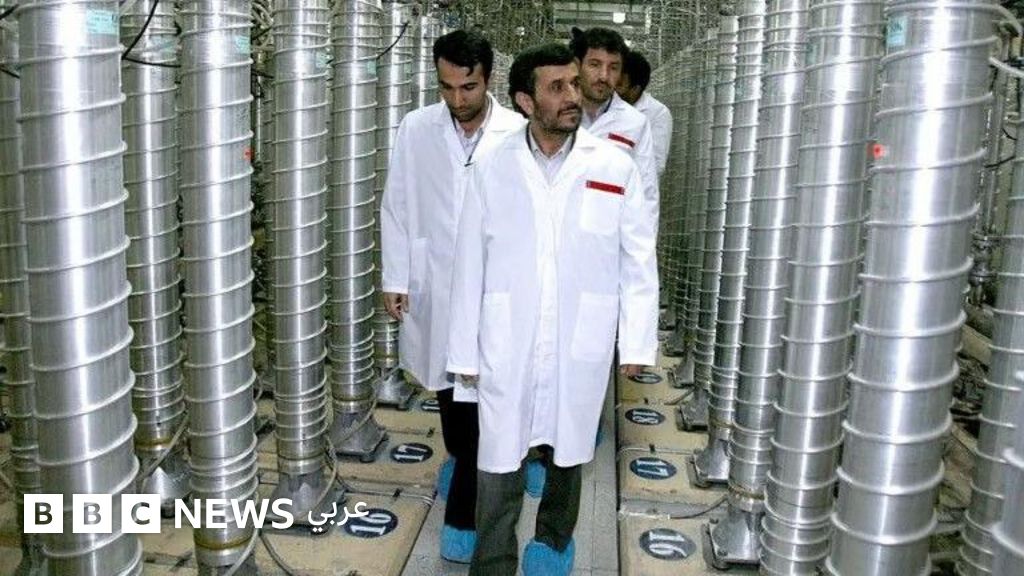
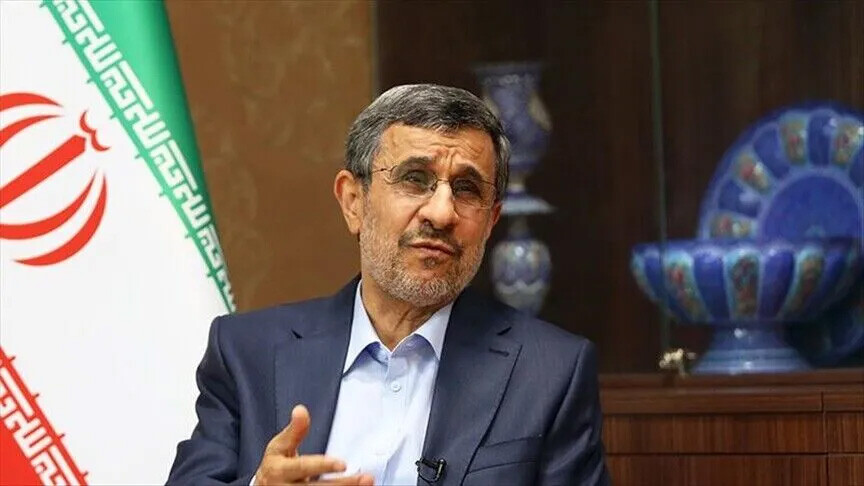
A New York Times report states that Ahmadinejad was seeking to return to power in Iran, frustrated by a political system that prevented him from being elected president for a third term.
"How Did Israel Recruit Former Iranian President Ahmadinejad?" – In The New York Times
Published 5 minutes ago
Reading time: 5 minutes
In our tour of today's newspapers, we dive into the details of the "agreement between Ahmadinejad and Israel," review an article discussing how the Trump administration dismantled institutional diplomacy in the United States, and finally, why the England vs. Argentina World Cup semi-final match is taking on a "vengeful" character.
We begin our tour with The New York Times and a report titled "Inside an Israeli Intelligence Operation to Recruit Ahmadinejad," written by several of the newspaper's correspondents.
The report starts at Ludovika University in the Hungarian capital, Budapest, where a meeting was arranged in early 2024 between Mossad officers and former Iranian President Ahmadinejad, as part of a scientific conference on climate change.
According to the report, this meeting—which was repeated the following year in 2025—was the culmination of years of Israeli efforts to recruit the former Iranian president, who was being groomed for installation as the new leader of Iran.
Ahmadinejad: From Western antagonist to a potential choice in the post-Khamenei era.
The report stated that the head of the Mossad at the time, David Barnea, traveled to Budapest in 2024 to meet Ahmadinejad in person, according to former U.S. officials.
The report indicates that in recent years, Ahmadinejad met with Mossad officers outside the country more than once, particularly in Budapest; he also allegedly received funds secretly from Israel.
Note: Following the newspaper's report, Ahmadinejad's office published a statement rejecting the report, calling it "Hollywood-style allegations" that "do not even deserve a denial," and accused the newspaper of spreading "fake news."
But how did the interests of two bitter enemies—Ahmadinejad and Israel—converge? The report says that Ahmadinejad was seeking to return to power in Iran and was frustrated by the country's governance system, which prevented him from being elected president for a third time. He saw the downfall of this system as a necessity for his own rise to power—and Israel seized upon this opening.
Skip the most read and continue reading.
The Houthis target Abha airport and warn against flying in Saudi airspace.
The U.S. military bombs the oil-producing cities of Abadan and Mahshahr in southwestern Iran, and Tehran expands its attacks to Bahrain.
Why has Haaland transformed from a football star into a cultural phenomenon?
Why do mosquitoes bite some people more than others?
Skip the podcast and continue reading.
Worth paying attention to.
An in-depth explanation of the most prominent events and topics, to help you understand the most important variables around you and their impact on your life.
Episodes.
End of the podcast.
The report mentioned that this cooperation reached its peak last February, during the first days of the American-Israeli war on Iran, when Mossad elements moved Ahmadinejad from a location where he was under tight security in Tehran to another safe location inside Iran.
Ahmadinejad disappeared from view until last Monday, when he appeared at the funeral of the late Supreme Leader Ali Khamenei. Those familiar with the matter believe that Ahmadinejad became frustrated with the success of the Israeli plan to return him to power, which prompted him to leave the hideout where Israel had moved him at the beginning of the war.
The report cited four high-ranking Iranian officials as saying that Ahmadinejad is now in the custody of the intelligence wing of the Islamic Revolutionary Guard Corps after his dealings with Israel were uncovered.
The report indicates that the former Iranian president was part of an ambitious Israeli plan to overthrow the regime in Tehran, which included arming and training Iranian-Kurdish opposition forces based in northern Iraq with the aim of using them to topple the regime.
The report stated that Ahmadinejad saw himself as capable of playing a reformist role in Iran in the aftermath of the overthrow of the existing regime, similar to the role played by former Russian President Boris Yeltsin, and that he (Ahmadinejad) feared the U.S. bringing in Iranian opposition figures from abroad to lead Iran after the fall of the Khamenei regime.
The report tracked how Ahmadinejad changed on several levels to achieve his dream of returning to the head of power in Iran—starting with his views toward Israel, which he once called to be wiped off the map, all the way to his personal attire.
"Rest in peace."
Moving to the British Financial Times, we read a report titled "U.S. Department of State: Rest in Peace," by several of the newspaper's correspondents.
The report addressed aspiring American diplomats, telling them that it might be a good time to look for jobs—even if only on paper.
The report noted that more than half of the positions at U.S. embassies have been vacant since last June, pointing out that about 80 percent of U.S. embassies in Africa do not have ambassadors.
The report stated that career prospects within the U.S. Department of State are no longer bright, especially since Donald Trump's return to the presidency in January 2025 and his clear declaration of disdain for what he described as a "foolishly intense foreign policy establishment."
The report said that over the 18 months since Trump's return, the U.S. State Department has not only been marginalized but appears to be under siege, after having once been the official face of the country and highly respected around the world.
According to the report, Trump administration officials believe that what the U.S. State Department is witnessing—having laid off more than 20 percent of its workforce—is a "long-overdue reform of a bureaucratic arm that is isolated from the surrounding world and incapable of contributing to achieving America's national security goals."
In contrast, the report noted a warning issued by diplomats regarding what they described as a "purge of experts" within an "America First" culture that despises those with experience and institutional knowledge.
According to the report, Trump relies on "trusted loyalists" to conclude agreements like the Memorandum of Understanding signed with Iran last month, which faced criticism for being fragile and for tilting the scales in favor of Tehran over Washington.
The report views the pressure on the U.S. State Department as part of Trump's retaliation against what his administration describes as the "deep state," and as part of a "calculated" plan that uses the State Department to achieve the "America First" agenda and what is known as the "MAGA" movement.
In response, the report noted the Trump administration's comment on these criticisms: that most of them are detached from the developments of the modern world, where leaders communicate via WhatsApp.
In light of this climate that ignores diplomats in the United States, the report observed that diplomats in U.S.-allied countries are turning to Trump's inner circle and his trusted envoys instead of their counterparts among American diplomats.
According to veteran diplomats, the American foreign policy establishment has reached a "turning point" from which it will not be able to return even if the Democrats return to power, according to Bill Burns, who previously served as an ambassador and director of the CIA.
"The Vengeance Match."
We conclude our tour with the British Independent, with an article titled "The Final Vengeance Match on the Falkland Islands between England and Argentina."
Original source: BBC Arabic


Comments (0)
Be the first to comment.