Lebanese army enters ‘pilot zone’, as villagers return amid Israel deal

Under US-brokered plan, Israel is to hand over control of some areas it occupies in the south to Lebanese government.
By Ehab el-Okdy
Originally published on 21 Jul 202621 Jul 2026
The pilot zone project is part of a broader ceasefire framework between Israel and Lebanon, brokered by the United States.
|
Updated: 36 minutes agoUpdated: 36 minutes ago
Southern Lebanon – Dozens of displaced residents have begun to return to villages in southern Lebanon, as Israel, Lebanon, and the United States announced on Monday that the so-called “pilot zone” project had begun.
On Tuesday morning, the Lebanese army confirmed that it had deployed troops to Zawtar el-Gharbiya, one of the three towns it is expected to take control of in the first phase of the pilot zone plan.
Recommended Stories
list of 3 items
- list 1 of 3Lebanon’s military starts ‘pilot zone’ takeover in south
- list 2 of 3Who is Khalil al-Hayya, Hamas’s newly elected political chief?
- list 3 of 3Why is Iran bombing Gulf states while avoiding US naval assets and Israel?
end of list
The plan is part of a framework agreement between Lebanon and Israel, signed in Washington last month. It will see Israel pull out from a small number of areas in southern Lebanon, while it continues to occupy other areas it invaded since escalating its war on the country in March, which has killed more than 4,300 people.
Israel has been fighting the Lebanese group Hezbollah, which it insists must be disarmed before a full Israeli withdrawal.
Al Jazeera spoke to people in Froun and Ghandouriyeh, neighbouring villages in southern Lebanon to which residents began returning on Monday after Israeli bombardment forced them to flee. The US said Froun was one of three villages that were part of the first phase of the pilot zone plan, while Ghandouriyeh is believed to be in the second phase.
However, some locals have questioned their villages' inclusion in the plan, asserting that Israeli forces never occupied them. They view the inclusion as evidence that Israel is not actually conceding anything under the framework agreement, but rather is able to remain in the areas it has occupied.
Lebanese security sources back up that narrative, telling Al Jazeera that the two villages had not been occupied by Israeli forces.
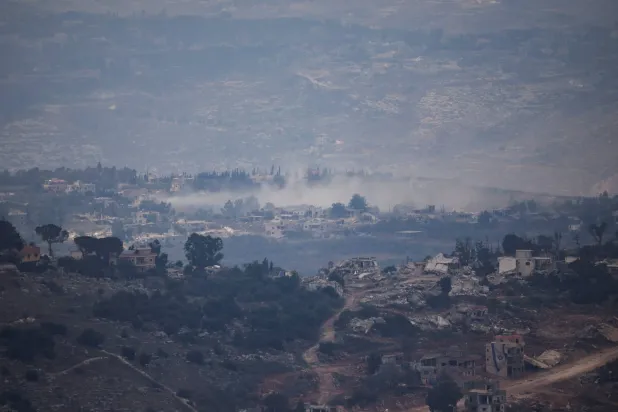
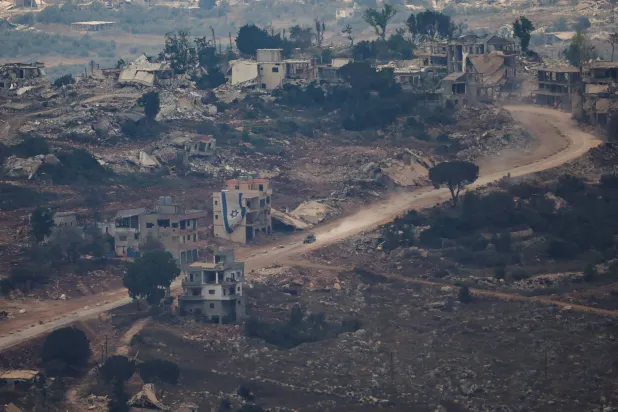
Perched on hills overlooking several Israeli-occupied towns in the Nabatieh and Marjayoun districts, the two villages face the town of Zawtar el-Gharbiya.
The road connecting Ghandouriyeh and Froun is fraught with danger: The stretches overlooking the Hujeir Valley continuously come under Israeli fire, and occupying Israeli forces stationed in Odaisseh al-Qusayr, Qantara, Alma ash-Shaab and elsewhere can monitor anyone passing through.
Still, many families have not waited for the outcome of the framework agreement and have begun gradually returning. They include the family of Abu Ali Miqdad, who owns heavy machinery that allowed them to start clearing the rubble of a building they own – containing residential apartments and storage warehouses at the entrance to Froun – in an effort to salvage whatever materials remain.
Abu Ali founded the family business decades ago, before his sons and grandsons joined him. After hours of work, they managed to pull tyres, oil drums and spare parts from the debris.
The grandfather shows little optimism about the current situation, but says he has grown weary of constant displacement. Watching his grandchildren haul an oil drum from the rubble, he says he will keep “clearing the rubble and rebuilding, even under bombardment”.
He says that the presence of the Lebanese army and UN peacekeeping patrols brings him some comfort despite the circumstances.
Anxious
Across from the demolished house, one home did survive the destruction. On its doorstep sits a woman in her 70s, dressed in traditional southern Lebanese attire, with her grandson beside her wearing a Spain national team football jersey.
Spanish troops had been patrolling the area opposite Froun as part of the United Nations peacekeeping force (UNIFIL) deployed south of the Litani River, though its mission is set to end by year’s end under a UN Security Council resolution.
Despite the destruction around her, Sumaya Haidar says she is relieved to be back home, sitting beside her grandson – even though there is no water, electricity or phone service.
Like everyone else in Froun, she is anxious about the town’s fate. Sumaya’s worry also stems from the continued displacement of her children’s families to different towns, leaving them unsettled.
“We put our trust in God,” Sumaya says. “We sit here, we’re not afraid, and we’ll stay. Look at these people – living in schools after losing their homes, and my children are scattered, too.”
State authority
Meanwhile, Lebanese army patrols have been visible for three days in the area of Ghandouriyeh, with soldiers from the Fifth Intervention Regiment standing at the village’s southern entrance.
Ghandouriyeh has suffered even more destruction than Froun: 250 of its 260 homes are fully or partially destroyed, according to municipal council head Mohammed Nader. Along with several council members, he has set up damaged chairs under the shade of a tree for their daily meetings.
Nader, who used to live in Paraguay but returned to serve his small hometown, grows visibly angry when asked whether the village might be included in the second phase of the pilot zones.
Pointing towards the Israeli position just a few kilometres away, he rejects the idea outright, saying Israel wants “to sell us and the state empty walnut shells, calling it a pilot zone, when they never even entered it in the first place”.
The army granted Al Jazeera permission to film its positions in Ghandouriyeh and Froun twice, to affirm its control over the area and its designation as a zone under military oversight. Army patrols were seen repeatedly moving along the line stretching from Kfar Dounine to Froun via Ghandouriyeh, and a checkpoint was observed where service members searched vehicles and checked residents’ identification.
“Extending state authority” is expected to top the agenda when Lebanese President Joseph Aoun meets with US President Donald Trump in Washington, DC, on Tuesday.
For the Lebanese government, its presence in Froun and Ghandouriyeh is evidence of that state authority, even if Hezbollah continues to insist that its weapons are necessary to confront Israel if the Lebanese army is not willing to do so.
The return of residents to these villages, despite not being occupied, highlights the complex nature of the ceasefire implementation. It remains to be seen whether the pilot zone project will lead to a full Israeli withdrawal or further entrenchment of the current situation. The ongoing disagreement over which villages are considered occupied underscores the challenges in disarming Hezbollah and achieving a lasting peace.
Original source: Al Jazeera


Comments (0)
Be the first to comment.