Why does Iran insist on linking Hezbollah to its agreement with Washington?
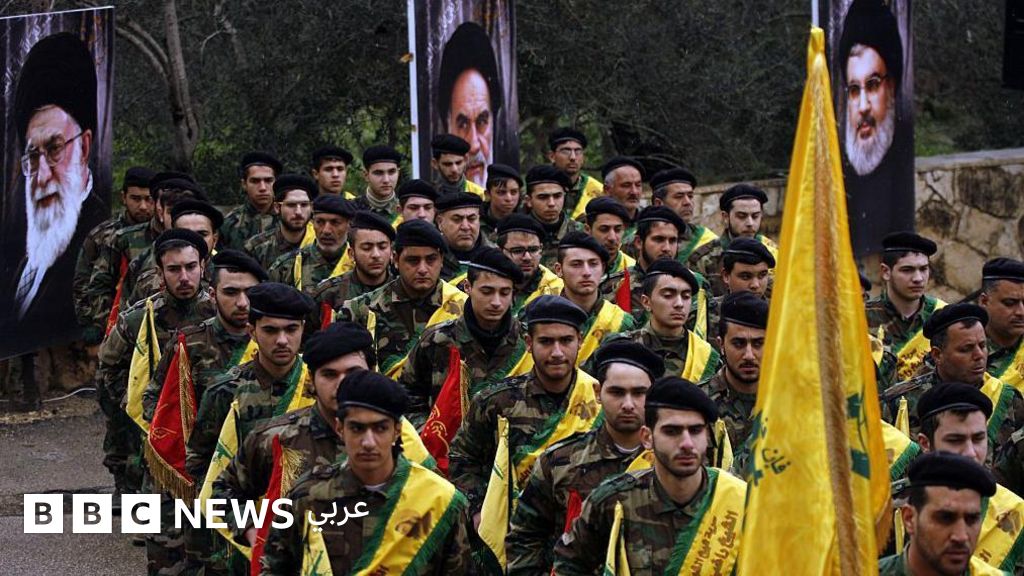
Experts agree that the role and position of Lebanon's Hezbollah have declined after the strikes it received, so what is its importance to Iran today?
Why does Iran insist on linking Hezbollah to its agreement with Washington?
Article Information
Author, Saeed JafariRole, BBC Persian
Published 25 June 2026
Reading time: 13 minutes
If someone in late February had predicted that the Israeli-American attack on Iran would lead to a ceasefire agreement in which Iranian officials link the reopening of the Strait of Hormuz to a halt in Israeli attacks on Lebanon, few would have believed it.
But after the details of the memorandum of understanding between Tehran and Washington were published, it became clear that Lebanon played a prominent role, both in the text of the agreement and in its margins.
On the surface, the main issue in this understanding was ending the war between Iran and the United States, reopening shipping lanes, containing the economic crisis caused by the closure of the Strait of Hormuz, and paving the way for nuclear negotiations. But Iran insisted on not leaving the Lebanese arena and the Hezbollah front outside this framework.
The death toll from the American-Israeli war with Iran is in the thousands, but the true toll may remain unknown
Where is Iran hiding enriched uranium, and what is the fate of its stockpile?
This insistence was like walking a tightrope: on one hand, it could put Iran in a position of strength, and on the other, it could lead to the collapse of the agreement and a return to hostilities in the region.
But why does Iran not want to separate Hezbollah in Lebanon from an agreement with the United States?
It appears that Hezbollah, for Iran, is not just a military force on Israel's border. This group is, at the same time, part of Tehran's negotiating leverage, a symbol of the Islamic Republic's regional credibility, and an important element in how the regime's ideological supporters view Iran's foreign policy.
Many critics of the Islamic Republic's regional policies in Iran question why Tehran is willing to risk jeopardizing an agreement with the United States to maintain this link, especially when the Iranian economy is under severe pressure.
But a review of the positions of Islamic Republic officials and expert analyses shows that, from Tehran's perspective, the issue is not solely about Hezbollah's future, but also relates to Iran's regional influence, the credibility of its network of allies, and the Islamic Republic's leaders' perception of the nature of the upcoming confrontation with Israel and the United States.
Skip most read and continue reading
Do you really need to avoid gluten?
"A meal I had during my vacation ended with me getting 38 parasites in my brain"
Ukraine strikes a major oil refinery in Russia's Saint Petersburg
Funeral music and 'selected verses': How social media covered Khamenei's farewell ceremony
How did Lebanon enter the memorandum of understanding?
Critics of the agreement in Washington see the inclusion of Lebanon in the memorandum of understanding between Iran and the United States as one indication that Tehran was able to impose some of its demands on the diplomatic track.
There are critics such as Mark Dubowitz, Jonathan Schanzer, and Michael Doran, who have for years supported the maximum pressure policy against the Islamic Republic, who see the agreement as a sign that the Trump administration has conceded a lot to Tehran. In their view, the United States offered Iran concessions beyond a temporary ceasefire in exchange for reopening the Strait of Hormuz and containing the economic costs of the war.
From a different angle, Michael Young, a senior fellow at the Carnegie Middle East Center, reaches a similar conclusion. Young says in an interview with the BBC that the United States today needs the success of the negotiations more than Iran does, because the closure or restriction of navigation in the Strait of Hormuz has imposed a heavy cost on the American and global economies.
Caption: Iran seeks to ensure restrictions on Israeli movement in Lebanon in exchange for signing the agreement with the United States
According to Young, "Iran is in a stronger position because it can still close the Strait of Hormuz." He believes that Tehran wants to reach an agreement with the United States, but Washington, and especially Donald Trump, needs this agreement more.
This perception may be one of the factors that allowed Iran to bring Lebanon into the equation as well. Tehran wants to ensure that if the war with the United States stops, Israel's hand will not be free in Lebanon. From the perspective of decision-makers in Tehran, an agreement that eases direct pressure on Iran while leaving Hezbollah vulnerable to Israeli attacks would likely be an incomplete agreement, because it weakens one of Iran's most important tools in any future confrontation with Israel.
What is Hezbollah's situation today?
Skip podcast and continue reading
Worth attention
In-depth explanation of the most important events and topics, to help you understand the key changes around you and their impact on your life
Episodes
End of podcast
Iran's insistence on Hezbollah continues at a time when the party is no longer in the position it held before the Gaza war. Over the past two years, Hezbollah has suffered severe blows from Israel, from the assassination of its leader and a number of its commanders, to the targeting of its command and control network, the destruction of part of its military infrastructure, and the imposition of restrictions on its ability to maneuver in southern Lebanon.
Hamid Reza Azizi, a Middle East expert, tells BBC Persian: "Hezbollah is in a much weaker position compared to before the Gaza war. One of the reasons that led Israel to believe it could attack Iran at a manageable cost was precisely this weakness that has afflicted Hezbollah."
Azizi says that Hezbollah was previously a force that seemed larger than the Lebanese army and stronger than many armies in the region, but its missile capabilities and combat structure have declined after the recent wars.
He adds: "Hezbollah has today, to some extent, returned to the approach it adopted in its early years and during its first confrontations with Israel: a more decentralized structure, reliance on smaller units, asymmetric warfare, and the use of new technologies such as first-person view (FPV) drones."
Hezbollah's small drones: Why do they pose a challenge to Israeli defenses?
Michael Young offers a similar assessment, saying that Hezbollah "has suffered a severe blow" and can no longer be described as a force with the same deterrent capability as before. But he stresses that the party remains militarily important to Iran because it is located on Israel's border and, in future crises, could provide an additional leverage card.
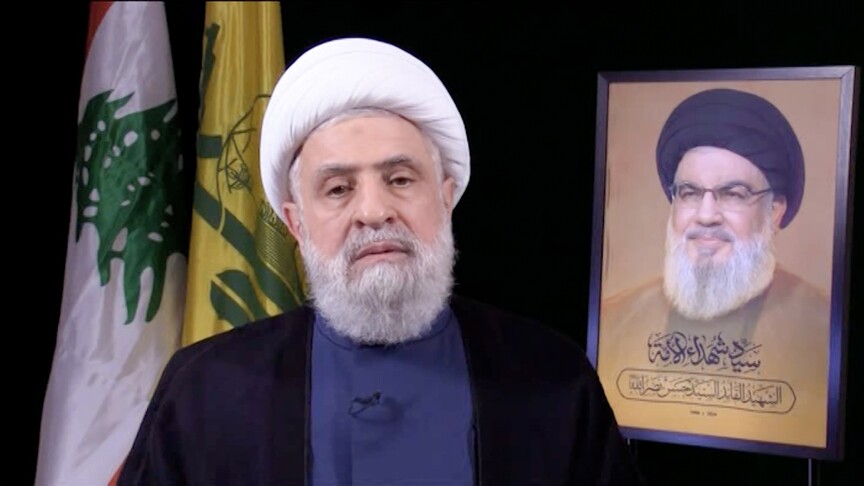
Caption: Hezbollah lost its leader and a number of its commanders in Israeli attacks
Deterrent force or leverage card?
In recent years, many analysts have seen Hezbollah in Lebanon specifically, and the "Axis of Resistance" more broadly, as part of the Islamic Republic's strategy to enhance its deterrence capability. This strategy was based on the theory of "deterrence by denial."
According to this model, Iran, relying on its network of regional allies, including Hezbollah, sought to increase the cost and complexity of any Israeli or American military action and enhance its deterrence capability by creating something akin to a "ring of fire" around Israel. Hezbollah in Lebanon, Iraqi groups, the Houthis in Yemen, and allied forces in Syria were each seen as part of this pressure belt.
Original source: BBC Arabic

Comments (0)
Be the first to comment.