Lebanon-Israel Talks in Rome: Why the Move from Washington and What Are the Key Issues?
After five rounds in Washington, Lebanese-Israeli talks shift to Rome. This report explores the reasons behind choosing the Italian capital and the agenda regarding Israeli withdrawal, the deployment of the Lebanese Army, and the disarmament of Hezbollah.
Lebanon-Israel Talks in Rome: Why the Move from Washington and What Are the Key Issues?
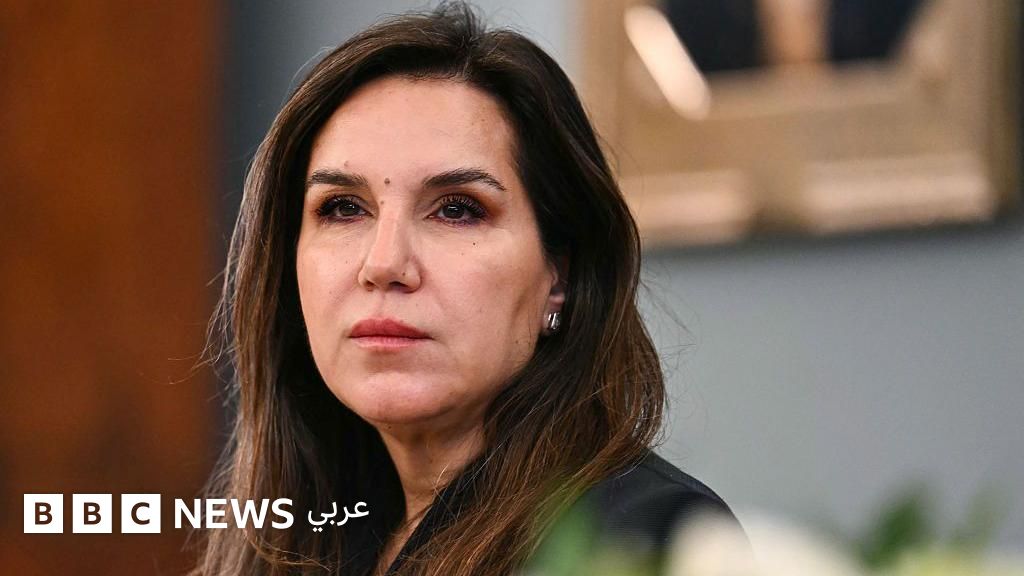
Photo Caption: Nada Hamadeh, Lebanon's Ambassador to the United States, during a meeting between the Lebanese and Israeli delegations hosted by the U.S. State Department in Washington on June 2.
Published 2 minutes ago
Reading time: 7 minutes
For the first time since direct talks between Lebanon and Israel began in April, delegations from both countries are meeting outside of Washington.
Rome is hosting the sixth round of U.S.-brokered negotiations today and tomorrow, in an attempt to move from the principles outlined in the 'Framework Agreement' signed on June 26 to actionable steps on the ground.
According to a Lebanese official who spoke to Agence France-Presse (AFP), the meetings began at 10:00 AM local time at the U.S. Embassy in Rome and will continue for two days.
The negotiations are being conducted at the ambassadorial level. According to press reports, the Lebanese delegation includes former Ambassador Simon Karam, Lebanon's Ambassador to the U.S. Nada Hamadeh Moawad, and retired Brigadier General Ziad Haykal, acting as an advisor to General Joseph Aoun.
Israel is represented by its Ambassador to the U.S. Yechiel Leiter, while the U.S. side includes State Department official Dan Holler.
Lebanon: Will the Framework Agreement with Israel ignite internal division?
What are the most prominent points of the talks between Lebanon and Israel?
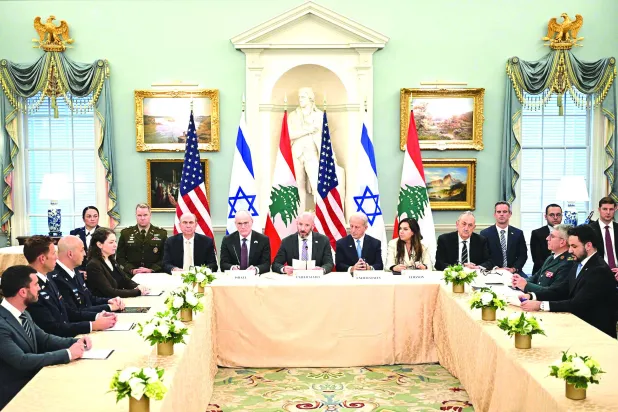
Photo Caption: Nada Hamadeh Moawad, Yechiel Leiter, and Dan Holler during the signing of the 'Framework Agreement'.
Why Rome?
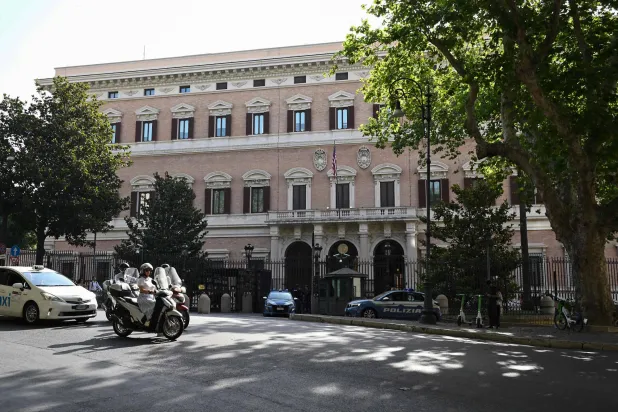
Photo Caption: The U.S. Embassy building in the Italian capital, Rome.
There is no official, unified explanation for moving the negotiations from Washington, where the previous five rounds were held, to Rome.
Italy had offered to host the talks as early as April. Italian Foreign Minister Antonio Tajani stated that his country was prepared to support direct dialogue between Lebanon and Israel and host the negotiations, before welcoming the convening of the new round in Rome.
Italy maintains close military ties with Lebanon, as it participates in the UN Interim Force in Lebanon (UNIFIL), manages a bilateral military mission to train the Lebanese Army, and leads the Technical Military Committee for Lebanon, a multilateral initiative to support the army's capabilities. The Italian Foreign Ministry has announced that Rome seeks to encourage a direct dialogue between Lebanon and Israel that leads to a lasting peace.
Skip most-read and continue reading
Houthis target Abha airport and warn against flying in Saudi airspace
Iran expands attacks to Bahrain and targets two tankers in Hormuz; Washington continues strikes
Why did Haaland transform from a football star into a cultural phenomenon?
Iran's Jabal al-Fas facility: What do we know about the site threatened by the U.S. President?
Skip podcast and continue reading
Worth paying attention to
An in-depth explanation of major events and topics to help you understand the most important variables around you and their impact on your life.
Episodes
Podcast End
However, press reports provided different accounts regarding who suggested moving the talks.
The Lebanese Broadcasting Corporation (LBC) quoted a diplomatic source as saying that the United States proposed moving the negotiations to Rome, following a recurring approach of launching negotiation tracks from the U.S. State Department before moving them to a European capital. The source linked the choice of Rome to Italy's close ties with Lebanon and the Lebanese Army.
Conversely, Lebanese reports suggested the move was based on an Israeli proposal. The Times of Israel quoted a Lebanese diplomatic source as saying that Israel was quick to accept Rome as a venue in an attempt to alleviate the pressure it faced during the Washington negotiations. There has been no official confirmation of this account. The source added that the Lebanese delegation received assurances that Washington would maintain the same level of engagement in managing the negotiations.
The National newspaper reported that Lebanon initially refused to move the talks to Rome after Israel announced the date and location before officially informing Lebanese authorities. Beirut later agreed to participate after receiving a formal U.S. invitation and reaching an understanding with the American side.
The sources did not provide a definitive explanation for choosing Rome, but pointed to possible logistical considerations, including the proximity of both delegations to their home countries—allowing for faster consultations with their respective governments—and the ease of coordinating with U.S. officials due to the time difference.
The move to Rome does not change the mediator, as the negotiations remain trilateral under U.S. sponsorship, with Italy acting as the host country.
Royal Palace
Reports state that the meetings will be held at the U.S. Embassy in Rome, which occupies 'Palazzo Margherita' on Via Veneto in the heart of the Italian capital.
The palace was built between 1886 and 1890, designed by Italian architect Gaetano Koch, to serve as the residence for Prince Rodolfo Boncompagni Ludovisi, before it was purchased by the Royal House of Savoy in 1900.
The building acquired its name from Queen Margherita, mother of King Victor Emmanuel III, who resided there until her death in 1926. It became the U.S. Embassy in 1931, before the U.S. government purchased it in 1946.
Photo Caption: A delegation arrives at the U.S. Embassy in Rome today as talks begin.
What items are on the table?
Photo Caption: Models of the Lebanese and Israeli flags near the border between the two countries.
This round differs from its predecessors as negotiations shift from discussing general principles to discussing how to implement the 'Framework Agreement' signed by Lebanon, Israel, and the United States in Washington on June 26.
The agreement and its security annex, which has not been officially published, provide for a phased and conditional process. During this process, the Lebanese Army is tasked with dismantling the military infrastructure of non-state armed groups and disarming them in designated areas, before a mutually agreed-upon third party verifies these steps. Thereafter, the army assumes full security responsibility, coinciding with a gradual Israeli withdrawal.
The agreement identifies two initial areas in southern Lebanon for the implementation of this mechanism. The Lebanese Army will hold exclusive security responsibility there, with the state later leading reconstruction efforts with international support, within a U.S.-backed implementation and verification mechanism.
However, the agreement does not include a publicly announced timetable for withdrawal. Furthermore, the map of the two areas and the full details of the mechanism that will determine the order and timing of steps have not been officially published.
Israeli Ambassador to the U.S. Yechiel Leiter stated before the round that the delegations would include specialized teams to address various files, noting that points of disagreement remain that require further work before a comprehensive agreement is reached.
It is expected that the round will discuss establishing specialized mechanisms to monitor implementation, including Israeli withdrawal, the deployment of the Lebanese Army, verification of security arrangements, the return of displaced persons, and reconstruction.
Original source: BBC Arabic


Comments (0)
Be the first to comment.