A Decade Later: The Hotel Where Erdoğan's Assassination Was Attempted, Preserved as Is
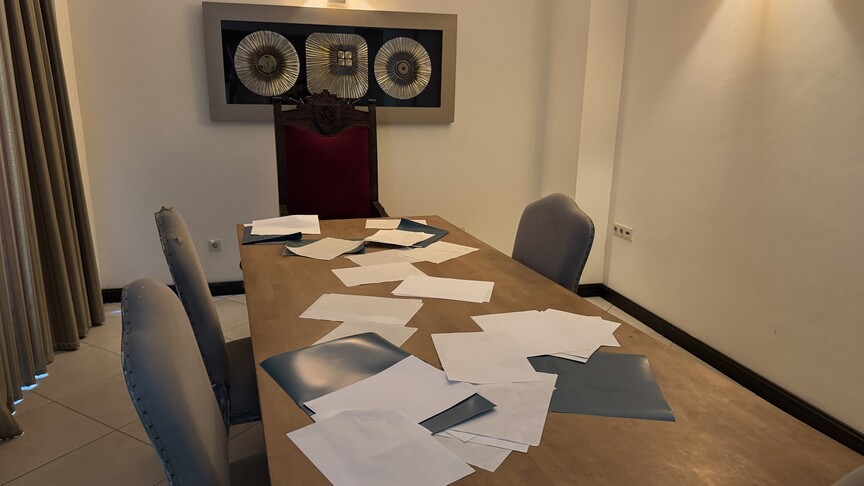
The management of the hotel where the Turkish president was staying decided not to repair the damage from the attack in order to preserve the traces of that night.
Muğla/ Sabri Kesen/ Anadolu
- Traces of bullets are visible inside the hotel on door locks, shattered furniture, broken mirrors, and holes in walls and furniture
- In the back of the room where Erdoğan stayed, prayer rugs and prayer beads remain in their places
Despite ten years having passed since the coup attempt of July 15, 2016, the traces of the assassination team attack by the Gülen terrorist organization on the hotel where Turkish President Recep Tayyip Erdoğan was staying in Marmaris, southwestern Turkey, remain preserved as is.
Those traces have remained over the years, without any cleaning or restoration, to stand as a witness to one of the bloodiest nights in modern Turkish history.
Erdoğan had left the hotel shortly before the assassination team arrived, which stormed the place as part of the coup attempt carried out by the terrorist organization.
The hotel management decided not to repair the damage left by the attack, in order to preserve the traces of that night and convey its details to future generations as a physical witness to what happened.
Anadolu Agency reached the two rooms that were attacked and photographed them after they remained closed since that night, and were not allowed to be used again.
** Bullet traces
The hotel management surrounded the damaged rooms with iron barriers as part of preserving the traces of the attack and preventing tampering, while all damage remained as is without cleaning or restoration, reflecting the level of violence witnessed that night.
Bullet traces are visible on door locks and shattered furniture inside the rooms where President Erdoğan stayed, in addition to the building where he held a meeting on the night of the coup attempt, as well as the rooms where his security personnel and police were staying.
Broken mirrors and holes from bullets in walls and furniture are also visible.
In one room, the shattered windows were hidden from the outside using decorative panels, while the destruction inside remained as it was.
Also, the handcuffs of one of the security personnel who confronted the attackers are still placed on a bed with bloodstains, while on one sofa there are 18 bullet impacts, a scene reflecting the intensity of the clashes inside the hotel.
In the back of the room where President Erdoğan stayed, which was used as a prayer room, prayer rugs and prayer beads remain in their places.
Files and papers remain scattered on the meeting table, along with signs of clashes in the laundry area, unchanged since the attack.
** Life sentences for perpetrators
During the attack on the hotel, police officer Mehmet Çetin assigned to protect him and police officer Nedim Cengiz Eker from Marmaris Security Directorate were martyred.
After carrying out the attack, members of the assassination team fled to a wooded area, before security forces could capture them after 17 days of sweeping operations.
Sentences of aggravated life imprisonment four times were issued against 31 defendants, including the mastermind of the assassination attempt and the second defendant in the case, former Brigadier General Gökhan Şahin Sönmezateş, and former Special Forces Major Şükrü Seymen, who led the assassination team.
Three other defendants were sentenced to aggravated life imprisonment once, while six defendants received life imprisonment sentences.
The sentences also included the then-chief aide to the President of the Republic, Ali Yazıcı, who was convicted of participating in the planning, preparation, and organization of the assassination attempt, and was sentenced to aggravated life imprisonment.
Turkish authorities continue to pursue former Captain Burak Kara Tepe, a member of the assassination team, who remains at large.
In mid-July 2016, Turkey witnessed a coup attempt carried out by limited elements of the military affiliated with the Gülen terrorist organization, during which they tried to seize control of state institutions, security and media organizations.
The Turkish government declared July 15 of each year as 'Democracy and National Unity Day' in the country, in memory of the 253 martyrs who died while resisting the coup attempt.
Original source: Anadolu Agency

Comments (0)
Be the first to comment.