Netanyahu's Government 'Transitional'.. Dissolution of Knesset Opens Way for 'Difficult' Elections
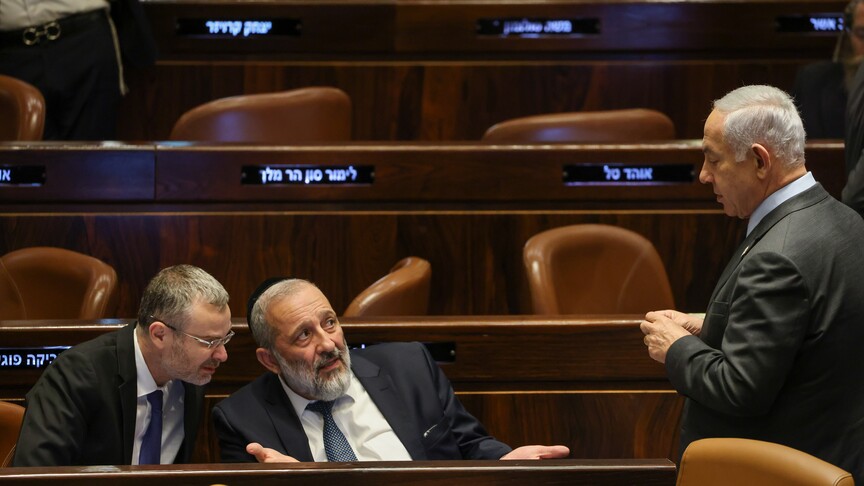
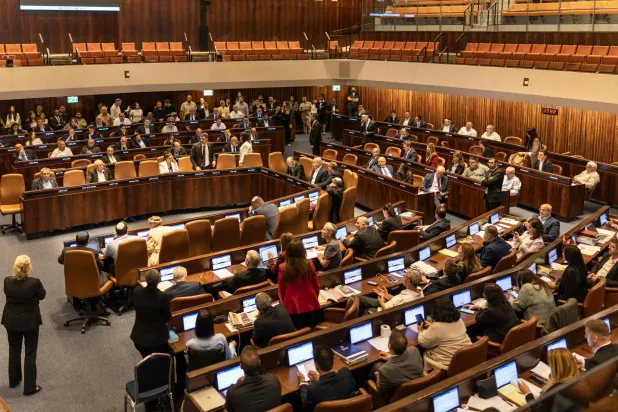
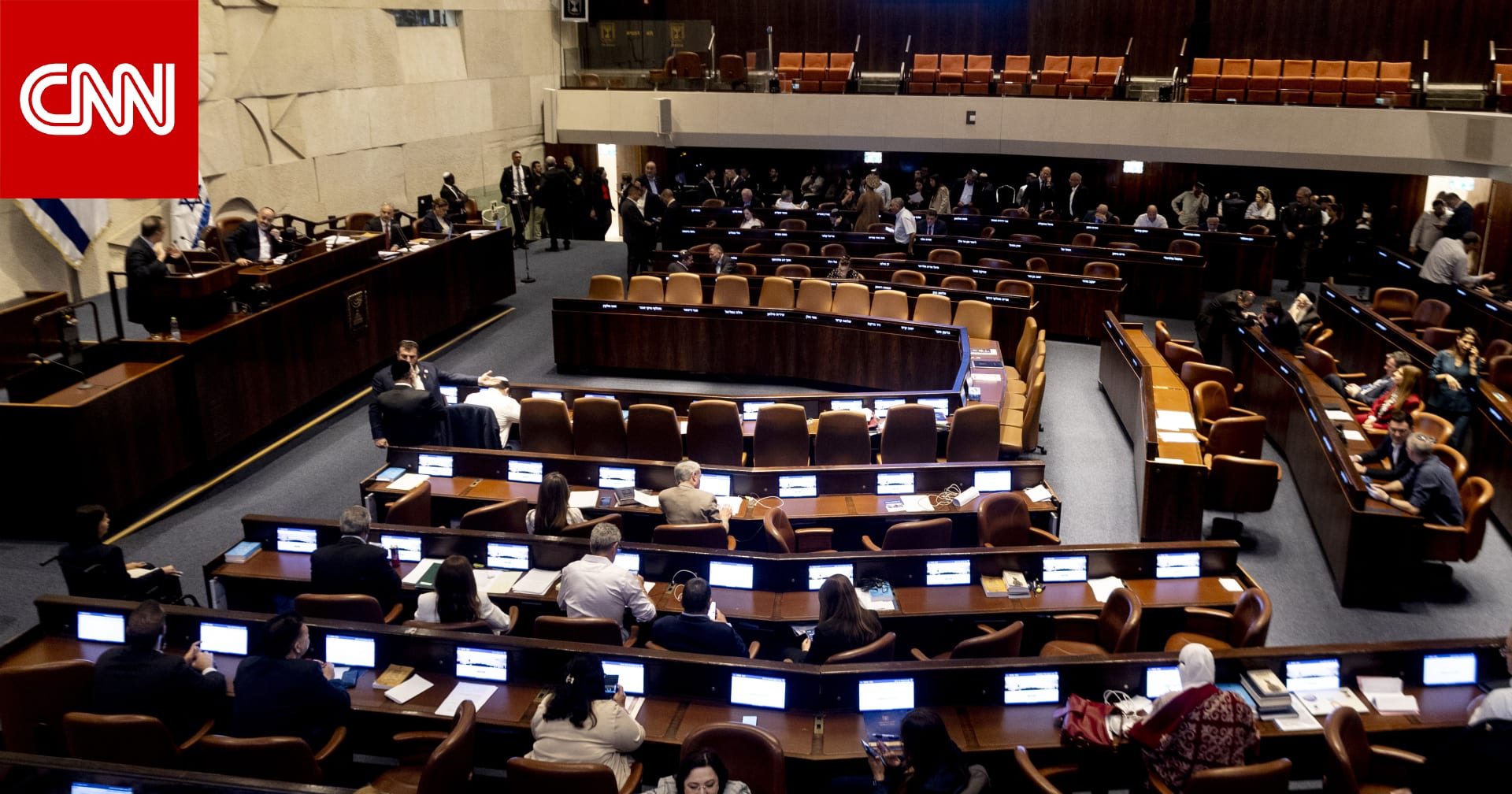
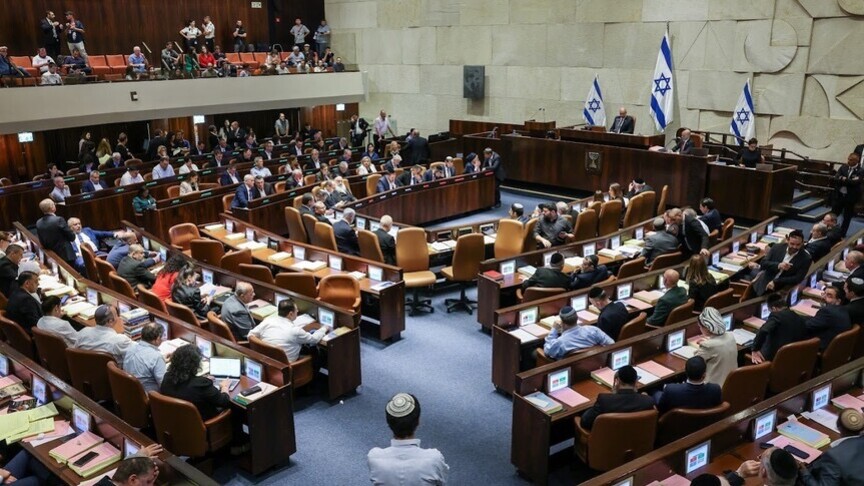
The Israeli Knesset approved its dissolution in preparation for the general elections to be held on October 27
JERUSALEM / Abdel Raouf Arnaout / Anadolu
Knesset Speaker Amir Ohana of the Likud party:
-This was the most challenging Knesset term in its history, and we are entering an election campaign characterized by escalating positions and conflict between ideas
Haaretz newspaper:
-Netanyahu's term was 'the most harmful in Israel's history'
-As long as Netanyahu's government remains, one of the country's most destructive leaders, there is no rest
-Blessed be the getting rid of them, and blessed be the dissolution of this Knesset
Government Legal Adviser Gali Baharav-Miara:
-You are now a transitional government and must exercise restraint
The dissolution of the Israeli Knesset on Friday opens the way for general elections scheduled for October 27, in which Prime Minister Benjamin Netanyahu will run to stay in power, while opposition parties, despite their differing positions, agree on the goal of removing him and his allies from office.
The elections come after a parliamentary term that the Knesset Speaker described as 'the most challenging', while Haaretz considered the current government 'the most harmful in Israel's history'.
Netanyahu's government began its term at the end of 2022 by proposing bills it called 'judicial reform', which the opposition considered an end to democracy, then waged ongoing wars on Gaza, Lebanon, Iran, and Yemen, and concluded with a series of laws in favor of the Haredim, which the opposition called 'evasion and plunder laws'.
**'The most challenging Knesset term'**
Early Friday, Knesset Speaker Amir Ohana of the Likud party said in a speech to the Knesset: 'I think it is fair to say that this was the most challenging Knesset term in its history.'
He added: 'It witnessed various protests and coincided with the longest and most difficult war in the state's history.'
Ohana continued: 'We are entering an election campaign characterized by its nature of escalating positions and conflict between ideas.'
He added, announcing the dissolution of the Knesset: 'The next session will be held two weeks after the elections. As for this session, this term, the 25th Knesset, is adjourned.'
**'The most harmful term in Israel's history'**
For its part, Haaretz newspaper considered in its editorial on Friday that the current term was 'the most harmful in Israel's history' and said: 'We will breathe a sigh of relief, but it will not be a breath of comfort, but a breath like that of a drowning person who then surfaces for moments.'
It added: 'As long as the government headed by Netanyahu, one of the country's most destructive leaders, remains, there is no rest, there will only be real concern and fear of the destruction it has brought upon every corner of this bleeding country, whose democratic foundations are crumbling.'
The newspaper pointed out that Netanyahu's government used its last days 'to run a terrifying marathon (of passing new laws that serve the upcoming election campaign).'
It said: 'This behavior befits a government that allowed the October 7 massacre to occur during its tenure, then waged a series of wars with ferocity that turned Israel into a pariah state, boycotted and hated around the world, and sowed hatred and incitement, fueling conflict among us.'
It continued: 'The ultimate goal is to turn Israel into a dictatorial state based on Jewish religious law. That is how the government began its terrifying term - by violating the rights of its citizens - and that is how it ends.'
**'Destructive legislation' and 'Politicized militia'**
The newspaper highlighted the campaign of what it described as 'destructive' legislation that Netanyahu's government waged in recent weeks.
It said: 'After turning the police into a politicized militia under the leadership of an evil criminal follower of Kahane (referring to Itamar Ben-Gvir), and appointing a political loyalist who legitimizes Kahanism as head of the General Security Service (Shin Bet), it launched a destructive legislative campaign in its final weeks.'
It added: 'Netanyahu and the Haredim struck a deal to pass laws that encourage evasion of military service, distribute cronyism, weaken the role of the Attorney General to carry out a political smear campaign against Gali Baharav-Miara, and undermine press freedom.'
The newspaper also noted that the government ignored 'a ruling by the Supreme Court and made the police internal investigations department subject to politicians.'
It mentioned that the Knesset passed on Thursday 'a law allowing gender segregation in academia.'
The newspaper continued: 'This law puts another nail in the coffin of liberalism and threatens to deepen the chasm into which the already isolated Israeli higher education system has been thrown.'
It concluded: 'The liberal people fell silent, exhausted from three bloody years, besieged from all sides by their government, and disappeared from view. They pin their hopes on the elections. And while waiting and wishing is not enough, especially with Netanyahu's conspiracies, we can, even for one day, breathe a sigh of relief and say: Blessed be the getting rid of them, and blessed be the dissolution of this Knesset.'
**Netanyahu and a 'fierce' election campaign**
In a related context, Haaretz predicted that the dissolution of the Knesset would open the way for the start of a 'fierce' election campaign by what it said was 'one who fears the end of his rule', referring to Netanyahu.
It continued: 'The (current) coalition will work tirelessly to maintain its power. There is no custom that this gang of thieves does not violate, and no red lines they do not cross with insolence.'
The newspaper added: 'It is the duty of the opposition and the people to be vigilant to ensure fair elections, and that at the end of them a new government is formed that serves its citizens rather than abandons them.'
**Netanyahu's government 'transitional'**
For her part, Government Legal Adviser Gali Baharav-Miara announced that the current government 'has become a transitional government as the country enters the election period.'
Baharav-Miara affirmed: 'The necessity for ministers to exercise restraint and avoid unnecessary or urgent decisions.'
The Israel Broadcasting Authority quoted Baharav-Miara as saying in a message she sent to Government Secretary Yossi Fuchs: 'The government has from now on become a transitional government, and it is obliged to exercise restraint and caution in exercising its powers during the election period, despite continuing to perform its duties until a new government is formed.'
She added: 'In light of the setting of the election date for the Knesset on October 27, there is no doubt that the country has officially entered an election period.'
The legal adviser confirmed that the work of the (transitional) government and the manner in which it exercises its powers during this stage 'differ from the situation of a regular government', based on 'the criteria established by court rulings regarding the work of transitional governments on the eve of elections.'
Baharav-Miara demanded that the government 'refrain from taking unnecessary or non-urgent steps, while maintaining a balance between the need for continued government operation and the duty of restraint.'
She warned of 'growing concerns during election periods about prioritizing narrow party interests over the public interest, or making decisions that would impose facts on the ground and put the next government in situations from which it would be difficult to retreat.'
Baharav-Miara also called on 'ministers and relevant authorities in government ministries to conduct a prior legal review, in coordination with the legal advisers of the ministries, before making decisions that go beyond the scope of routine government administration.'
She indicated that detailed instructions will be issued in the coming days to the ministries regarding the restrictions imposed during the election period, and will include government decisions, secondary legislation, appointments, provision of support, conclusion of international agreements, and other areas of government work.
Original source: Anadolu Agency


Comments (0)
Be the first to comment.