New Deterioration in French Relations
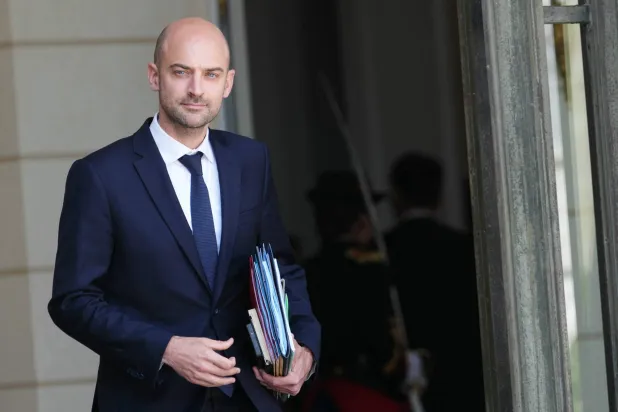
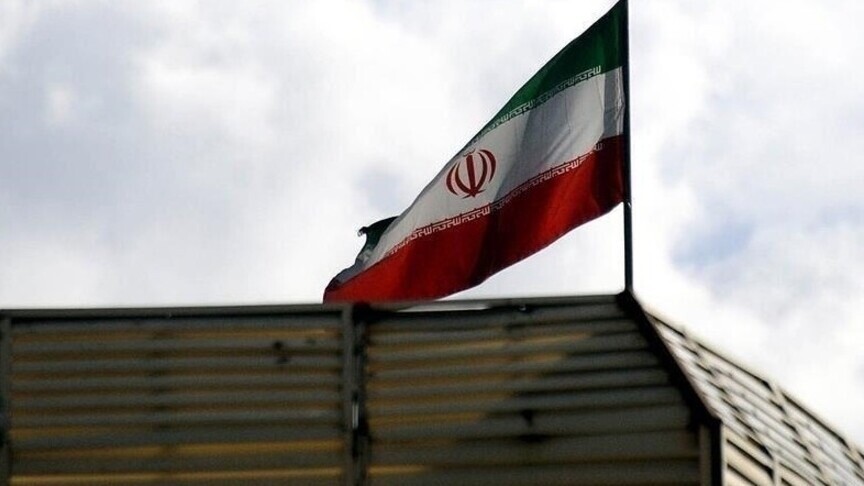
New deterioration in Franco-Iranian relations, and Paris does not rule out imposing new sanctions on Iran over the humiliating treatment of two of its diplomats in Tehran.
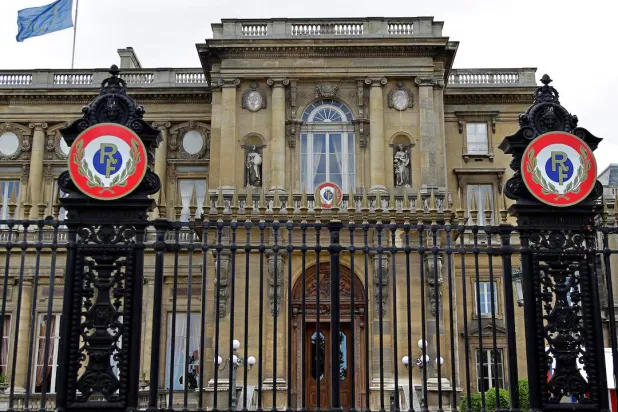
The French Foreign Ministry denied on Thursday that it had evacuated its diplomats from its embassy in the Iranian capital, contrary to rumors circulating on the matter.
Ministry spokesman Pascal Confavreux said during the weekly press conference that Paris 'did not relocate its diplomats' from Iran.
The news of the evacuation was published by the 'Fars' agency affiliated with the 'Revolutionary Guard', while the already tense Franco-Iranian relations worsened after Iranian security personnel on Saturday targeted employees of the said embassy, one of whom is the cultural attaché.
The two diplomats were detained for four hours, despite presenting their IDs and diplomatic passports, and were deprived during that period of using any means of communication, including mobile phones, and of contacting the embassy.
Additional tension factor
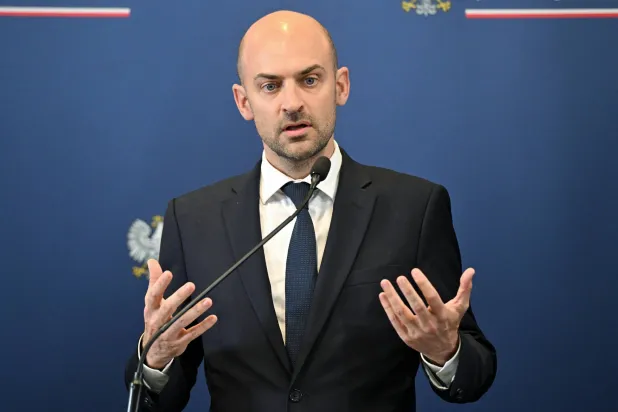
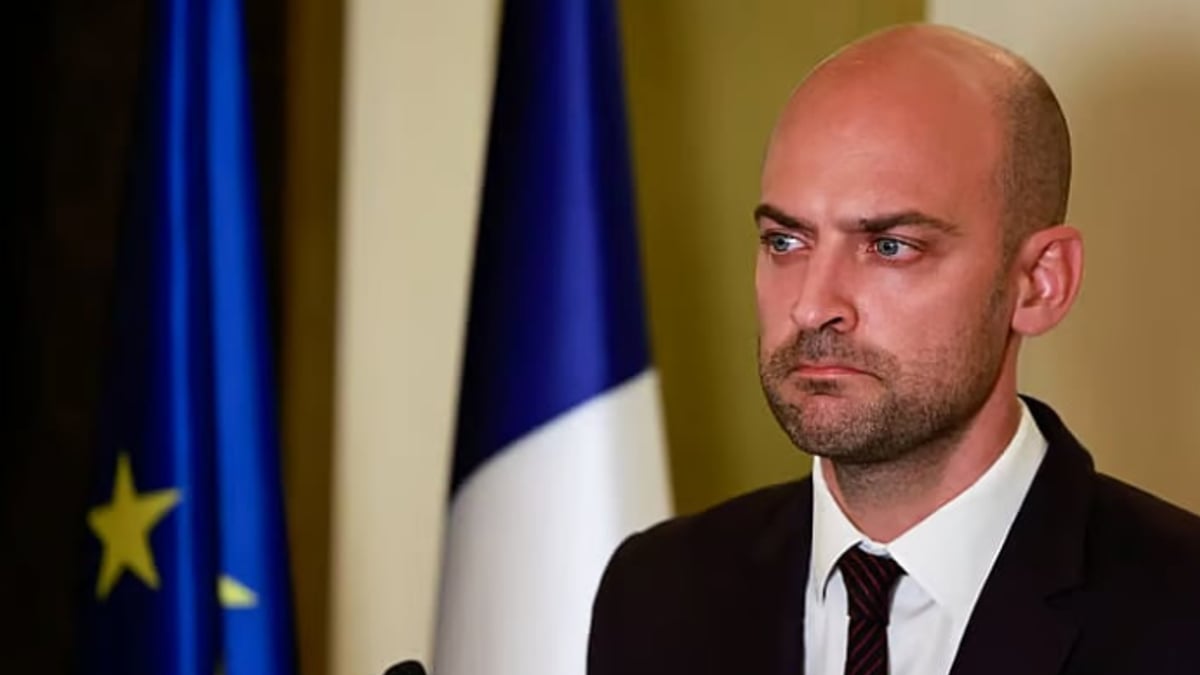
In an interview with 'France Inter' radio on Thursday, Foreign Minister Jean-Noël Barrot said the diplomats returned to Paris on Wednesday and will continue their duties from the French capital, describing what they experienced as an 'extremely serious attack' that was 'premeditated'.
The French Foreign Ministry said the diplomats 'were subjected to intimidation', and that the Iranian authorities committed a 'flagrant violation of diplomatic immunity' to which they are entitled, after detaining them 'without any justification' for several hours and interrogating them, while one of them, according to the ministry, was subjected to ill-treatment including beatings.
Barrot added that the diplomats 'remain in shock after being violently stopped by regime security officers in a private place, held for nearly four hours without the ability to use their own communication means or contact the embassy, and were intimidated, and one was subjected to violent physical assault'.
Paris considers what happened a major incident and thus cannot be overlooked. The French minister considered that the incident 'will not pass without consequences' because it is 'illegal and indescribable', stressing that his ministry is studying 'all available options' to respond to Iran, without revealing the nature of potential measures, not ruling out imposing new sanctions.
So far, the French Foreign Ministry has done two things: first, the phone call Barrot made with his Iranian counterpart Abbas Araghchi on Monday to inform him of Paris's rejection of what happened to its diplomats, and that the incident, which extended to the use of 'physical intimidation, cannot pass without consequences'.
The second step was summoning the Iranian chargé d'affaires in Paris the following day at the request of the foreign minister, where France demanded in a statement that the Iranian authorities 'reveal the circumstances of this incident, punish those responsible, and ensure the security of its premises and staff, in line with its international obligations'. However, the Iranian side responded to the French accusations by holding the French employees responsible for what happened.
Araghchi wrote on the 'Telegram' platform on Tuesday that he informed his French counterpart that the 'unconventional and unprofessional' behavior of the employees 'cannot be accepted', adding that 'respecting the laws and regulations of the host country and adhering to recognized diplomatic principles and norms is necessary for the continuation of diplomatic missions' activities'. He added that Tehran 'expects the French government to prevent the recurrence of such behavior and to take necessary measures'.
Two conflicting narratives
It is clear from the above that there are two conflicting readings of what happened; each side blames the other. On one hand, Paris, through its foreign minister, considers the incident completely unjustified because 'the Iranian authorities had no grievance (against the diplomats), and targeting diplomats (in general) is absolutely prohibited and unequivocally condemned'. What aggravates the French 'shock', according to Barrot, 'is that these two employees oversee our programs supporting civil society, especially for Iranian artists and scientists', as well as 'developing programs to support Iranian civil society', particularly for students and artists wishing to come to France within academic and cultural mobility programs, or to benefit from services provided by the French embassy to Iranian citizens, including French language courses.
In contrast, the Iranian reading is completely different; Iranian media quoted the head of the Western Europe department at the Foreign Ministry, Mohammad Tanaei, on Wednesday, as describing Barrot's statements about French embassy staff in Iran being subjected to 'threats and intimidation' as 'untrue and baseless'.
Tanaei added that 'two French individuals participated, on Sunday evening, July 19, in a meeting with a number of wanted security suspects, and they were subjected to a short interrogation by security agencies'. He continued: 'Numerous documents indicating anti-security activities were found at the meeting place, and the competent authorities are still investigating them'.
Contrary to accusations of assault and beating, the Iranian official presented a different account; the two individuals, after being identified, were transferred to the diplomatic police station, then handed over to the French embassy after contacting the ambassador and coordinating with the Iranian Foreign Ministry.
The aforementioned official described the diplomats' activities in supporting civil society as 'interference in internal affairs' and 'contradicting conventional diplomatic tasks'. Barrot said the Iranian regime 'is trying by all means to dissuade France from continuing its support for the Iranian people, but we will of course continue our work for them'.
Iranian grievances against France
The fact is that this incident first reflects the growing deterioration in relations between Paris and Tehran, especially since French officials are among the few who continue to communicate with the Iranian side.
Moreover, Tehran views with suspicion the initiative launched by President Macron to establish the 'maritime coalition' to ensure freedom of navigation in the Strait of Hormuz, which Iran fundamentally rejects.
Furthermore, Tehran holds Paris responsible for its strict view of the US-Iranian memorandum of understanding reached last June, as it does not include all the elements that France, along with Europeans, insists on resolving; it does not refer to the Iranian missile and ballistic program, nor to Iran's policy in the region, nor to its support for affiliated groups in Lebanon, Iraq, and Yemen.
However, in light of the military escalation between the two warring sides, Paris, through Barrot who refused in his radio interview to describe President Trump's threat to strike civilian infrastructure in Iran in response to its targeting of ships passing through the Strait of Hormuz, believes that 'the return of calm, security, and peace to the region will only be achieved through a political solution that would strictly frame the Iranian nuclear program, push Iran to abandon its destabilizing policies in its vicinity through developing its missile programs and support for terrorist groups, and enable the Iranian people to enjoy their fundamental rights and freedoms'.
"); googletag.cmd.push(function() { onDvtagReady(function () { googletag.display('div-gpt-ad-3341368-4'); }); }); }
Original source: Asharq Al-Awsat
Comments (0)
Be the first to comment.