"If Beirut’s Balconies Could Tell Their Story": Lebanese Artist Turns Daily Details into Living Memory
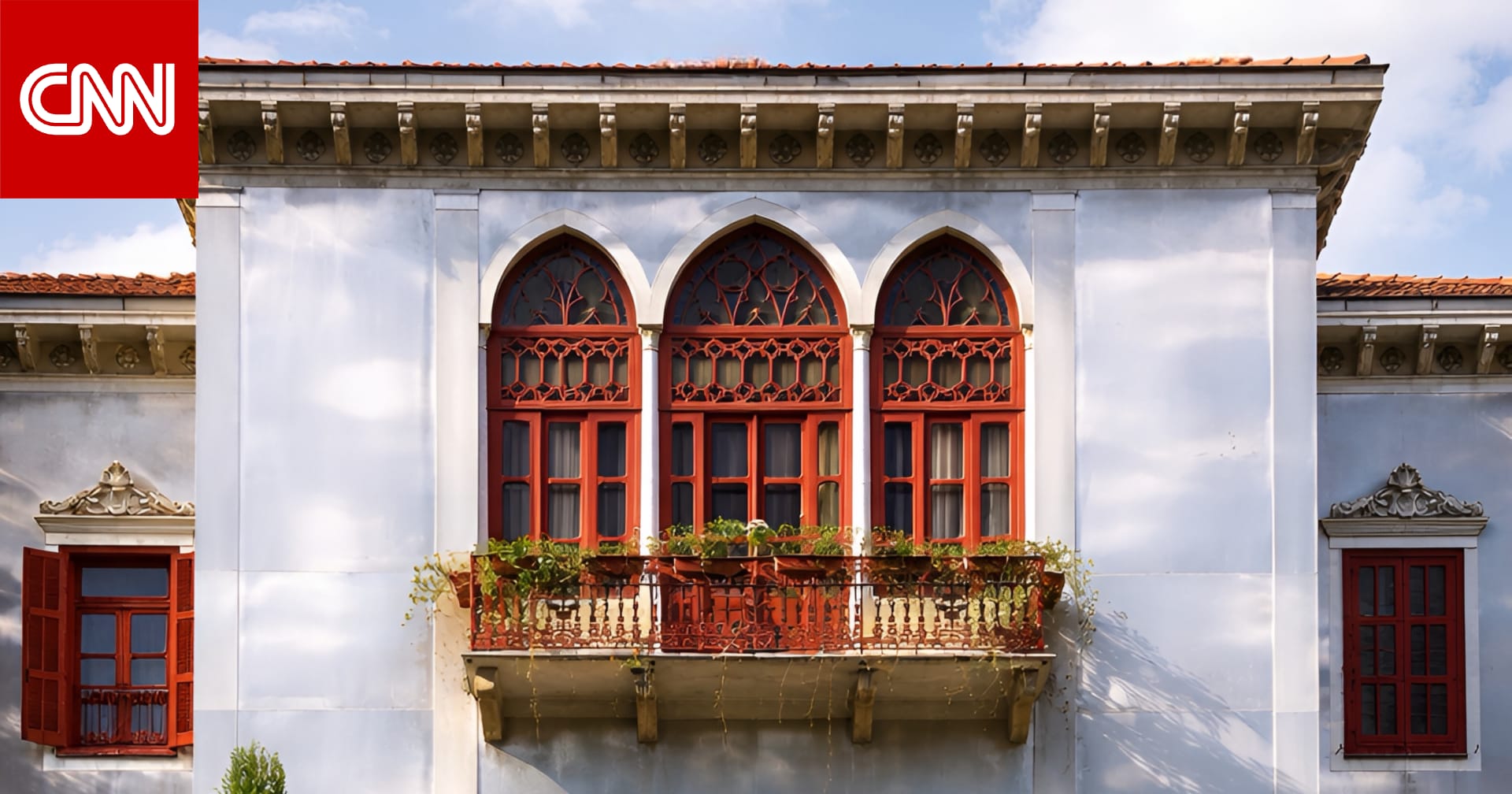
Lebanese artist Chafic Mekawi draws on the simple details of daily life to uncover deeper layers of memory and identity in the Arab world. Rather than viewing familiar objects as mundane, he reimagines them visually and conceptually.
Lebanese artist Chafic Mekawi offers a different visual and conceptual reading of familiar elements and the details of daily life that surround us. Credit: Chafic Mekawi
(CNN)-- Lebanese-Canadian artist Chafic Mekawi draws on the simple details of daily life in his work, uncovering deeper layers of memory and identity in the Arab world. Rather than viewing familiar objects as mundane, he reimagines them visually and conceptually, turning them into a gateway for a broader understanding of culture and place.
Through this approach, his practice intersects the fields of architecture, design, and contemporary art, where elements such as the "monobloc" chair, the balconies of Beirut, or ornate carpets become symbols that carry human narratives.
Mekawi views his visual language as rooted in his academic background in architecture and his upbringing between Dubai, London, and Beirut, where urban and cultural contrasts formed a fundamental part of his spatial awareness.
Architecture provided his work with a framework for understanding form and structure, while his interest in nature, traditional crafts, and daily cultural elements pushed him to expand toward deeper questions related to memory, belonging, and identity.
Over time, he has become less concerned with producing an image for its own sake, focusing instead on art as a medium for storytelling and narrative construction.
The "Beirut Balconies" project stems from a personal experience Mekawi lived between Beirut and Dubai, reflecting the fragmented way cities are recalled and emotionally experienced through memory. Credit: Chafic Mekawi
Mekawi emphasized that his work often begins with a question, or a curiosity toward a place, an object, a social ritual, or a shared cultural experience, which later transforms into a process of comprehensive narrative and visual exploration.
Discussing the relationship between illustration and artistic expression, Mekawi refused to place them in contradictory boxes, explaining that the former provides immediate clarity, while art opens a wider space for interpretation.
Therefore, he treats different media as multifaceted carriers of the same narrative layers; an idea may begin as a precise drawing, then evolve into a three-dimensional work, a spatial installation, or a digital experience, depending on what the idea requires. For him, it is not a matter of balancing these forms, but a continuous dialogue between them.
Mekawi works to reimagine familiar cultural elements within unexpected contexts. Credit: Chafic Mekawi
In an interview with CNN Arabic, Mekawi explained that every project begins with an in-depth research phase, during which he understands the cultural, historical, or spatial context of the subject before moving on to drawing and experimentation. He noted that the final work is often the result of multiple layers of development, where the idea, narrative, and visual language are refined together until a balanced and precise form is achieved.
As for his "Carpet Court" project, the Lebanese artist explained that it stemmed from a desire to reimagine familiar cultural elements within unexpected contexts by introducing the Persian carpet into a space inspired by sports and public areas. This transforms a symbol of home and intimacy into a shared civic space, creating a dialogue between heritage and contemporary life.
In his plastic chair project, he continues to deconstruct daily symbols and visually re-read them. Credit: Chafic Mekawi
Mekawi continues in his work to deconstruct daily symbols and visually re-read them. The plastic chair, despite being a mass-produced industrial product since the 1960s, has become a symbol of daily life and spontaneous gatherings in the Arab world. He is now repositioning this chair by merging it with regional traditional crafts.
In the "Beirut Balconies" project, he provided a sensitive reading of the city through its most intimate architectural elements. As a space between the private and the public, the balcony in his work becomes a silent witness to daily life, bearing the traces of presence, memory, and absence.
The project started from a personal experience Mekawi lived between Beirut and Dubai, to reflect the fragmented way cities are recalled and emotionally experienced through memory, where balconies become an indirect visual archive of social shifts.
Mekawi treats all elements of technology with the mindset of a craftsman. Credit: Chafic Mekawi
Regarding his approach to the relationship between art and design, Mekawi pointed to a fundamental difference: he believes design aims to solve problems and improve interaction with the world, while art provides space for questioning, experimentation, and expression. He does not seek to blur the lines between them, but rather to create a continuous dialogue.
He explained that he approaches technology with the mindset of a craftsman, considering it an extension of human creative tools, whether it is a camera, a traditional loom, or modern digital tools. He is certain that technology becomes valuable when it expands creative possibilities, but it does not replace the artist; it remains a tool controlled by the user's awareness and experience.
The Lebanese artist also pointed out that artificial intelligence, despite its technical capabilities, cannot be a source of emotion, but rather a tool that contributes to developing an idea visually.
His visual language is rooted in his academic background in architecture, and his upbringing between Dubai, London, and Beirut. Credit: Chafic Mekawi
Amid growing discussions about the impact of technology on art, he acknowledged that it has two sides: on one hand, there are concerns about losing the human touch or the homogenization of visual production due to reliance on unfiltered massive archives; on the other hand, there is the conscious use of technology that can open new horizons for experimentation and expression.
In conclusion, Mekawi emphasized that the value of art will always remain in the human vision behind it, no matter how much tools evolve.
Original source: CNN Arabic



Comments (0)
Be the first to comment.