Pharaohs' Genes Ignite New Debate on Ancient Egypt's History

An ambitious Egyptian project to decode mummy DNA is reigniting debates on ancient Egyptian origins, migration, and genetic heritage, with implications for historical narratives.
An ambitious Egyptian project to decode the genetic code of mummies has revived one of the most sensitive issues in Egyptology, as DNA analysis techniques begin to reveal unprecedented details about the origins, movement, and genetic relationships of the ancient Egyptians, in developments that could reshape many long-held historical beliefs.
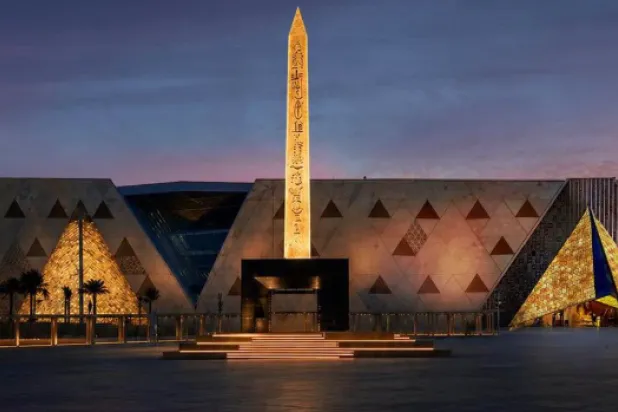
The opening of the Grand Egyptian Museum has given this debate new momentum, with interest no longer limited to displaying the treasures and statues of the pharaohs, but extending to attempts to understand them biologically by studying their genes, tracking the diseases that afflicted them, their causes of death, and their population links to regions of Africa and Asia.
Egyptian geneticist Yahya Gad is leading a project aiming to analyze the complete genome of about 200 pharaonic mummies and 100,000 modern Egyptians, in one of the largest genetic studies in the Middle East. The project aims to build a more accurate genetic database for Egyptians and address the existing bias in global databases that rely primarily on Western samples, according to the Financial Times, as reported by Al Arabiya Business.
Genetic research has gained particular importance after scientific teams succeeded in recent years in extracting DNA from Egyptian mummies, despite a long-held belief that the hot climate and mummification processes made the task nearly impossible. Subsequent international studies confirmed the possibility of using mummies as a reliable source for reconstructing the population history of ancient Egypt.
One recent study showed that an Egyptian who lived during the Old Kingdom more than 4,000 years ago carried about 20% of his genetic ancestry from the Fertile Crescent region, indicating large-scale human movements between Africa and West Asia since the time of pyramid building or earlier.
These findings have opened the door to more sensitive questions about the identity of the ancient Egyptians and the nature of the relationship between Egyptian civilization and its regional surroundings. Each new discovery shrinks the traditional boundaries drawn by historians between ancient peoples and reveals that migration and population interaction were more widespread than previously thought.
In parallel, researchers are seeking to use DNA to solve historical mysteries that have remained elusive for decades. Among the main goals of the project are to determine the causes of death of some pharaohs, diagnose the genetic diseases they suffered from, and reconstruct family trees within royal families.
Scientists believe that genetic tests may bring them closer to solving the mystery of Tutankhamun's death, after dismissing assassination hypotheses that preoccupied researchers for years. One hypothesis suggests that the young king suffered a severe injury that led to a fatal infection, causing his early death at the age of 19.
But this research is not without controversy. While some researchers call for expanding the scope of mummy examination and extracting samples from teeth and skull bases to obtain more accurate results, the Egyptian team refuses to take measures that could damage the mummified bodies.
Yahya Gad emphasized that the mummies represent the ancestors of Egyptians and must be treated with full respect, even if that slows the pace of discoveries.
The debate has moved beyond science into politics and culture, with rising calls to reconsider the way ancient Egypt's history is narrated. Some academics argue that Egyptology has been dominated by Western schools for decades, while others believe that international cooperation and global promotion of Egyptian heritage have been key reasons for sustained interest in pharaonic civilization.
Egyptian archaeologist Zahi Hawass believes that modern technology allows combining both aspects, considering that studying mummies gives historical figures a new life in human consciousness rather than erasing them.
But alongside this debate, academic discussions have intensified regarding the legacy of Egyptology itself. Egyptian researcher Monica Hanna criticized what she describes as the continued influence of colonial roots in the field, arguing that excessive focus on kings, treasures, and spectacle has sometimes come at the expense of producing scientific knowledge and serving local communities.
These criticisms have sparked divisions within academic circles. While Hanna called for reshaping Egyptology to strengthen the connection of modern Egyptians to their past, other researchers believe that tourism and global interest in Egyptian civilization represent an economic and cultural necessity that cannot be ignored.
Hawass defended the project to 'Egyptianize' Egyptology that he began years ago, by sending Egyptian researchers for training abroad and imposing stricter rules on foreign missions, along with his ongoing campaigns to recover famous artifacts from international museums, most notably the Rosetta Stone, the Nefertiti bust, and the Dendera Zodiac ceiling.
Amid this debate, ancient genome technology seems poised to bring about the greatest transformation in Egyptology since the decipherment of the Rosetta Stone more than two centuries ago. Just as language changed the world's understanding of ancient Egypt, genes may soon change the world's understanding of the Egyptians themselves.
Advertisement
Advertisement
Original source: Al Arabiya





Comments (0)
Be the first to comment.