Phone Consultations Between Muscat and Paris to Contain Regional Tension and Protect Navigation
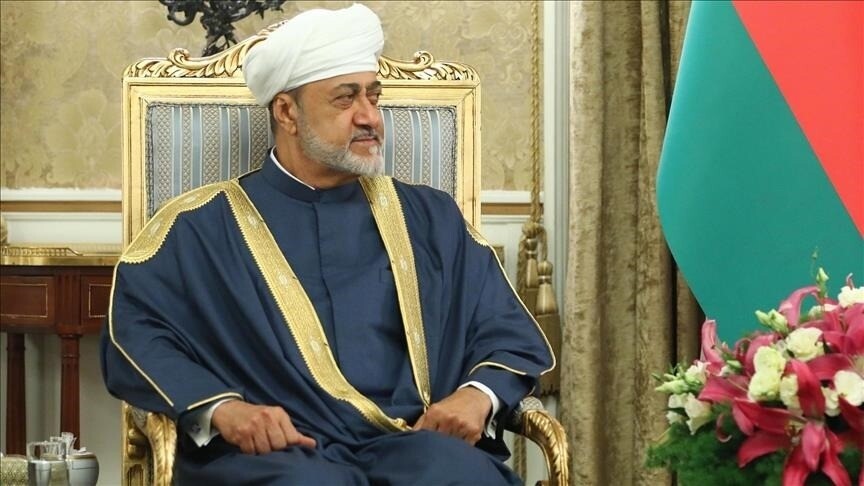
Sultan Haitham bin Tariq received a phone call from French President Emmanuel Macron, during which they discussed diplomatic efforts to control the current crisis in the Middle East and secure sea lanes.
Istanbul / Anadolu
Sultan of Oman Haitham bin Tariq and French President Emmanuel Macron discussed regional and international efforts aimed at containing the escalating tensions in the Middle East and ensuring the safety and security of maritime navigation.
These diplomatic contacts are of great importance amid growing security challenges threatening the stability of trade routes and international navigation.
The communication took place via a phone call between the two leaders on Thursday, according to an official statement issued by the Ministry of Foreign Affairs of the Sultanate of Oman.
The statement said that the two sides discussed 'the latest developments in the region and the rapid changes taking place, as well as regional and international efforts to contain them, in a way that contributes to preserving the security and stability of the region and maintaining the safety of navigation in accordance with the provisions of international law.'
The call comes amid the ongoing military confrontation between the United States and Iran, and rising fears of its expansion and impact on navigation and energy supplies through the Strait of Hormuz and the Red Sea.
The Sultanate of Oman plays a pivotal role in the diplomatic path aimed at resolving conflicts, based on its network of balanced relations with all relevant parties.
France praised, in a joint statement issued after the Sultan of Oman's visit to Paris last June, Muscat's mediation in the Iranian nuclear file and its efforts to resolve the Strait of Hormuz crisis.
The two countries then affirmed their commitment to dialogue and diplomacy to contain the region's crises, and unconditional freedom of navigation in the Strait of Hormuz according to the international law of the sea.
For about two weeks, the United States has been conducting daily strikes on Iran, while Tehran responds with attacks on ships, bases, and military facilities it says are linked to Washington in regional countries.
The escalation comes after the collapse of the ceasefire that was included in a memorandum of understanding signed by the United States and Iran on June 17 last, which stipulated a halt to military operations, reopening of the Strait of Hormuz, and entry into negotiations to reach a broader agreement.
Washington demands guaranteeing 'freedom of navigation and not targeting ships in the Strait of Hormuz,' while Tehran insists that ship movements be coordinated with its authorities, leading to a decline in tanker traffic and rising concerns about oil and gas exports from the region.
Oman and France had agreed to enhance their cooperation in maritime security, monitoring navigational routes, and protecting trade routes, along with intensifying coordination to support de-escalation and prevent the expansion of conflicts in the region.
These moves come amid ongoing military confrontations and negative repercussions from the collapse of previous understandings between Washington and Tehran. Muscat plays the role of a traditional mediator due to its close relations with various active parties. Securing the Strait of Hormuz and the Red Sea is a top priority to maintain global energy supplies and market stability. International cooperation and diplomacy remain the key tools relied upon to limit the expansion of the regional conflict.
Original source: Anadolu Agency



Comments (0)
Be the first to comment.