Rare Appearance of Puffin Chick in England After 30 Years of Absence
In the 1950s, there were about 80 birds nesting in that area, but the number of pairs dropped to just 3...
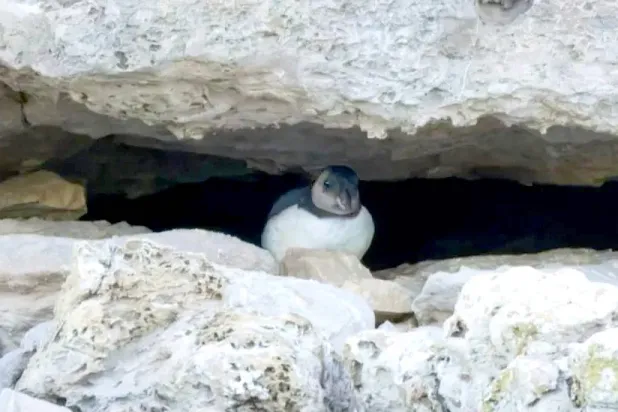
For years, volunteers kept craning their necks and testing their patience to scrutinize the cracks in the rocky cliff, hoping to catch a glimpse of a delightful fluffy creature. In the end, their efforts paid off when a puffin chick made its way into the sunlight, becoming the first chick spotted on the Dorset coast in southern England in three decades.
In this context, The Guardian quoted seabird scientist Richard Caldow as saying: 'Seeing a puffin chick was a source of immense excitement.' He added: 'Every chick matters, and one chick alone won't save this colony, but having one chick is much better news than having none at all.'
This stretch of coast, the Purbeck coast near Swanage, is the last known regular nesting site for puffins on the mainland of southern England.
In the 1950s, there were about 80 birds nesting in that area, but the number of pairs dropped to just 3, and no confirmed sightings of young chicks had been recorded in 30 years, amid serious fears that the colony was on the verge of extinction.
Over the summer, 13 volunteers took turns monitoring the rocky outcrops for 15 weeks, a task that was not easy due to the difficulty of accessing the observation point and its dangerous location.
In April, 6 adult puffins were documented in the colony, and within weeks, volunteers observed the birds carrying fish to at least two separate nesting sites, indicating that more than one pair might have been trying to raise chicks.
Most fish deliveries stopped after June 12, suggesting that not all chicks survived, but fish deliveries continued at one site until eventually a puffin chick was spotted and photographed.
Caldow, who is supported by volunteers from the Purbeck Natural History Forum, said they chose the perfect timing for the photo: 'We knew his parents had been feeding him from around May 29 to July 5, so he was 38 days old.'
He added: 'At that time, it was likely to emerge from time to time, especially when one of the parents was present. That was more likely to happen in the evening, so we hired a boat on July 7 to anchor at the appropriate spot from 4pm to 8pm. It took 3 hours, but shortly after 7pm, the chick peeked out from behind one of its parents. It was a wonderful sight.'
Caldow believes the chick may have left the site that night, adding: 'We have no idea where it is now; it will be far out at sea on its own. The parents stop caring for the chick once its feathers are fully grown and it can fly. It won't return for at least two years, and it won't breed before 2030 at the earliest. It may come back here, but it could also go elsewhere.'
Original source: aawsat.com





Comments (0)
Be the first to comment.