Report: British Counter-Terrorism Police Investigate Killing of Former Minister of State
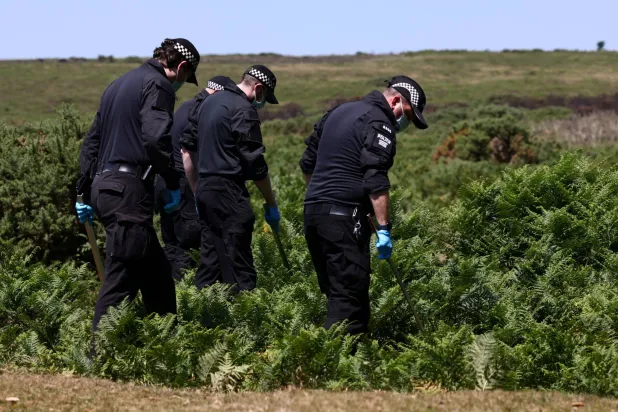
The BBC reported on Monday that British counter-terrorism police are leading the investigation into what is suspected to be a murder that killed a former minister.
The French presidency relies on two main variables to determine the course of the Russian-Ukrainian war, ongoing for four and a half years: first, the field developments and accumulated capabilities of Ukrainian forces, especially in aerial and naval drones, and their ability to target vital and symbolic sites far from the borders; and second, what Paris and its European allies see as a shift in the positions of US President Donald Trump, manifested at the G7 summit in Évian and then the NATO summit in Ankara last week.
This summit comes as part of increasing European efforts to coordinate positions on Ukraine, amid changing international dynamics.
French and Ukrainian presidents before the start of the 'Coalition of the Willing' meeting in Paris on Monday (Reuters)
Against the backdrop of these two important shifts, the expanded summit was held on Monday in Paris, bringing together 25 heads of state and government, most of them European, including Ukrainian President Volodymyr Zelensky, at the invitation of President Emmanuel Macron as part of the 'Coalition of the Willing' – that is, countries interested in contributing to providing security guarantees for Ukraine after military operations cease or after a peace agreement is signed between Kyiv and Moscow.
«Coalition of War Advocates»
The Russian response was not long in coming; Kremlin spokesman Dmitry Peskov on Monday described the coalition as a 'coalition of war advocates, driven by deep illusions about the possibility of inflicting a strategic defeat on our country. This is a coalition of the deluded and those who fuel war,' adding that Moscow would closely monitor the summit's proceedings.
Moscow had previously warned Europeans led by French President and British Prime Minister Keir Starmer against deploying troops on Ukrainian soil, which it considers hostile NATO forces. But what is new today, for Western capitals, is that the military difficulties facing Moscow are pushing them to toughen the conditions for a political settlement and to reject the specifics of the previous US peace plan, which made Ukraine's abandonment of the entire Donbas region, including areas not controlled by Russian forces, a condition for peace between the two sides. Macron tweeted on Platform X on Monday afternoon, stressing that the 'Coalition of the Willing' will work to 'accelerate support for Ukraine, strengthen its defense, increase pressure on Russia, and build security guarantees for tomorrow,' adding that 'the unity (of Europeans) is the source of their strength, determination, and credibility.'
It was clear that Macron took advantage of the national holiday to organize the meeting. As a gesture towards the 'Coalition of the Willing,' he invited a number of its leaders to be his guests on the VIP platform to attend the traditional military parade on the Champs-Élysées, led by 500 soldiers from coalition member states. The parade enjoys widespread public interest and was the only one of its kind in a major democracy before President Donald Trump copied it and ordered a similar parade in Washington for US Independence Day.
French president and British prime minister during the 'Coalition of the Willing' summit to support Ukraine in Paris on Monday (AFP)
«Strategic Awakening»
Sources at the French presidency preempted the meeting by presenting the goals the leaders seek to achieve, seeing it as an indication of the 'strategic awakening' that Europeans want in the face of Russia and the United States. However, they also stressed that the 'Coalition of the Willing' summit will focus on pushing for a ceasefire and resuming peace negotiations between Moscow and Kyiv, alongside strengthening Ukrainian defense capabilities. The coalition focuses on enabling Kyiv to intercept Russian ballistic missiles.
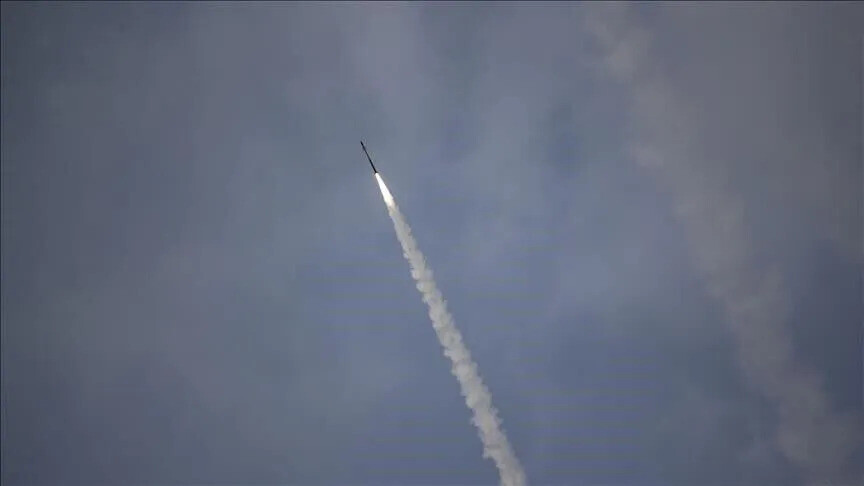
From the Élysée's perspective, this must be achieved through three mechanisms: first, providing more interceptor missiles for the Patriot system, which have become scarce due to the US-Israel-Iran war; second, accelerating the deployment of the Franco-Italian SAMP/T air defense system, which rivals US Patriot missiles; and third, working at the European level to develop alternatives for interceptor missiles through joint cooperation between Europeans and Ukrainians. After Trump told the Ukrainian president that he would enable Kyiv to produce Patriots locally, Europeans will consider a similar mechanism, noting that obtaining a license to produce Patriot missiles, for example, is not free and Europeans will have to bear the cost.
German Chancellor and Ukrainian president on the sidelines of the 'Paris Summit' on Monday (AFP)
Ballistic Missile Counter-Coalition
On Monday afternoon, the Élysée Palace distributed the 'Joint Declaration on the Establishment of the Integrated Coalition to Counter Ballistic Missiles' issued by the leaders of 11 European countries (Denmark, France, Germany, Italy, Netherlands, Norway, Spain, Sweden, Ukraine, and the United Kingdom), stating that the signatory countries, 'aware of the growing threat posed by ballistic missiles and the increasing importance of defense capabilities in ensuring the security of the European continent, announce today the launch of the process of creating a purely defensive coalition to counter ballistic missiles. They also express support for its main project aimed at working tirelessly to develop a ballistic missile defense capability.' The countries concerned believe that 'protecting Europe requires a comprehensive solution consisting of creating an integrated missile defense system, aimed at deterring and responding to future missile threats, through collective effort, technological openness, and trust-based industrial cooperation.'
A member of the French Republican Guard standing in front of the flags of countries that participated in the 'Willing Summit' in Paris on Monday (AFP)
The way to achieve this goes through 'unifying our defense industrial base, research efforts, and operational expertise.' The declaration outlined a set of actions and mechanisms to achieve the desired goal, or what resembles a 'roadmap.' The 11 leaders stressed that what they are doing 'does not target any people, but aims to defend our peoples.' The signatories left the door open 'for other countries that share its principles and goals.' Macron wrote on X, saying, 'Faced with the ballistic threat, we made a clear choice: to protect Ukraine, strengthen our collective security, and build a defensive Europe. By launching the ballistic coalition, we enhance the capabilities Europe needs.'
Original source: Asharq Al-Awsat

Comments (0)
Be the first to comment.